387 Tanzanian scholars receive travel documents for China, India universities
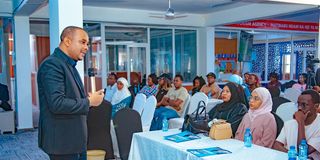
During the travel document handover ceremony in Dar es Salaam, Global Education Link (GEL) executive director, Mr Abdulmalik Mollel, engages directly with students departing for India and China, alongside their parents and guardians. PHOTO | ROSEMARY MIRONDO
Dar es Salaam. A total of 387 Tanzanian students have received travel documents to enable them to pursue higher education in China and India.
The students, who are preparing to travel for their studies, received the documents at a function in Dar es Salaam attended by their parents and guardians.
The documents were handed over by Global Education Link (GEL), with 198 students set to travel to China and 189 to India to begin studies at various higher learning institutions.
The packages included passports, visas, flight tickets, No Objection Certificates (NOCs), Yellow Fever vaccination certificates, and other documents required by relevant authorities, depending on the destination country, institution, and individual travel requirements.
The meeting also provided students, parents, and guardians with final briefings on travel arrangements, immigration procedures, accommodation, health insurance, safety, financial management, conduct, and adapting to life in the destination countries.
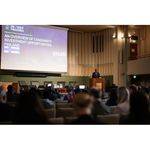
Speaking at the event on Tuesday, August 11, 2026, GEL executive director, Mr Abdulmalik Mollel, who was joined by representatives from colleges in China and India, urged students to make full use of learning opportunities abroad.
The college representatives provided information on academic programmes, campus services, and the international student experience.
"I urge you to use your time abroad to gain knowledge and skills beyond academic qualifications," said Mr Mollel.
He encouraged them not to travel to China and India simply to obtain certificates or degrees, but to take advantage of the technology, laboratories, workshops, innovation centres, and international networks available to them.
Mr Mollel challenged the students to go beyond classroom learning by visiting laboratories, workshops, and innovation centres to understand how technologies and products are developed and used to address societal challenges.
Using a Business Administration student as an example, he said learning management theories alone was insufficient, urging students to also understand products, technology, production processes, and industrial systems.
Such knowledge, he noted, helps students identify opportunities to establish businesses or contribute to transforming existing enterprises after graduation.
GEL has more than 19 years of experience assisting Tanzanian students, parents, and guardians with overseas education.