Witness’ testimony sparks row as Lissu treason trial resumes

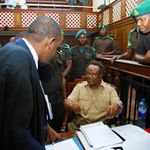
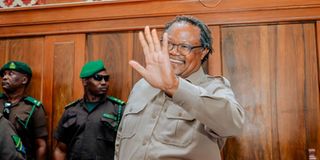
Chadema chairman, Mr Tundu Lissu, in court. He faces one count of treason under Section 39(2)(d) of the Penal Code arising from statements he allegedly made in connection with efforts to prevent the 2025 General Election. PHOTO | SAID POWA

Dar es Salaam. The treason trial of Chadema chairman Tundu Lissu which resumed yesterday, descended into a legal dispute after a prosecution witness linked his alleged calls to disrupt the 2025 General Election to the tearing of ballot papers.

The claim was made by the 16th prosecution witness, Assistant Commissioner of Police (ACP) Amin Mahamba, while giving evidence before the High Court in Dar es Salaam.
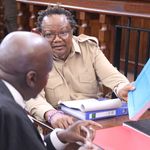
However, Mr Lissu challenged the testimony, arguing that the alleged tearing of ballot papers was not part of the charge against him and had not featured in the witness statement presented to him.

The three-judge panel, led by Judge Dunstan Ndunguru alongside Judges James Karayemaha and Ferdinand Kiwonde, ended the exchange by directing the witness to confine his evidence to matters within his personal knowledge.

“Witness, you are a witness and also an investigator in this case, so you are required to focus on what you observed during your investigation,” Justice Ndunguru said.

Mr Mahamba, who works at the Dar es Salaam Special Police Zone headquarters under the Directorate of Criminal Investigations (DCI), told the court that he took charge of the investigation team handling the treason case in April 2025.

He said he was assigned the case file on April 8, 2025, after being instructed by police officer Ramadhani Ng’anzi to report to the office of the head of investigations for the Dar es Salaam Special Zone.

He said deputy head of investigations for the zone, Mr George Bagyemu, introduced him to the investigation team, which he was assigned to lead.

The team reviewed a video published on Jambo TV’s YouTube account showing Mr Lissu addressing a gathering.

According to the witness, Mr Lissu said the opposition would prevent the election, encourage rebellion and disrupt the poll.

Mr Mahamba told the court that he interpreted the remarks as an attempt to pressure the government into doing what Mr Lissu wanted, which he regarded as treason.

He also told the court that Mr Lissu, as a Tanzanian citizen, was required to comply with the laws of the United Republic of Tanzania whether inside or outside the country.

The witness further alleged that Mr Lissu’s remarks had contributed to arrests in Arusha, Kilimanjaro, Mbeya, Ruvuma and Dar es Salaam, involving people suspected of encouraging others to participate in demonstrations.

But it was his interpretation of the phrase “kukinukisha” as involving acts such as causing chaos and tearing ballot papers that triggered the legal dispute.

Mr Lissu objected, telling the court that he was facing a treason charge and that the witness should not introduce conduct that was not contained in the charge.

“Honourable judges, the court should not allow the prosecution to bring in matters that I am not charged with. If you allow that evidence into the record, you will have to make a determination on it and we will move from a treason case to a minor case of tearing ballot papers,” Mr Lissu said.

“The court should not open the door to something new that was not contained in the evidence statement,” he added.

Lead State Attorney, Nassoro Katuga, rejected the objection, arguing that the evidence was not new because previous prosecution witnesses had already testified about Mr Lissu’s statements.

The court then directed Mr Mahamba to focus on what he had personally observed during the investigation.

The proceedings resumed after a 160-day interruption caused by a prosecution attempt to introduce additional evidence from Mr Mahamba.

The trial had been suspended on February 24, 2026, after the Director of Public Prosecutions (DPP) filed a review application at the Court of Appeal challenging the High Court’s refusal to admit the additional evidence.

The Court of Appeal dismissed the application on July 30, 2026, upholding the High Court’s position.

A three-judge Court of Appeal panel comprising Justices Augustine Mwarija, Zainabu Muruke and Amour Khamis ruled that the prosecution’s notice seeking to introduce additional evidence was without merit.

Mr Lissu is facing one count of treason under Section 39(2)(d) of the Penal Code arising from statements he allegedly made in connection with efforts to prevent the 2025 General Election.

The prosecution alleges that on April 3, 2025, in Dar es Salaam, Mr Lissu, with seditious intent, sought to persuade the public to prevent the holding of the election through statements calling for rebellion and disruption of the poll.