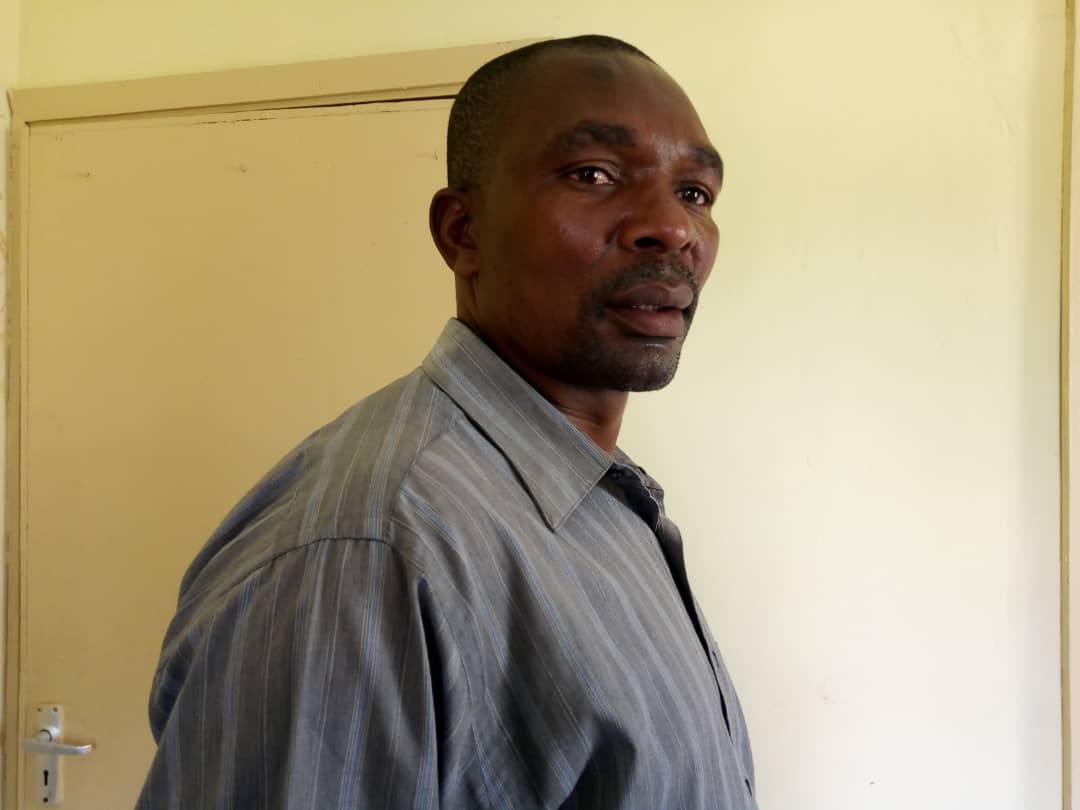
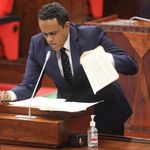
The minister for Agriculture, Daniel Chongolo, tables his ministry’s budget for the 2026/27 financial year in Parliament yesterday. PHOTO | CORRESPONDENT
Dodoma. Tanzania has outlined an ambitious plan to revitalise its agricultural sector, placing the Building a Better Tomorrow (BBT) programme at the centre of a Sh1.1 trillion budget for the 2026/27 financial year.
The ministry of Agriculture has identified six priority areas, including increasing productivity and output, expanding decent employment, and enhancing the participation of youth and women in agriculture.
Other areas include strengthening food and nutrition security, improving access to capital, markets and export opportunities, advancing cooperative development, and promoting the use of information and communication technology (ICT) in the sector.
To deliver on these priorities, the ministry has drawn up 30 strategies. However, the 2026/27 allocation is slightly lower than the Sh1.2 trillion budget for 2025/26, which also featured six priorities but was backed by 27 strategies.
During that period, BBT projects were embedded under the first priority area.
The Parliamentary Standing Committee on Industry, Trade, Agriculture and Livestock has raised concerns over delays in the disbursement of development funds, warning that this is undermining implementation. According to the committee, only Sh6 billion out of the Sh16 billion approved for BBT projects had been released by February 2026—equivalent to 37.5 percent. Overall, development expenditure disbursement stood at just 55.39 percent.
Presenting the budget in Parliament, the minister for Agriculture, Mr Daniel Chongolo, said the government would prioritise agricultural research, alongside scaling up the production and distribution of improved seeds and seedlings. This will include subsidies for fertilisers, seeds and pesticides as part of efforts to modernise farming and boost yields.
Other measures include registering farmers, formalising agricultural activities, strengthening extension services, establishing large-scale block farms, and conducting soil health assessments.
“In response to unemployment challenges, particularly among youth and women, the government will scale up the BBT programme at council level, expand irrigation infrastructure for smallholder farmers, and improve access to credit through targeted financing schemes,” said Mr Chongolo.
Under the programme, youth and women will also be supported to produce seedlings, add value to crops and provide extension services, as part of a broader effort to integrate them into agribusiness.
The government is also seeking to strengthen food storage systems, with a target of building capacity to store up to three million tonnes through the promotion of modern farming practices and improved post-harvest management.
Mr Chongolo said strengthening agricultural research remains central to the sector’s growth, noting that innovation and the adoption of modern technologies depend on robust research systems.
Through the Tanzania Agricultural Research Institute (Tari), the government plans to complete the development and registration of 73 improved seed varieties for strategic crops, including cereals, legumes, roots, fruits and oil crops, in line with market demand.
The initiative is also expected to guide appropriate fertiliser use, supported by the analysis of 34 soil samples to determine optimal application rates.
The minister said Tanzania’s annual demand for improved seeds stands at 127,650 tonnes. In the coming financial year, the government, in collaboration with the private sector, aims to meet this demand fully.
Domestic production is projected to rise from 47,702.45 tonnes in 2025/26 to 105,000 tonnes in 2026/27. The Agricultural Seed Agency (ASA) is expected to produce 27,219 tonnes through contract farming arrangements covering 12,470 hectares.
“The foundation of an agricultural revolution lies in quality seeds,” said Mr Chongolo, warning against the circulation of substandard inputs by dishonest traders. He urged farmers to purchase seeds only from registered dealers, adding that legal action would be taken against those found selling fake inputs.
On fertiliser, the Tanzania Fertiliser Company (TFC) plans to establish an agricultural lime plant with an annual production capacity of between 250,000 and 500,000 tonnes, while also supporting irrigation expansion.
The government is also implementing a strategy to boost sugar production, with the Tanzania Sugar Board targeting an increase in sugarcane output from 4.35 million tonnes recorded in 2025/26 to 5.5 million tonnes. This is expected to raise sugar production to about 550,000 tonnes, moving the country closer to self-sufficiency.
Mr Chongolo said the BBT programme will be rolled out across 20 councils that have each allocated at least 200 acres of land in regions including Dodoma, Singida, Tabora, Njombe, Mbeya, Iringa, Pwani, Mara, Katavi, Rukwa, Kagera and Geita. In addition, 2,000 youth selected by local authorities will receive training in agribusiness through BBT programmes at agricultural colleges and training centres.
Presenting the committee’s recommendations, its chairperson, Mr Deodatus Mwanyika, urged the government to increase reliance on domestic revenue sources rather than external financing, which he said has proven unreliable.
He warned that the slow release of funds was undermining key programmes, including BBT, and limiting progress in creating jobs and expanding youth and women’s participation in agriculture.
Mr Mwanyika said that the reduction in the agriculture budget contradicts international commitments to increase investment in the sector, calling on the government to allocate at least 10 percent of the national budget to agriculture.
Register to begin your journey to our premium contentSubscribe for full access to premium content