BoT says financial experts key to Tanzania’s economic growth
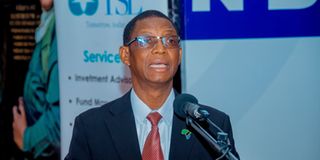
Bank of Tanzania (BoT) Governor Emmanuel Tutuba speaks in Arusha on Monday, May 25, 2026, during a joint seminar between the National Board of Accountants and Auditors (NBAA) and BoT aimed at strengthening a sustainable financial system through technology. PHOTO | FILE
Arusha. Bank of Tanzania (BoT) Governor Emmanuel Tutuba said accountants, auditors, and financial consultants are central to the successful implementation of Tanzania’s Development Vision 2050, as they ensure strong financial management, accountability, and safe use of digital systems in the financial sector.
He said the economy continues to show resilience and remains among the better-performing globally, despite prevailing international economic challenges.
Mr Tutuba made the remarks on Monday, May 25, 2026, in Arusha during a joint seminar between the National Board of Accountants and Auditors (NBAA) and BoT, focused on strengthening a sustainable financial system through technology and good governance in accounting and finance.
He said that professionals carry key responsibilities in overseeing environmental, social, and governance (ESG) issues, which are essential for sustainable development.
Governor Tutuba said discussions centred on improving accounting and financial management systems, bringing together accountants, auditors, and financial consultants to reinforce financial oversight in the country.
“We have emphasised that you must work professionally and with integrity in your respective disciplines, while adhering to ethical standards and managing risks in your areas of work,” he said.
He noted that rapid technological change requires professionals to continuously upgrade skills and adapt to new systems, warning against reliance on outdated practices.
According to him, the economy continues to perform well despite global pressures, with the financial sector remaining stable and resilient.
“Tanzania is among the countries with a fast-growing financial sector, and we are informed that the economy is performing well. The financial sector remains resilient. There are no major challenges, although there are global warning signs. As a country, we have continued to remain strong and grow at a good pace,” he said.
“Last year the economy grew by six percent, while inflation remained within the medium-term target of 3.3 percent,” he added.
Despite the positive outlook, he said there is still a need to closely monitor risks linked to climate change and other emerging challenges that could affect financial stability.
He said accountants, auditors, and financial consultants are key players in helping the country achieve its goal of building a $1 trillion economy by 2050, with an average per capita income of $7,000.
Mr Tutuba urged professionals to strengthen governance in institutions they serve, ensuring financial transactions are managed through secure systems that minimise leakages.
He also stressed the need to shift from cash-based transactions to digital financial systems, which he said are safer and more efficient.
“Our appeal is that you must properly manage the institutions you serve to ensure transactions are handled through strong systems with no leakage. We also urge you to promote innovations that reduce reliance on cash and its associated risks, and instead strengthen digital financial systems,” he said.
He added that accounting and auditing professionals should embrace innovation and collaborate with other stakeholders to enhance their contribution to economic growth.
“In the economy, collaboration is key. There are stakeholders who have developed efficient systems that enable smooth transfer of funds from one institution or level to another,” he said.
“There is no need to carry cash because it carries many risks; you may be exposed to theft or other challenges, and even storing it at home can lead to losses,” added Mr Tutuba.
NBAA executive director, Prof Siasa Mzenzi, said the seminar focused on sustainability in the financial sector and the role of technology in financial management.
He said the event followed a memorandum of understanding between NBAA and BoT, allowing both institutions to combine expertise to strengthen the financial system.
“BoT are experts in financial matters, and we are experts in accounting and auditing. We therefore found it important to combine our expertise to ensure all financial matters are conducted in accordance with proper procedures,” said Prof Mzenzi.
He said key discussions included environmental, social, and governance issues as well as the use of technology to enhance transparency, efficiency, and sustainability in the financial sector.
He added that technological innovation will continue to improve financial management systems and contribute to broader national development.