Dar es Salaam. Tanzanians running or joining informal savings schemes outside the country's legal framework risk fines, imprisonment or both, the Bank of Tanzania (BoT) has warned.
The warning comes amid growing use of informal savings arrangements commonly referred to as upatu in Swahili, in which groups of people contribute agreed amounts and distribute the pooled funds among members in turns.
Speaking during a BoT seminar for artists in Dar es Salaam, an officer from the Directorate of Financial Sector Supervision, Mr Joseph Lubava, said the law does not recognise upatu arrangements operating outside the prescribed framework.
“Upatu is invalid, and by doing so, it is an offence for the person operating the upatu as well as for you who have gone to participate in it,” he said.
The warning puts both organisers and participants on notice, particularly where the arrangements involve collecting and managing money on behalf of others.
Mr Lubava said the central bank had received complaints about such schemes, including cases involving artists, prompting the regulator to engage the creative industry on financial regulations and consumer protection.
“After receiving many complaints, some of which also involved artists, the Bank thought it would be appropriate to meet with them because we believed there might be a gap in understanding,” he said.
Rather than operating informal schemes outside the law, the BoT advised people seeking to pool savings and provide loans among themselves to form community microfinance groups.
Under the Microfinance Act, such groups can have between 10 and 50 members and must operate under a constitution, elected leadership and clearly defined procedures.
They are also required to register through the Wezesha Portal.
Mr Lubava said registration gives groups legal recognition and provides members with a framework within which to conduct their financial activities.
“The benefit of this system is that the group obtains legal recognition and its members can conduct their activities under a legally recognised framework,” he said.
The BoT's warning extends beyond upatu to people providing financial services without the licences or registrations required by law.
Mr Lubava cited Section 16(2) of the Microfinance Act, 2018, which sets requirements relating to dealings with financial service providers without the necessary licences or registrations.
He said anyone providing second-tier microfinance services without a licence could face a fine of between Sh20 million and Sh100 million, imprisonment for between two and five years, or both.
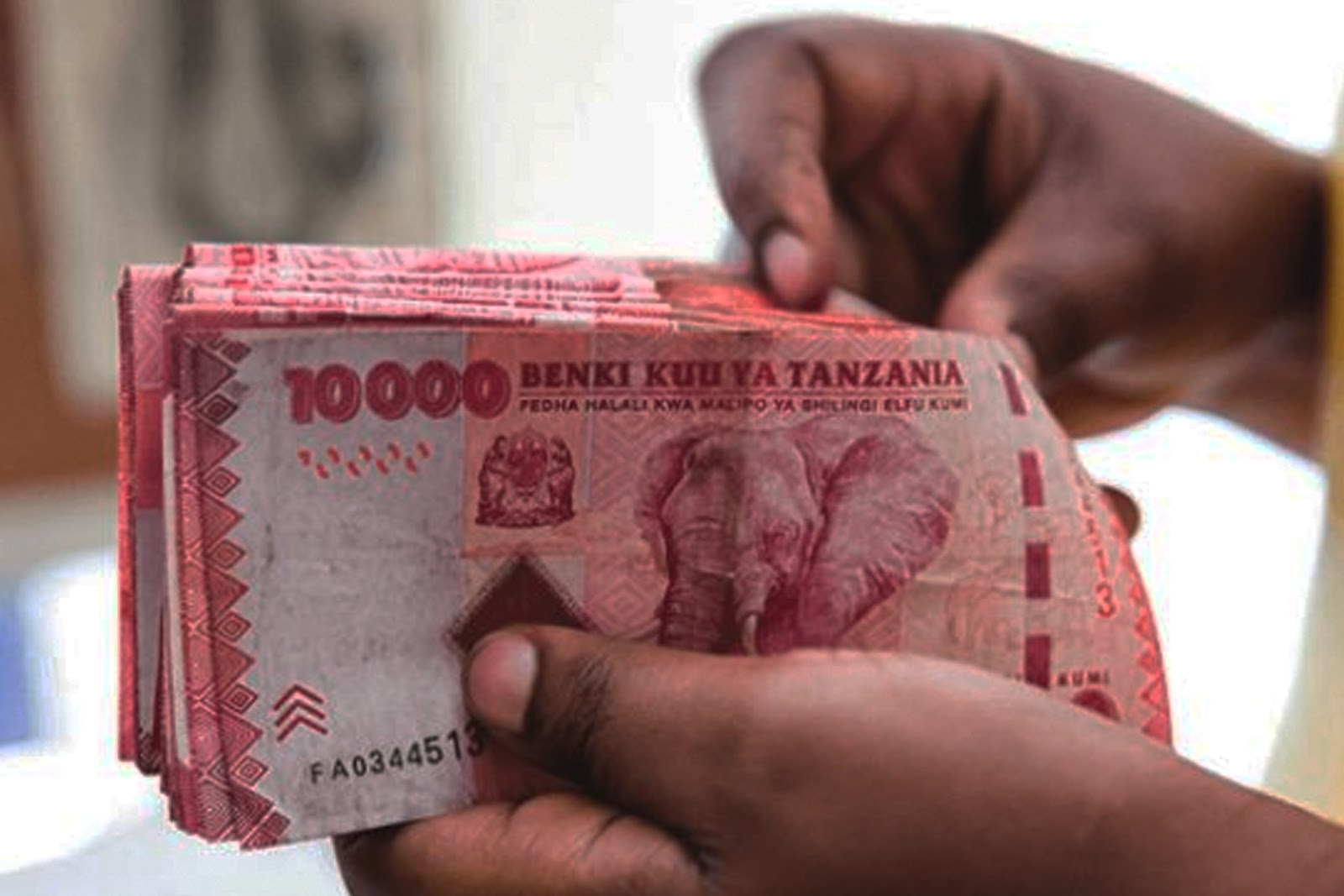
Banknotes need care
In a separate presentation, BoT Director of Economic Research and Policy, Dr Suleiman Misango, urged the public to take greater care of banknotes, saying their condition affects the efficiency of the country's payment system.
He said preserving the quality of banknotes was a shared responsibility between financial institutions and the public.
“Protecting money does not only mean keeping it in a safe place, but also involves how it is handled in everyday activities,” Dr Misango said.
He warned against folding, writing on, dirtying or otherwise damaging banknotes, saying such practices could reduce their quality and affect their ability to function properly in some payment systems and machines used in financial services.
Dr Misango said careful handling of currency by individuals would help reduce the number of damaged notes that need to be withdrawn from circulation and replaced.