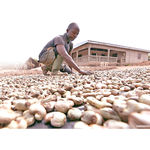
Mtwara. Cashew nut processors have called on the government to improve the business environment, strengthen value addition, and expand the processing sector, citing persistent challenges including limited access to modern technology, inadequate capital, delays in permits, and inefficiencies in the primary market.
The appeal comes as Tanzania continues to pursue its goal of processing over 600,000 tonnes of Raw Cashew Nuts (RCN), which is equivalent to 60 percent of the total production anticipated by 2030. Tanzania targets one million tonnes of RCN production by 2030.
However, stakeholders say current conditions remain a major constraint to achieving the target.
Statistics from the Cashew Board of Tanzania (CBT), the country produces an average of 300,000 to 500,000 tonnes of raw cashew nuts annually.
However, less than 20 percent is processed locally, while more than 80 percent is exported in raw form to foreign markets, especially Vietnam and India.
To reverse this trend, the Tanzania Cashew Processors Association (TACP) has urged the government to scale up support to processors and address structural bottlenecks affecting growth in the sector.
Speaking during the association’s fourth general assembly held on Tuesday, April 21, 2026, in Mtwara, a processor from Mtawanya Juu in Mtwara Mikindani Municipality, Mr Fakhii Mussa, said strengthening small and medium processors would significantly improve output and sector performance.
He cited limited access to modern machinery and technology as one of the biggest challenges facing processors, noting that outdated equipment reduces efficiency and competitiveness.
“If we get modern equipment and training on technology, I believe we can bring major change in this sector and help achieve government targets,” he said.
Stakeholders at the meeting noted that the processing industry has the potential to create more than 100,000 jobs, most of them for women and youth, if investment and enabling conditions are improved.
They warned that failure to address these challenges could slow sector growth and limit employment opportunities for young people and women, who make up a significant share of the workforce in cashew processing.
Another processor from Kisarawe in the Coast Region, Ms Lidya Jacob, said delays in permits for transporting RCN were disrupting operations and causing financial losses.
“When permits are issued on time, we work efficiently, but currently the system is slow, and responses take too long,” she said, adding that delays in licensing for purchasing RCN in the primary market also remain a concern.
From a broader industry perspective, the TACP Vice Chairperson, Mr Daniel Marwa, said collaboration between the private sector and the government was essential to improve productivity and competitiveness in the value chain.
He stressed the need for better management of the primary market to ensure processors have consistent access to raw materials.
“The growth of the processing sector in recent years has largely been driven by the primary market, so it is important to continue improving it,” he said.
Mr Marwa added that the market system allows small processors to participate in the industry without direct competition from large international firms, while also enabling farmers to sell their produce and receive timely payments.
He further noted that improved access to quality cashew nuts at fair prices would enhance local processing capacity and strengthen Tanzania’s competitiveness in international markets.
However, he said access to capital remained a major obstacle, particularly due to the high cost of machinery and technology required for processing operations.
“It is important for the government to create a friendly environment for low-interest loans to enable processors to expand operations and improve competitiveness,” he said.
Stakeholders at the meeting emphasised that addressing challenges related to technology, financing, market systems, and regulatory processes would be key to unlocking the sector’s potential.
They said such reforms would not only increase the value addition of cashew nuts but also generate significant employment opportunities for thousands of young people and women across the country.
When contacted, CBT Director General Francis Alfred and Cashew Processing Director Mangile Maregesi declined to respond to processors’ concerns.