Confusion over law as citizens blamed to hit trains

Dar/Upcountry. Within roughly a month, two people have died after being struck by trains in separate incidents, prompting renewed questions over compliance with railway regulations, the adequacy of warning systems at crossings, and discipline among road users.

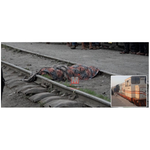
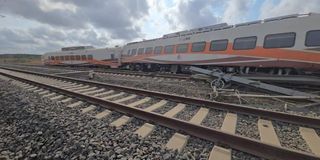
The most recent incident occurred on Monday, February 23, 2026, in the Tabata Relini area of Dar es Salaam, where Mr Salehe Jinga, aged between 40 and 50 and popularly known as Karosi, died after colliding with a city train travelling from Ubungo to the central station.
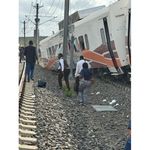
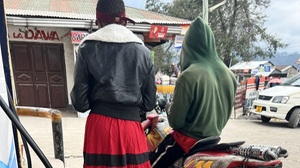
Earlier, on January 20, 2026, Ms Tatu Mgeta, 23, died in the Isevya area of Tabora Region after the motorcycle taxi she was riding collided with a passenger train travelling from Tabora to Mpanda.

The accident occurred in the morning as the motorcycle attempted to cross the railway line.

These incidents have sparked broader debate: are such accidents caused mainly by negligence among road users, weaknesses in infrastructure, or violations of existing safety regulations?

Businesses operating inside railway reserves

An investigation by The Citizen’ssister newspaper, Mwananchi, has revealed businesses operating inside or along railway reserves in several parts of Dar es Salaam, including Tabata Relini and Tabata Mataa.

The situation underscores weaknesses in managing railway reserves and exposes traders and their customers to danger, particularly when trains pass at high speed.

Where the challenge lies

The head of communications and public relations at the Tanzania Railways Corporation (TRC), Mr Fredy Mwanjala, said the corporation is deeply saddened by the recurring accidents.

“Loss of life is never something to celebrate. As a corporation, we are deeply saddened whenever lives are lost; no accident brings us satisfaction,” he said.

He highlighted that a major challenge is that some citizens cross railway lines at unofficial points, despite designated crossings.

“Across the network there are level crossings, official points where pedestrians, vehicles, and even animals are allowed to cross. Yet people still cross at prohibited locations. That is our biggest challenge,” he emphasised.

He compared the behaviour to motorists ignoring zebra crossings or traffic lights.

“The railway is a special corridor. It does not intersect with vehicles or motorcycles in the same way as roads, and a train cannot stop suddenly like a car,” said Mr Mwanjala.

He added that TRC is continuing to improve both the metre-gauge railway (MGR) and the standard gauge railway (SGR), while also providing public education on safe crossing practices.

“If someone wants to cross a railway, they should look both ways and avoid using phones or earphones. Life is more important than rushing,” he added.

Latra cites negligence and recklessness

Senior Railway Inspector at the Land Transport Regulatory Authority (Latra), Mr Lameck Kamando, said that despite ongoing education campaigns, many accidents still result from negligence and reckless behaviour among some drivers, particularly those operating commuter buses and motorcycles.

“They know very well that when a train approaches it sounds a horn as a warning. Yet some people hear it and still rush to cross,” he said.

He explained that urban trains usually begin braking about 20 to 30 metres before reaching a station, while long-distance trains start slowing up to 800 metres earlier.

For that reason, drivers must stop, listen, and look carefully before crossing railway lines.

Mr Kamando said Latra is emphasising education rather than impounding vehicles, holding meetings with drivers at commuter bus terminals, and cooperating with local authorities to remove traders operating close to railway lines.

“Railway safety is everyone’s responsibility. A train cannot stop suddenly like a car. Life is more important than arriving a few minutes earlier,” he said.

Education over enforcement

Mr Kamando added that Latra is currently prioritising public education over enforcement measures, such as impounding vehicles that violate procedures at railway crossings.

“We visit commuter bus stands and organise meetings. Often, drivers even start blaming each other for accidents. This shows they understand the problem, but implementing solutions remains a challenge,” he said.

Due to the large number of railway crossings across the country, he explained, it is not practical to deploy officers at every location.

Consequently, education has become the main strategy for reducing accidents.

The inspector said Latra recently conducted awareness visits in several regions, including Arusha, Tanga, Mwanza, Kigoma, and Katavi, to provide safety education and inspect conditions around railway areas.

According to him, Arusha Region has demonstrated notable success in improving public awareness about railway safety.

“Residents in Arusha are highly informed; even businesses that previously operated near the railway have reduced significantly,” he said.

He recalled that in the past some people parked vehicles or erected stalls close to railway tracks, obstructing drivers’ visibility and increasing accident risks.

Similar situations persist in areas where traders place stalls too close to railway lines, making it difficult for drivers to see approaching trains.

Mr Kamando said Latra is working closely with local governments to ensure that such traders are relocated to safer locations.

“We cannot remove them ourselves because we lack that authority, so we cooperate with local authorities to ensure they obtain safer places to conduct their businesses,” he said.

He emphasised that railway safety is a collective responsibility because trains move at high speeds and cannot stop suddenly once in motion.

Legal perspective

Senior State Attorney, Mr Silinde Gumada said the law clearly defines offences and penalties for anyone who damages railway infrastructure, encroaches on railway reserves without authorisation, or creates danger through negligence.

He explained that railway matters are regulated by Latra under the 2019 law, which mandates the authority to oversee safety standards, issue licences, conduct inspections, and investigate accidents.

“Accident investigations usually assess whether the driver obeyed signs, signals, and warnings present at the crossing involved,” said Mr Gumada.

He added that since many accidents occur at railway-road intersections, the Road Traffic Act also applies.

The law requires drivers to slow down or stop when approaching railway crossings and obey warning signs and signals.

“If a driver ignores those requirements, legally it is considered that they ‘hit the train’ because there was no reason to rush onto the track,” he said.

He emphasised that trains cannot stop abruptly due to their size and weight and therefore have the right of way.

However, Mr Gumada noted that if an accident is proven to have been caused by negligence on the part of the railway corporation, for example, lack of warning signs or malfunctioning signals, families may file civil suits seeking compensation for death, injuries, or funeral costs.

Law on hitting trains

Under the Railway Act of 2017, it is a criminal offence for anyone to commit an act that endangers the safety of trains or passengers. The law also prohibits trespassing within railway reserves without permission.

Railway corridors and adjacent land belong to the railway corporation. Anyone entering or conducting business there without authorisation commits an offence.

Legally, trains have the right of way. Vehicles and other road users must wait for trains, not the other way around.

Anyone found guilty under the law may face fines, imprisonment, or be required to compensate for damage to railway infrastructure, which can run into millions of shillings.

Is the law outdated?

Some citizens argue that the legal approach, which blames individuals struck by trains, is outdated and should be reviewed.

They say that historically, railway lines were located far from residential settlements and economic activities, meaning most accidents resulted from individual negligence.

Today, however, expanding cities and growing economic activities mean many communities live near, or frequently cross, railway lines, increasing the risk of accidents.

A resident of Mkuyuni in Mwanza City, Mr Bashiri Josephat, urged Parliament to review the law, arguing that it no longer reflects present realities.

“For example, in the Mswahili area a woman was struck by a train and died, and her body was badly mutilated beyond recognition. It was said she did not hear the horn. It was extremely tragic,” he said.

He added that Mswahili hosts extensive fish trading activities where many women gather daily. Some cross the railway to reach their homes, while others cross to spread sardines on nearby rocks to dry.

“If the law cannot be changed, then railway areas should be strictly restricted from social and commercial activities,” he said.

A sardine trader in the same area, Ms Joanitha Masumbuko, said traders try to avoid walking along railway tracks but often must cross them to carry out their work.

“The railway passes through many places here in Mwanza, but the Mswahili area is the most dangerous because of the large concentration of people and intense business activities. The government should reconsider blaming only the accident victim,” she said.

A similar view was expressed by a resident of Kigoma Ujiji Municipality, Ms Mariam Yohana, who argued that it is unfair to place all responsibility on victims without considering the circumstances of particular locations.

“Authorities should improve infrastructure and establish stronger safety systems before imposing strict legal measures,” she said.

Mr Ayubu Zuberi also called for improvements to the law to ensure accountability on both sides, depending on the circumstances surrounding accidents.

He said areas where railways pass through residential neighbourhoods, markets, or transport terminals require additional safety measures such as barriers, warning lights, and regular patrols.

A resident of Tabora, Mr Saidi Kapalila, suggested that the government should consider rerouting some railway lines or amending the law so responsibility is shared instead of placing sole blame on citizens.

“Currently, when someone is struck by a train, it is often reported that the person ‘hit the train’, automatically assigning responsibility to the victim. In some places there are no signs indicating that a train is approaching. A citizen passes and is struck, then is told they hit the train,” he said.

“They should review the law honestly because sometimes someone suffers serious harm yet receives no assistance, as legally they are considered at fault,” added Mr Kapalila.

Awareness is key

However, a lawyer in Tabora Region, Mr Alexander Barunguza, said the problem is not the law itself but rather low public awareness of the proper use of road and railway infrastructure.

He cited the Railway Act Chapter 170, as amended in 2023, particularly Section 84(1), which makes sitting on or being present on railway infrastructure a criminal offence.

“It is important to educate people on proper use of roads and railway infrastructure. When they see signs indicating railway presence or an approaching train, they must comply. If this is done properly, many accidents can be avoided,” he said.

Railway network and risks

Tanzania has more than 3,000 kilometres of railway linking major economic regions. The network is mainly managed by TRC and the Tanzania-Zambia Railway Authority (Tazara).

TRC operates the metre-gauge railway connecting Dar es Salaam, Morogoro, Dodoma, Tabora, Kigoma, Mwanza, Shinyanga, and Singida, as well as branch lines to Tanga, Kilimanjaro, and Arusha.

Tazara operates about 1,860 kilometres of railway between Dar es Salaam and Kapiri Mposhi in Zambia.

The modern SGR line between Dar es Salaam and Dodoma has already started operations, with strong barriers, overpasses, and underpasses designed to reduce random crossings.

Overall, the combined TRC and Tazara railway network is estimated at about 3,682 kilometres, excluding new SGR sections still under construction.

As the railway network expands, experts say safety awareness and enforcement must strengthen accordingly.