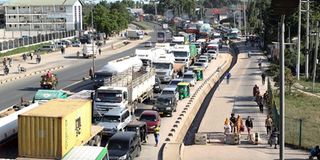
Dar es Salaam. The long-awaited expansion of Nelson Mandela Road, which links the Port of Dar es Salaam to the rest of the world, will start next year, the government has said.
The government is finalising procedures to procure a contractor for the project, which is expected to ease congestion along one of Dar es Salaam’s busiest transport corridors.
The Tanzania National Roads Agency (Tanroads) plans to upgrade Mandela Road from the Kijazi Interchange to the Nyerere (Kigamboni) Bridge, expanding it to eight lanes comprising six mixed-traffic lanes—three in each direction—and two dedicated Bus Rapid Transit (BRT) lanes.
The project is expected to improve access to the Port of Dar es Salaam and facilitate the movement of cargo between the port, Morogoro Road, the rest of the country and neighbouring countries.
BRT Project Coordinator Julius Msofe told The Citizen yesterday that the agency was completing the remaining procurement procedures, including those required through the Tender Board, before inviting prospective contractors.
“The process of procuring the contractor includes the procurement procedures and processes through the Tender Board and proceeds with the procurement of the contractor,” he said.
Mr Msofe said the design review for BRT Phase II Mixed Traffic, covering six lanes, had been completed and the project was now at the contractor procurement stage.
“The review of the design has been completed. That is why it took longer to secure the contractor. Now that the review has been completed, the process of securing the contractor will proceed,” he said.
He said construction was expected to begin next year and take about 30 months.
The project will also involve the construction of new bridges in the Luhanga and Msimbazi areas.
Mr Msofe said completing the design review was an important step towards moving the project into implementation.
He said the planned works would address road capacity as well as infrastructure requirements associated with the BRT system, including the new bridges.
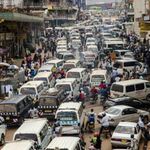
The upgrade comes as the government seeks to address persistent congestion along roads serving the Port of Dar es Salaam, the country’s main gateway for domestic and transit cargo.
Morogoro Road, which connects Dar es Salaam with the country’s interior, is also an important trade corridor for landlocked countries, including the Democratic Republic of Congo, Rwanda, Burundi, Zambia, Uganda, Malawi and Zimbabwe.
The then acting chief executive officer of Tanroads, Ephatar Mlavi, recently told The Citizen that persistent traffic congestion in Dar es Salaam had imposed significant social and economic costs, including lost working hours, increased fuel consumption, longer commuting times and higher vehicle operating costs.
According to the March 2025 Traffic Time Index report, a journey that should take about 30 minutes can stretch to 70 minutes during peak periods, while commuters lose an average of about 2.5 hours a day.
Travel between Kijazi Interchange and Uhasibu in Temeke can take up to two hours during heavy congestion, compared with about 15 minutes under free-flow conditions.
In 2021, President Hassan said traffic congestion was costing the country about Sh4 billion a day, equivalent to about Sh1.44 trillion a year, through lost productivity, wasted fuel and environmental costs.
Transport operators have welcomed the planned expansion.
Upcountry bus driver Musa Lipembe said additional lanes would improve traffic flow and reduce pressure on alternative routes.
“This corridor is often dominated by heavy trucks, some of which break down. With three lanes, other vehicles can overtake more safely, saving time for buses and private motorists,” he said.
A private-sector employee, who requested anonymity, said the project would improve urban mobility and support economic growth.
“To reach a $1 trillion economy by 2050, Tanzania needs fast and efficient movement of goods. Removing bottlenecks that slow transport is essential to achieving this goal,” he said.
Tanzania Bus Owners Association (Taboa) secretary-general Joseph Priscus said completing the Morogoro Road works and starting the Mandela Road project would reduce fuel costs and vehicle wear caused by prolonged traffic jams.
He said the expansion would also help protect the road surface from damage caused by stationary heavy vehicles.
“This is a positive step that will support economic growth,” Mr Priscus said.
He, however, urged the government to prioritise improvements along the Chalinze-Morogoro road, which remains largely a two-lane corridor and is prone to congestion and accidents.
Tanzania Medium and Small Truck Owners Association (TAMSTOA) chairman Chuki Shabaan also welcomed the project but called for the full operationalisation of Kwala Dry Port in line with government directives.
He said severe bottlenecks along the Kibaha-Morogoro corridor had resulted in some trucks spending as long as 17 days on the road, highlighting the need for measures beyond the Mandela Road upgrade.
The government expects improved road access to the port to increase cargo-handling efficiency, reduce transport delays and strengthen Dar es Salaam’s role as a regional trade gateway.
Register to begin your journey to our premium contentSubscribe for full access to premium content