New drive targets water, farm productivity

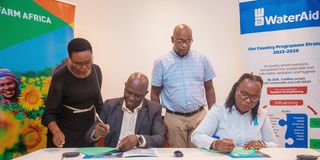
WaterAid Tanzania Country Director, Anna Mzinga (right), and Farm Africa Tanzania Country Director, Dr David Ojwang (left), sign a Memorandum of Understanding (MoU) formalising a strategic partnership to address the link between poor sanitation, malnutrition and low agricultural productivity in rural Tanzania during an event held on Tuesday in Dar es Salaam. PHOTO | COURTESY
Dar es Salaam. WaterAid Tanzania (WAT) and Farm Africa have formalised a strategic partnership to address the link between poor sanitation, malnutrition and low agricultural productivity in rural Tanzania.

The organisations signed a Memorandum of Understanding (MoU) on Tuesday, seeking to integrate water, sanitation and hygiene (WASH) services with sustainable agriculture and livelihood programmes.

The partnership recognises that safe water and hygiene are foundations for productive and resilient farming communities, particularly as climate change intensifies pressure on rural households.

WaterAid Tanzania Country Director Anna Mzinga said the partnership would combine the organisation’s WASH expertise with Farm Africa’s experience in sustainable agriculture.

“Water connects health, dignity, food security and livelihoods,” Ms Mzinga told journalists during the event. She said the collaboration would help create resilient solutions for communities most affected by limited access to essential services.

Farm Africa Tanzania Country Director, Dr David Ojwang, said sanitation and hygiene were also central to improving food security and nutrition.

“Improved sanitation and hygiene are key to improving food security and good nutrition,” said Dr Ojwang.

He said access to water had moved beyond being solely a health concern, becoming essential for smallholder farmers seeking to produce food amid changing environmental conditions.

The partnership will focus on joint planning, resource mobilisation and projects where WASH services are critical to improving livelihoods.

Ms Mzinga said the agreement reflected the organisations’ shared commitment to helping communities adapt to climate change. “This partnership reflects our shared commitment to ensuring that communities... have the services and opportunities they need to thrive in the face of a changing climate,” said Ms Mzinga.

Dr Ojwang said combining improved hygiene with better agricultural practices could enable more communities to build climate-resilient livelihoods by 2030.

The partnership brings together WaterAid’s 43 years of experience in Tanzania and Farm Africa’s 35 years of operations, creating an integrated approach to rural development.

WaterAid says it has reached 1.9 million people with water services and 4.3 million with hygiene services since 1983.

The organisations also plan to strengthen community management of natural resources, improve farmers’ access to profitable markets and share lessons with other development partners.

The initiative is expected to support efforts to reduce poverty by linking water security with improved agricultural productivity, incomes and nutrition.

Both organisations said collaboration would help ensure investments in water and sanitation contribute directly to stronger livelihoods and more resilient rural communities.