Dar es Salaam. The Tanzania Episcopal Conference (TEC) has urged the country to confront the reality of the political events of October 29, 2025, through mutual forgiveness and national healing, rather than allowing lingering wounds to divide citizens.
The call follows a meeting between Catholic bishops and President Samia Suluhu Hassan on August 10, 2026.
According to State House statement, the talks aimed to address key national issues, including pathways to resolve the country's ongoing political stalemate.
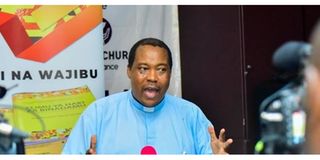
Speaking on Thursday, August 13, 2026, TEC Secretary-General, Fr Dr Charles Kitima, said the bishops requested the audience with President Hassan to share their perspective on the political climate, emphasising that lasting peace requires truth, mutual forgiveness, and national reconciliation.
Dr Kitima clarified that the bishops were not summoned by the government but initiated the meeting to reinforce the position set out in their November 15, 2025 statement.
He noted that the nation cannot construct a stable future without addressing the fallout from the 2025 events.
In their November 15 statement, delivered by TEC President Bishop Wolfgang Pisa following a four-day prayer reflection, the bishops observed widespread public discontent and division following the elections.
"The bishops maintain that we must reach a point of rectifying this situation," said Dr Kitima.
"We cannot let sin rule us; we must be guided by goodness and love," he added.
Dr Kitima stressed that mutual forgiveness is a human step to restore broken relationships among citizens and with the government, rather than a political contest over power.
While TEC does not oppose the government's commission of inquiry into the incidents, Dr Kitima urged that the process uphold truth, transparency, and public involvement.
"Commission investigations are important so truth is known and those responsible are held accountable under the law. However, investigation alone cannot heal the pain without a parallel process of mutual forgiveness and reconciliation," he said, adding that the bishops' intent is not to change the administration, but to safeguard human dignity and rights under existing leadership.
Citing international examples, Dr Kitima referenced South Africa's Truth and Reconciliation process, where acknowledging facts and granting mutual forgiveness helped lay the foundation for a unified nation.
Sharing a similar perspective, the National Muslim Council of Tanzania (Bakwata) Executive Council Chairman, Sheikh Khamis Mataka, noted that human societies inevitably face challenges, but wisdom lies in how they are resolved.
Describing the October events as a national test, Sheikh Mataka commended the establishment of the investigative commission, stating that its findings should feed into broader national dialogue.
"You forgive after knowing what offence occurred and who erred," said Sheikh Mataka, emphasizing that identifying root causes is essential for preventing future conflict.
Anglican Bishop of Dar es Salaam Diocese, Jackson Sosteness, also advocated for national healing and inclusivity, highlighting the need to address youth grievances.
"Youth were heavily involved in the October 29 events. It is imperative for the government to address their core challenges, including unemployment, to channel their energy into productive nation-building," said Bishop Sosteness.
Tanzania Human Rights Defenders Network (THRDC) national coordinator Onesmo Olengurumwa emphasized that genuine recovery requires all stakeholders to acknowledge past shortcomings.
"Accountability does not solely mean imprisonment. Accepting mistakes, asking for pardon, and speaking the truth are fundamental steps," said Mr Olengurumwa.
"Assuming last year's problems can be buried by force would be a grave mistake that risks creating even greater challenges in the future," he added.