GGML backs drive to expand access to paediatric cardiac care
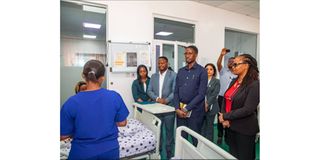
Vice President for Sustainability and Corporate Affairs, Africa, AngloGold Ashanti, Simon Shayo( second from right) learning about the pediatric health initiatives when he visited Jakaya Kikwete Cardiac Institute ( JKCI).
Dar es Salaam. Geita Gold Mining Limited (GGML) has stepped up its support for Tanzania’s healthcare system by backing a national initiative aimed at strengthening early referral and improving access to life-saving paediatric cardiac care.
The initiative, implemented in partnership with the Jakaya Kikwete Cardiac Institute (JKCI) and other health stakeholders, focuses on improving early diagnosis, referral pathways and financial access for children born with heart conditions.
Speaking during a recent visit to JKCI to deepen collaboration, AngloGold Ashanti Vice President for Sustainability and Corporate Affairs in Africa, Mr Simon Shayo, said the support reflects GGML’s long-term commitment to improving health outcomes, particularly for vulnerable children.
“In 2025 alone, GGML contributed Sh56 million towards paediatric cardiac care, enabling 14 procedures with a 95 per cent survival rate,” Mr Shayo said.
“Access to quality healthcare for children with critical heart conditions is not just a medical issue—it is a social responsibility. Partnerships like this are vital if we are to save lives and strengthen the national health system.”
He noted that demand for paediatric cardiac services in Tanzania continues to rise, making it necessary for the private sector to complement government efforts through financial and strategic support.
Mr Shayo was accompanied by GGML Senior Manager for Sustainability Mr Gilbert Mworia and Public Relations and Communication Manager Mr Stephen Mhando during the visit.
According to JKCI, the institute receives an average of 50 paediatric referrals every month, yet its children’s unit—comprising the Intensive Care Unit (ICU) and High Dependency Unit (HDU)—has a capacity of only 26 beds.
Nationally, about 1,500 children are currently on the waiting list for fully government-assisted paediatric cardiac procedures, with hundreds more added each year. Although the government subsidises around 70 per cent of treatment costs, the remaining 30 per cent—about Sh4 million per child—remains a major financial hurdle for many families.
“Since November 2024, GGML has focused on bridging this gap to ensure children from vulnerable backgrounds are not denied treatment because of cost,” Mr Shayo said.
Through the initiative, up to 200 paediatric cardiac procedures have so far been supported. However, the waiting list continues to grow, with an additional 400 children recently added—highlighting the need for sustained and expanded support.
Mr Shayo said GGML’s commitment goes beyond financial assistance to include research and development initiatives aimed at improving paediatric cardiac care outcomes nationwide.
“Our goal is to contribute not only to immediate, life-saving interventions but also to long-term systemic improvements, so that more children can receive timely treatment closer to their communities,” he said.
JKCI Head of Surgery Dr Angela Muhozia welcomed GGML’s continued support and called on more stakeholders to join the initiative. She said caregivers of children undergoing treatment often face severe challenges beyond the medical process itself.
“Some mothers sleep outside the hospital gate and return every day to support their children. Alongside medical care, there is a growing need for non-clinical support for families,” she said.
Medical experts note that up to 95 per cent of paediatric cardiac conditions are fully treatable when detected early—ideally within the first 28 days of life and no later than the first year.
As part of efforts to ease pressure on JKCI, the institute is strengthening partnerships with regional hospitals to improve early diagnosis and referral systems. These include empowering Chato District Hospital as a referral centre for the Lake Zone and working closely with Geita Regional Referral Hospital.
The initiative underscores the growing importance of partnerships between the private sector, healthcare institutions and government in strengthening Tanzania’s health system and ensuring that no child is denied care for a treatable heart condition.