Government now turns to bonds to finance road projects
Minister Abdallah Ulega being praised by other ministers after presenting 2026/2027 budget estimates for Works Ministry in Parliament yesterday. PHOTO | Said Khamis
Josephine Christopher is a senior business journalist for The Citizen and Mwananchi newspapers
Mwananchi Communications Limitted
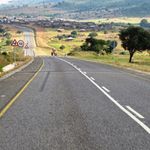
Dar es Salaam. The government plans to use bond financing to fund major road construction and upgrade projects as it seeks alternative funding sources to meet growing infrastructure demands, Works Minister Abdallah Ulega has said.
Presenting the Ministry of Works budget estimates in Parliament on Wednesday, May 20, 2026, Mr Ulega said President Samia Suluhu Hassan had directed the government to explore alternative financing mechanisms, including bonds, to bridge the widening infrastructure financing gap.
He said the ministry will begin implementing the strategy in the 2026/27 financial year, targeting key trunk roads requiring rehabilitation and expansion from two lane to four lane.
“Following these directives, the Ministry of Works is expected to begin using bonds in this budget to finance major maintenance and rehabilitation of key economic roads,” he said.
Roads expected to benefit from the programme include the Morogoro–Dodoma, Dodoma–Singida, Singida–Tabora, Tabora–Shinyanga, Shinyanga–Mwanza, Dar es Salaam–Kibiti, Kibiti–Lindi (Mingoyo), Sirari–Musoma, Musoma–Mwanza and Geita–Bukoba–Mutukula corridors.
Other planned projects include Chalinze–Segera, Segera–Tanga, Tanga–Moshi–Arusha, Babati–Singida and the Dar es Salaam–Morogoro–Iringa–Makambako–Mbeya–Tunduma corridor, parts of which are expected to be expanded into dual carriageways.
Mr Ulega said the financing model is intended to accelerate infrastructure delivery at a time when traditional budget financing is under pressure due to competing development priorities and rising construction costs.
The bond financing model is expected to mobilise long-term capital from domestic and potentially international investors, enabling the government to spread repayments over time while securing immediate funding for strategic infrastructure projects.
At the same time, the government plans to continue implementing large-scale urban decongestion projects under a Sh2.56 trillion infrastructure agenda for the 2026/27 financial year.
Mr Ulega said the ministry will prioritise the construction and expansion of roads, flyovers, bridges and urban transport systems to reduce traffic congestion in major cities and improve transport connectivity.
The projects form part of Tanzania’s Development Vision 2050 strategy, which identifies infrastructure as a key driver of economic transformation.
Under the programme, the government will continue decongestion projects in Dar es Salaam, Dodoma, Arusha, Mwanza, Mbeya, Iringa, Singida and Coast Region towns.
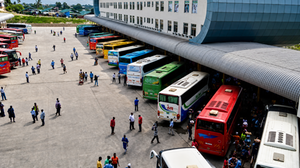
“Dar es Salaam will receive the largest share of the urban mobility projects, with the government continuing implementation of the third and fourth phases of the Bus Rapid Transit system,” Mr Ulega said.
The projects include the Maktaba–JNIA–Gongolamboto route, the Maktaba–Morocco–Mwenge–Tegeta corridor and the Mwenge–Ubungo stretch.
The government is also preparing to launch the fifth BRT phase linking Ubungo with the city centre and surrounding areas.
Several flyovers are planned at major traffic intersections, including Mwenge, Morocco, Fire, Magomeni and Kamata.
Other interventions in Dar es Salaam include expansion of the Ubungo–Kimara highway from six to eight lanes, widening of the Mbagala–Kongowe–Mkuranga road, expansion of Mwai Kibaki Road and upgrading of the Kibaha–TAMCO corridor into an eight-lane highway.
In Dodoma, the government is nearing completion of the 112.3-kilometre outer ring road intended to divert heavy traffic away from the city centre.
The ministry also plans to begin expansion of the Dodoma–Morogoro, Dodoma–Iringa and Dodoma–Arusha highways.
In Arusha, the decongestion programme will focus on expansion of the Arusha–Kisongo and Tengeru–USA River roads.
Mwanza is expected to benefit from expansion of the Mwanza–Usagara highway and construction of the Mwanza Airport–Kayenze road.
In Mbeya, ongoing works include expansion of the Nsalaga–Uyole–Ifisi corridor and preparations for the Uyole–Songwe bypass road, while Singida Municipality is preparing for the widening of key urban roads into four lanes.
Beyond urban transport, the ministry plans to intensify construction of trunk roads connecting regional capitals, neighbouring countries and strategic economic zones, including ports, railways, industrial parks, mining areas, tourism centres and border posts.
Flagship regional projects include the Tanga–Pangani–Makurunge road and Pangani Bridge linking Tanzania and Kenya, the Manyovu–Kasulu–Kabingo road connecting Tanzania and Burundi and the Matai–Kasesya road linking Tanzania and Zambia.
The ministry also announced plans to strengthen marine transport by procuring five new ferries in the Lake Zone and expanding ferry services in Coast Region.
Projects include a second ferry for the Nyamisati–Mafia route and new ferry services connecting Boza, Kuruti, Shungumbweni and Kisiju.
For the 2026/27 financial year, the Ministry of Works has been allocated Sh97.1 billion for recurrent expenditure and Sh2.47 trillion for development projects, bringing the ministry’s total budget to about Sh2.56 trillion.
Register to begin your journey to our premium contentSubscribe for full access to premium content