Mbeya. The government has called for greater utilisation of geoscientists to accelerate economic growth, noting that their work has been central to Tanzania surpassing its goal key resources to contribute at least 10 percent to the national income.
It said members of the Geological Society of Tanzania (TGS) form a core professional group whose discoveries—ranging from minerals and geothermal resources to groundwater, oil and gas—continue to underpin national development.
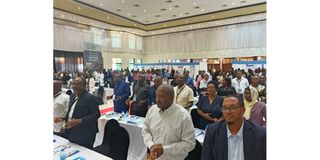
Speaking in Mbeya while opening the TGS annual general meeting, Chief Secretary and Secretary to the Zanzibar Revolutionary Council, Ms Zena Ahmed Said, said the society’s contribution comes at a critical moment as Tanzania begins implementing its Vision 2050.
She urged TGS to reflect on how its expertise can support the execution of the long-term strategy, particularly under the pillar on Wealth and Natural Resources, where geoscientists play a pivotal role.
“Geoscientists have been instrumental in enabling the implementation of Pillar Four under Vision 2050. Their work has contributed significantly to the discovery and development of mineral deposits, groundwater, oil and gas,” she said.
“Today, we would not be celebrating the achievement of surpassing the 10 percent contribution to the national income without the major discoveries made in the minerals sector,” she added.
She also emphasised the sector’s importance as the world transitions from fossil fuels to clean energy, calling on geoscientists to continue guiding the government on identifying resources that support the clean energy agenda.
“We should not forget to discuss the use of technology to improve our efficiency as geoscientists, including the application of Artificial Intelligence (AI) in locating minerals and oil,” she said.
For his part, TGS president Dr Elisante Mshiu said the gathering is part of the society’s annual tradition and praised Mbeya Region’s natural attractions, which delegates had a chance to explore during field excursions.
Since its establishment in 1969, he said, TGS has recorded numerous achievements, including strengthening regional and international cooperation and expanding professional development opportunities for its more than 4,000 members through conferences, seminars, training and study tours.
“These activities have enabled us to build the capacity of our members and contribute to public education—from schools to communities—while supporting the discovery and development of minerals, energy, geothermal resources, oil and gas,” Dr Mshiu said.
He noted, however, that the society continues to face challenges, including the ongoing process of establishing a geoscientists’ registration board in collaboration with the government.
Delivering regional greetings, Assistant Administrative Secretary for Production and Economy, Ms Anna Mwambene, underscored the importance of geoscientists in assessing land suitability for settlement and mining.
“I recall floods that occurred in Itezi some years ago. Had we had experts who had assessed the soil composition of Mount Kawetere, we would have detected the risk early and taken precautions,” she said.
“Our region is the second-largest in mining activities. We need research from geoscientists to help identify safe residential and mining zones. This will boost our regional economy and enhance public awareness,” she added.