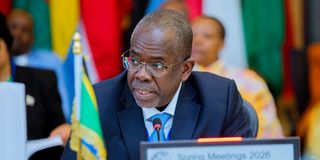
The Minister for Finance, Khamis Mussa Omar specifically urged the World Bank to consider a transformative development model inspired by the Marshall Plan
Washington. The Tanzanian government has issued a formal appeal to the World Bank to significantly bolster its support for the private sector across the African continent.
This strategic move aims to catalyse sustainable economic growth and stimulate robust investment frameworks within member states.
The Minister for Finance, Khamis Mussa Omar, articulated this position during the Africa Group 1 Constituency meeting. The discussions took place at the World Bank Group headquarters here in the city. This assembly serves as a critical platform for sub-Saharan African nations to align their developmental priorities within the global financial architecture.
Amb Omar underscored the dual pressures currently weighing on African economies. Governments are striving to enhance domestic revenue collection while simultaneously navigating strict borrowing constraints.
These limitations are primarily driven by escalating national debt levels across the region.
“A vibrant private sector is the most viable solution to this fiscal dilemma. It is important to foster an environment conducive to business by attracting both domestic and foreign direct investment,” Amb Omar said.
This shift would alleviate the necessity for aggressive taxation measures that often disproportionately impact low-income demographics.
Amb Omar emphasised the imperative for long-term economic strategies that prioritise productive sectors.
He specifically urged the World Bank to consider a transformative development model inspired by the Marshall Plan. This historic 1947 US initiative was instrumental in rebuilding European infrastructure and restoring industrial activity following the Second World War.
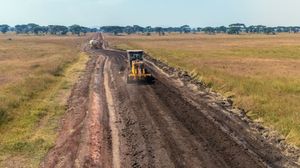
Mr Omar suggested that a contemporary equivalent for Africa could bridge massive infrastructure gaps and provide the foundation for industrial sovereignty.
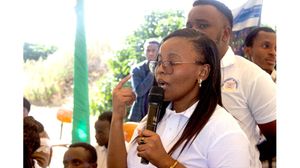
In response to these regional concerns, managing director, Zarau Wendelin Kibwe, presented the World Bank’s latest constituency report.
She confirmed that the institution is working to mobilise approximately $100 billion. These funds are earmarked to assist member states in managing immediate economic volatilities while fortifying their private sectors. A core component of this financial commitment is the promotion of socio-economic inclusion.
The programme intends to expand commercial opportunities for women, young people, and historically marginalised communities.
Dr Kibwe further noted that the initiative aims to enhance social protection systems to improve resilience against global economic shocks.
The World Bank is shifting its focus from mere job creation to the development of productive and sustainable employment. Targeted investments are being directed into critical areas such as agriculture, energy, healthcare, and mining.
The Africa Group 1 Constituency represents 22 sub-Saharan nations, including Tanzania, Kenya, Uganda, Zambia, Rwanda, and Zimbabwe. This collective continues to advocate for deeper structural reforms and enhanced capital flows to ensure regional stability.