How family interference and out-of-court deals sabotage GBV investigations
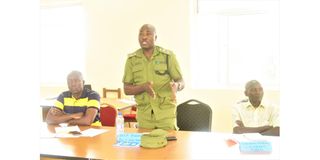
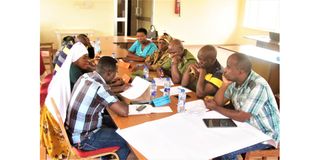
Tomondo Ward Police, Inspector Elias Mwinyi, on Wednesday, August 19, 2026, addresses village and ward leaders during gender-based violence response training organised by the Tanzania Gender Networking Programme (TGNP) for Tomondo and Rubeho participants in Gairo District, Morogoro Region. PHOTO | JUMA MTANDA
Morogoro. Families concealing gender-based violence (GBV) information to shield relatives remain a key barrier to securing justice for victims, stakeholders warned, urging enhanced public education and community cooperation.
Speaking on Wednesday, August 19, 2026, during training organised by the Tanzania Gender Networking Programme (TGNP), Tomondo Ward Police Inspector Elias Mwinyi said local leaders, social welfare officers, and law enforcement require strengthened capacity to combat the vice.
He said although police gender and children’s desks, courts, and health facilities actively handle cases, investigation efforts are frequently undermined by family interference.
"Strengthening community capacity to prevent, identify, report, refer, and respond to violence is the correct approach to reducing these incidents," he said.
However, he cautioned that some families instruct victims to give false statements when perpetrators are relatives, compromising police investigations and weakening court evidence.
"The family ought to be on the front line in assisting the victim to report accurate information. Concealing the truth because the suspect is a relative sabotages the entire process of justice," added Inspector Mwinyi.
He highlighted that long distances to police stations and health centres in rural areas delay reporting and cause loss of critical forensic evidence, compounded by incomplete medical reports and witness absenteeism in court.
Echoing his sentiments, Rubeho Ward Community Development Officer, Ms Perpetua Nguyai, observed that out-of-court settlements between families distort facts presented to authorities.
Ms Nguyai noted that in cases involving teenage pregnancies, families often coach minors to conceal the identity of the responsible party.
"You find the child has already been instructed on what to say. She goes to the executive officer and police, but the narrative remains unchanged. Ultimately, locating the suspect becomes difficult," she said.
TGNP facilitator, Mr Deogratus Temba, urged grassroots leaders to work closely with police, particularly in remote areas, to ensure perpetrators face legal accountability under the National Plan of Action to End Violence against Women and Children (NPA-VAWC II).