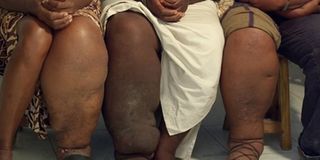
Dar es Salaam. A 12-year longitudinal study in southwest Tanzania has found that eliminating a parasitic worm responsible for lymphatic filariasis significantly reduces the risk of HIV infection, offering new insight into the intersection of neglected tropical diseases and HIV prevention.
The study, titled Impact of quasi-elimination of Wuchereria bancrofti on HIV incidence in southwest Tanzania: a 12-year prospective cohort study, was published in The Lancet HIV.
It suggests that controlling the parasite could serve as an additional strategy to reduce HIV transmission in endemic regions.
The research was led by Inge Kroidl, Thomas F Marandu, Lucas Maganga, Sacha Horn, and Mkunde Chachage, alongside collaborators from the National Institute for Medical Research (NIMR), Mbeya Medical Research Centre, and LMU University Hospital Munich.
The study was conducted in Kyela, Mbeya Region, an area previously known for high prevalence of Wuchereria bancrofti, the parasite responsible for lymphatic filariasis, which causes hydrocele and elephantiasis locally known as mabusha and matende.
The main objective was to assess the impact of reducing W. bancrofti infection through mass drug administration on HIV incidence.
This followed earlier findings in 2016 by the same research group showing that individuals with the infection had a 2.3-fold higher risk of acquiring HIV.
The Risk of HIV Infections through Nematode Organism (RHINO) study ran from 2007 to 2019.
It drew on data from the Evaluation and Monitoring of the Impact of New Interventions (EMINI) study, which followed participants annually between 2007 and 2011, and later incorporated follow-up data collected in 2019.
Researchers tested participants for HIV and circulating filarial antigen, an indicator of W. bancrofti infection.
The study tracked 1,139 individuals who were HIV-negative at the end of the initial surveillance period in 2011, assessing outcomes after mass drug administration with ivermectin and albendazole conducted between 2009 and 2015.
The study found that mass drug administration led to near elimination of the parasite in the area, with prevalence among adults falling from 35.1 percent in 2009 to 1.7 percent in 2019.
Importantly, HIV incidence declined significantly among participants who were cured of the infection. In this group, age-adjusted HIV incidence fell from 1.77 cases per 100 person-years in 2007–2011 to 0.60 in 2011–2019.
By contrast, HIV incidence among those who had never been infected remained broadly stable, moving from 0.80 to 0.66 cases per 100 person-years, a pattern the researchers say supports the role of W. bancrofti in increasing HIV susceptibility.
The study concludes that chronic W. bancrofti infection increases susceptibility to HIV by activating CD4 immune cells targeted by the virus.
It adds that this heightened risk is reversible after successful treatment.
Researchers say the findings support including elimination of W. bancrofti as an additional public health measure in areas with high prevalence, alongside existing HIV prevention strategies.
They further argue that neglected tropical diseases should be central to global health strategies, noting that such infections not only cause morbidity but also increase vulnerability to HIV.
The study suggests that treating elephantiasis-related infections could therefore deliver dual public health benefits: reducing both lymphatic filariasis and HIV transmission.
Register to begin your journey to our premium contentSubscribe for full access to premium content