Kampala University Vice Chancellor warns excessive AI use undermines students’ critical thinking

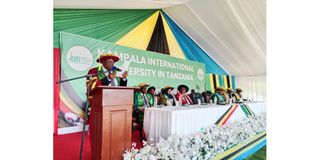
Prof Peter Msolla addresses KIUT’s eighth graduation ceremony, cautioning against the excessive use of AI by University students.

What you need to know:

  • The University Council, chaired by Prof Yunus Mgaya, commended KIUT leadership for upholding professional standards and ensuring good governance in a science- and technology-focused private institution. Of the 1,484 graduates, 772 were men and 712 women, with 821 earning diplomas, 641 obtaining bachelor’s degrees, and 22 receiving master’s qualifications.
Dar es Salaam. The Vice Chancellor of Kampala International University in Tanzania (KIUT), Prof Peter Msolla, has cautioned that the growing reliance on artificial intelligence (AI) among university students risks eroding essential critical thinking skills, which form the cornerstone of higher education.

Addressing graduates at KIUT’s eighth graduation ceremony on December 10, 2025 where 1,484 students received academic awards, Prof Msolla stressed that universities must urgently reconsider how they guide students in adopting emerging technologies.

While recognising AI’s transformative potential, he warned that unregulated use is already undermining intellectual development.

“We live in a digital age, but excessive reliance on AI is concerning. When students can simply click a button to complete assignments, their capacity to think independently diminishes. Technology offers both opportunities and challenges, and it is our duty to ensure it is used responsibly,” Prof Msolla said.

Highlighting the role of universities as incubators of knowledge and innovation, he emphasised that graduates must be creators, not mere consumers, of information.

“Sustainable economic progress depends on individuals capable of analysis, evaluation, and original thought. Society expects your achievements to reflect genuine understanding, not shortcuts,” he added.

Prof Msolla’s remarks come amid global concerns over the surge in generative AI tools, including ChatGPT, Gemini, and Claude, used by students for assignments, text summarisation, and problem-solving.

Education technology expert Dr Neema Mwakalinga supported the Vice Chancellor’s warning, noting that AI misuse, rather than the technology itself, is the primary risk.

“AI should be a learning companion, not a shortcut. Universities must implement robust digital literacy programmes, modernise assessment methods, and train faculty to integrate AI responsibly,” Dr Mwakalinga said.

Beyond the AI debate, Prof Msolla announced plans to complete KIUT’s teaching hospital by the end of 2026, which will enhance practical learning for health sciences students and improve medical services for the community.

Acting Deputy Vice Chancellor–Academic, Prof Honoratha Mushi, highlighted ongoing efforts to modernise laboratories, teaching equipment, and student facilities, with a view to expanding admissions in line with national education priorities.

The University Council, chaired by Prof Yunus Mgaya, commended KIUT leadership for upholding professional standards and ensuring good governance in a science- and technology-focused private institution. Of the 1,484 graduates, 772 were men and 712 women, with 821 earning diplomas, 641 obtaining bachelor’s degrees, and 22 receiving master’s qualifications.