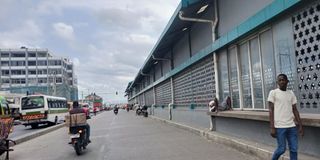
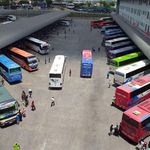
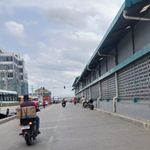
Dar es Salaam. Daladala operators along Kilwa Road have been granted partial relief as a directive barring them from dropping passengers at intermediate stops until their final destination takes effect today, Wednesday, July 1, 2026.
The relief follows permission allowing the commuter minibuses to use alternative routes that avoid interference with the Bus Rapid Transit (BRT) system, commonly known as mwendokasi.
On June 15, 2026, the Land Transport Regulatory Authority (Latra) announced that, effective July 1, 2026, commuter buses operating along Kilwa Road would no longer be allowed to operate within BRT-designated corridors.
According to Latra, passengers from Mkuranga, Toangoma and surrounding areas will terminate their journeys at the Mbagala Rangi Tatu BRT station, where they will transfer to BRT buses for onward travel to the city centre and other destinations.
The decision came three months after the BRT operator, Mofat Company, complained that it was failing to recover returns on its investment, arguing that daladala competition was forcing its buses to operate below capacity.
Speaking on Tuesday, June 30, 2026, Latra Acting Licensing Manager, Mr Ngereza Patel, told The Citizen’s sister newspaper Mwananchi that the relief followed consultations with stakeholders affected by the directive, including transport operators.
Mr Patel said operators had been allowed to access the city centre under specified conditions agreed during the meeting.
He said vehicles from Mkuranga, Mwandege, Kisemvule, Toangoma and nearby areas would, after dropping passengers at Mbagala, be permitted to continue their journeys alongside the BRT infrastructure without further passenger drop-offs until their final destinations.
Alternatively, operators may use designated routes to reach the city centre after dropping passengers at Mbagala, passing through Kilungule, Buza, Tandika and Usalama before exiting via Chang’ombe towards Gerezani or Machinga Complex.
Another option allows vehicles to exit through Toangoma, proceed via Kigamboni Bridge, pass the National Stadium area, then continue through Chang’ombe into the city centre.
“We told them there is no problem, because our objective is that once the upgraded BRT infrastructure is completed and operations are running, it must be protected so the project runs smoothly,” said Mr Patel.
He added that if operators wished to use the same infrastructure as BRT buses, they must avoid picking or dropping passengers along the corridor to reduce congestion.
Mr Patel said the alternative routes would ease congestion and improve access in areas not fully served by BRT services.
He, however, noted that use of the alternative routes was not compulsory, as operators remain free to terminate their journeys at Mbagala or continue into the city.
For daladala operating on the Mbagala–Mbezi and Mbagala–Gongolamboto routes, Mr Patel said three options were available.
These include using BRT infrastructure without dropping passengers, or taking detours via Kilungule and Buza, exiting at Jet Lumo and joining Nyerere Road.
Another option is via Kilungule–Buza, then Usalama, joining Mandela Road.
Reacting to the changes, daladala owner, Mr Ghalib Mohammed, said the proposals reflected long-standing suggestions from operators, adding that they were surprised when the initial directive required all vehicles to terminate at Mbagala or avoid the corridor entirely.
Mr Mohammed said the revised arrangement would improve service delivery and give operators greater flexibility.
Another operator, Mr Break Salim Break, said the government should allow free market operations, where those who can afford BRT use it while others rely on daladala.
“Even loans used to purchase vehicles are serviced like those of BRT investors. So why should one side be treated as more affected than the other? Let the market operate freely,” he said.
A driver, Mr Fredrick Kajuna, said they were concerned about rising fuel costs due to longer alternative routes.
Some residents welcomed the changes as a Kigamboni resident Efracia John said the decision would ease travel, as passengers previously relied on multiple vehicles to reach their destinations.
Toangoma resident, Mr Gabriel Kimondo, who works in Azizi Ally, said the changes would inconvenience those preferring direct city-centre drop-offs, adding that they would comply as government directives.
Ms Asha Abdallah said she hoped fares would remain unchanged despite the new arrangements.
Register to begin your journey to our premium contentSubscribe for full access to premium content