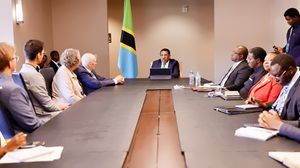
Dar es Salaam. The legality of a presidential commission of inquiry set up to probe incidents of violence during and after the 2025 General Election is being challenged at the High Court.
The commission, chaired by Court of Appeal Judge Shaban Lila, was named by President Samia Suluhu Hassan following a report from an earlier commission led by retired Chief Justice Mohamed Chande Othman, which reviewed breaches of peace during and after the October 29, 2025, General Election.
Other members of the Lila Commission include retired High Court judges Gad John Mjemmas, Awadh Mohamed Bawazir, and Aishieli Nelson Sumari, whose appointments were announced on May 18, 2026, respectively.
However, days after the commission was formed, activists Buberwa Buberwa and Joseph Mabugo moved to the High Court, challenging its legality via lawyers Mpale Mpoki and Hekima Mwasipu.
In their application lodged at the High Court, Kigoma Sub-Registry, the petitioners have named the Attorney General, the commission chair, and its members as respondents.
They seek leave to file a judicial review application to quash the President’s decision to establish the commission and appoint its members, and to bar similar future actions thereof.
Filed under a certificate of urgency, the applicants argue that unless the matter is heard quickly, the commission will continue its work despite what they describe as lacking constitutional and legal authority on their own part.
They cite events during and after the 2025 General Election, when police arrested several suspects across the country and charged them before courts.
While cases were ongoing, some suspects were later released following presidential intervention, which the State attributed to evidential considerations.
The earlier commission of inquiry, known as the Chande Commission, investigated the incidents and submitted its report on April 23, 2026.
It reported that 518 people had been killed, with others injured, warning the figure could be higher overall.
Following receipt of the report, President Samia announced the formation of the new commission to further investigate alleged criminal conduct linked to the violence thereof.
However, the applicants contend that establishing a second commission after a previous one had completed its work and submitted its report is unlawful, discriminatory, and contrary to Article 13(1) of the Constitution.
They further contend that under the Commission of Inquiry Act, Chapter 32 (R.E. 2023), the President lacks authority to institute a fresh inquiry once a previous commission has concluded and submitted its report.
According to their affidavit, once a report is complete and self-sufficient, individuals implicated should instead be subjected to criminal proceedings under established legal processes.
The applicants also argue that the Director of Public Prosecutions (DPP) has exclusive constitutional authority to institute and supervise criminal proceedings, and that this mandate cannot be overridden through the creation of another investigative commission.
They maintain that the Public Prosecutions Service Act, Chapter 430 (R.E. 2023), vests the DPP with sole responsibility for criminal prosecutions, except in limited circumstances involving military courts.
The case is scheduled for a preliminary hearing on Monday, June 1, before Judge Augustine Rwizile at the High Court.
The court will first determine whether the applicants should be granted leave to proceed with substantive judicial review proceedings.
At this stage, the applicants must demonstrate that the case raises arguable legal issues, that they have sufficient interest in the matter, and that the application has been filed within a reasonable time.
Register to begin your journey to our premium contentSubscribe for full access to premium content