Arusha . Tanzania has signalled a shift from investment dialogue to implementation after unveiling a $6.35 billion pipeline of investment-ready projects at the Tanzania Investment Summit 2026, as the government seeks to convert proposals into financing agreements under its Vision 2050 agenda.
The two-day summit has brought together senior government officials, development finance institutions, private investors and development partners to accelerate investment decisions and mobilise capital into priority sectors of the economy.
Organised under the Tanzania Investment Growth Facility (TIGF), the summit is a joint initiative of the Economic and Social Research Foundation (ESRF) and the United Nations Development Programme (UNDP), in partnership with the Tanzania Investment and Special Economic Zones Authority (TISEZA) and the Zanzibar Investment Promotion Authority.
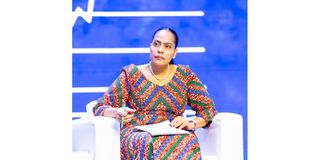
Opening the summit today, the Minister for Information, Communication and Technology, Angellah Kairuki, said Tanzania was increasingly turning to alternative financing models, with more than 70 per cent of funding for national development priorities expected to come from the private sector.
“Alternative financing is no longer optional. We are moving towards blended finance, public-private partnerships and stronger private sector participation,” she said.
Ms Kairuki said the government has prepared 60 investment-ready public projects worth $6.35 billion, up from $2.85 billion at an earlier stage.
She, however, did not provide a breakdown or list of the individual projects, saying the focus of the summit was to move discussions from dialogue to decisions and from commitments to implementation.
The UNDP Resident Representative in Tanzania, Shigeki Komatsubara, said the Investment Growth Facility was designed to bridge the gap between national priorities and global capital by de-risking projects and structuring them for investment.
“Through this platform, we are turning national priorities into bankable investments and connecting them directly to investors so that pipelines become real deals,” he said.
ESRF Executive Director Prof Fortunata Makene said the summit provided a platform for government, investors and development partners to align efforts aimed at translating development ambitions into tangible outcomes, noting that sustainable investment depended on structured partnerships and continued engagement among stakeholders.
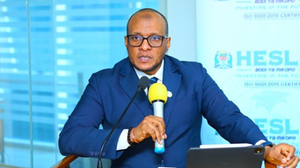
Speaking during a high-level panel discussion on strengthening Tanzania’s investment ecosystem, TISEZA Director of Investment Promotion George Mukono said ongoing reforms were aimed at streamlining investment procedures through a one-stop facilitation system and reducing regulatory bottlenecks that had previously delayed project implementation.
He said the government was also addressing challenges related to land access, licensing timelines and overlapping regulatory inspections in a bid to improve coordination among institutions and accelerate project execution.
The Principal Secretary in Zanzibar’s Ministry of Blue Economy and Fisheries, Capt Hamad B. Hamad, said the Isles were advancing a pipeline of large-scale infrastructure projects, including port developments intended to position Zanzibar as a regional logistics hub. However, he noted that several projects remained unbankable despite the completion of feasibility studies.
Permanent Secretary in the President’s Office (Planning and Investment), Dr Fred Msemwa, said Tanzania was targeting a $1 trillion economy by 2050, with the private sector expected to contribute more than half of the country’s gross domestic product and up to 70 per cent of investment financing.
He said reforms were focused on improving policy predictability, strengthening institutional coordination and creating a more efficient investment environment to support long-term economic transformation.
Ms Kairuki said the summit marked a new phase in Tanzania’s investment strategy, with greater emphasis on converting opportunities into signed agreements and measurable investments.
“We are not here for dialogue. We are here for decisions, partnerships and investments,” she said.