With land taken, residents are left paying the price after failure of major fish project

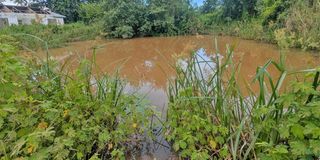
A section of the site at Nyengendi in Mtama District, Lindi Region, that was earmarked for the production of fingerlings and provision of extension services in the area. PHOTO | CORRESPONDENT

Lindi/Mtwara. Despite repeated government assurances over the years regarding the development of aquaculture centres, the reality on the ground, particularly at the Nyengedi project in Mtama District, Lindi Region, tells a very different story.

Presenting the Ministry of Livestock and Fisheries’ revenue and expenditure estimates for the 2021/22 financial year in Parliament, the then docket’s minister, Mr Mashimba Ndaki, announced that the government had embarked on the rehabilitation, expansion and construction of aquaculture development centres, including Nyengedi.
“Mr Speaker, the Ministry has continued with the rehabilitation, expansion and construction of aquaculture development centres to expand extension services and fish fingerling production.

The centres at Kingolwira, Mwamapuli, Nyengedi and Ruhila have commenced rehabilitation and expansion works for Sh802.3 million,” said Mr Ndaki.

Three years later, during the 2024/25 financial year, the then Minister for Livestock and Fisheries, Mr Abdallah Ulega, reaffirmed the government’s commitment to strengthening the facilities.

“Mr Speaker, during 2024/25, the Ministry will continue improving extension services and fingerling production through the management and operation of five aquaculture centres, Ruhila in Ruvuma, Kingolwira in Morogoro, Mwamapuli in Tabora, Machui in Tanga and Nyengedi in Lindi, to enable them to produce three million fingerlings,” Mr Ulega told Parliament.

However, more than five years after the initial pledge, conditions at Nyengedi paint a stark contrast between official commitments and implementation.

A visit by The Citizen to the site found an abandoned facility, with two dilapidated ponds engulfed by weeds and overgrown grass. The area appears neglected and poses potential safety risks.

At the investment site, estimated to cover more than 10 acres, visitors are greeted not by signs of progress but by silence, broken only by wind rustling through thick vegetation that has overtaken almost every corner of the property.

Residents warn that the area is home to highly venomous snakes.

The scene reflects total abandonment. Little suggests the site was once earmarked to become a major aquaculture investment centre and modern fish hatchery, repeatedly highlighted in government plans.

Amid the overgrown surroundings stands a deteriorating building. Sections of the roof have been damaged, while several iron sheets, doors and windows have been removed.

With no security in place, the structure has been left vulnerable to vandalism. Its faded walls are now covered with graffiti and other markings.

Residents say the area has become unsafe, particularly after dark or for those visiting alone.

They allege it has turned into a hideout for criminal activity involving groups of young people seeking alternative sources of income.

According to residents, the building was constructed to coordinate project operations.

Today, it stands as a symbol of unfulfilled promises, with no activity, no security and no indication of ongoing work.

Nearby, two ponds excavated during the project’s initial phase have become stagnant pools surrounded by thick vegetation.

There is no sign of production or investment activity. It appears work stopped abruptly and never resumed.

Residents say even the security guard assigned to protect the facility eventually left after going for long periods without pay.

The contractor responsible for implementing the project also abandoned the site without explanation.

Today, Nyengedi is no longer viewed as a beacon of economic opportunity.

Instead, it stands as a reminder of a stalled project that left behind shattered expectations and unanswered questions.

Given its current condition, residents find it difficult to believe there was ever a serious plan to transform the area through government investment. What remains is a shadow of what they were promised.

The Citizen investigation found no evidence of development corresponding to either the pledges made or the funds reportedly allocated.

Meanwhile, residents who surrendered their land continue to wait for compensation.

Information obtained in Lindi Region indicates that compensation assessments for affected residents required about Sh53 million.

However, only Sh21 million was made available, slowing implementation and leaving some residents unpaid to this day.

Based on the Sh802.3 million allocation announced by Mr Ndaki for four projects, each project would have received an average of more than Sh200 million.

Residents argue that such funding would have been sufficient to settle compensation claims while still facilitating development at Nyengedi.

According to government figures, the fisheries sector currently contributes about eight percent to the national gross domestic product (GDP), with a target of increasing that contribution to 10 percent by 2030.

To realise that goal, the Ministry of Livestock and Fisheries has developed strategies to promote aquaculture, including the construction and rehabilitation of strategic centres such as Nyengedi in Lindi Region and Ruvula in Mtwara Region.

The centres are regarded as key pillars in advancing the Blue Economy agenda, which seeks to ensure the sustainable use of aquatic resources to create employment, increase production and improve livelihoods.

The Nyengedi project

Located about 65 kilometres from Lindi Municipality in southern Tanzania, the Nyengedi Centre was expected to become a major hub for fish fingerling production and extension services across the southern zone while creating employment opportunities. Instead, it remains mired in implementation challenges that continue to raise concerns about its future.

In Nyengedi Village, within Nyengedi Ward in Mtama District, what was once viewed as a transformative investment project has become a story of frustration, uncertainty and prolonged waiting.

The proposed fish hatchery project, alongside plans to rehabilitate and expand the Nyengedi Aquaculture Development Centre, was initially welcomed as a potential catalyst for economic growth.

It was expected to support fingerling production, promote freshwater fish farming and create jobs for young people across southern Tanzania.

More than a decade later, however, the project remains stalled without satisfactory explanations, while residents who surrendered their land have yet to receive full compensation.

For many residents, what began as a vision of development has instead become a source of hardship.

Among those affected is Mr Ismail Mituka of Nyandeni Ward, who recalls surrendering his land in good faith after being assured the project would bring development and benefit local communities.

How it started

According to Mr Mituka, the project dates back to the early 2000s, when a foreign investor and a local partner arrived in the area seeking land for a fish-farming venture.

“They told us it was a major project that would bring development, create jobs and improve livelihoods. We voluntarily agreed to surrender our land,” he says.

He explains that the investor initially intended to compensate residents directly.

However, the process was later halted by government authorities and transferred to the Mtama District Council. Residents say that marked the beginning of the project’s troubles.

Following an assessment, Mr Mituka was offered compensation that he believed was far below the value of his property.

“I had 1.4 acres planted with coconut trees, oil palms and other crops, but I was told I would receive only Sh210,000. That was completely unfair,” he says.

He rejected the payment, although some residents accepted it for fear of losing everything.

Those who declined compensation later returned to their land and resumed farming for a time. That situation proved temporary.

Several years later, the government returned with plans to establish a regional aquaculture development centre through the Ministry of Livestock and Fisheries.

Residents were again asked to surrender their land, this time with assurances that full compensation would be paid.

“They told us this was a government project and that funds had already been secured. We were only asked to wait for the process to be completed,” says Mr Mituka.

According to him, a fresh assessment placed compensation requirements at about Sh53 million. However, only Sh21 million was secured, causing delays from the outset.

Despite the funding gap, construction commenced with the excavation of two ponds and the development of limited infrastructure.

To be continued tomorrow