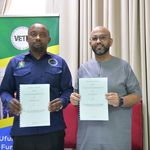
Through her leadership, vulnerable girls and young mothers who once faced limited futures are now accessing education, safe shelter, and economic opportunities that are helping them rebuild their lives with dignity and independence
Dar es Salaam. Girls in pastoralist communities in Monduli are being pulled back into classrooms, rescued from early marriages and given a second chance at life thanks to the work of Mesha Pius Singolyo, Director of Partnership for Women Development (PWD) Tanzania.
Through her leadership, vulnerable girls and young mothers who once faced limited futures are now accessing education, safe shelter and economic opportunities that are helping them rebuild their lives with dignity and independence.
Based in Monduli District, Arusha, PWD Tanzania has grown into a fast-rising force dedicated to empowering girls and young mothers through education and economic rights. At the centre of it all is Mesha, a determined advocate whose leadership blends lived experience, academic depth and grassroots action. She oversees programmes that stretch from rural villages to national advocacy platforms, ensuring that the voices of marginalised girls are not only heard but acted upon.
Her journey into advocacy did not begin in boardrooms or policy spaces. It started in her childhood, shaped by what she witnessed around her. Growing up in a pastoralist community, she saw firsthand how girls and women endured inequality, silence and violence often within their own homes.
“It is my personal life and the experiences I have witnessed silence, inequality, poverty, oppressive traditions and negative attitudes toward girls and women that inspired me,” she says.
Those early observations became the foundation of a lifelong commitment. For more than a decade, Mesha has worked as a social worker and community organiser, supporting vulnerable women, widows and girls. Her work has been deeply rooted in the realities of rural life, where harmful practices and limited access to education continue to hinder progress.
Her philosophy is captured in a simple but powerful theme: “Give to Gain, Elevate Her Rise.” It reflects her belief that investing in women and girls creates ripple effects that uplift entire communities.
Growing up in pastoralist settings shaped her understanding of how deeply cultural norms influence opportunities for girls. Rather than rejecting these traditions outright, she seeks to transform them from within by empowering women economically and educationally.
“When women and girls access education and achieve economic empowerment, they become independent in all areas of life. When this happens, children and the wider community become safer,” she explains.
Under her leadership, PWD Tanzania has recorded notable achievements. One of the most significant shifts has been in community attitudes encouraging men and women to work together in development initiatives and challenging long-held beliefs that setbacks such as teenage pregnancy mark the end of a girl’s future.
“We are changing mindsets. A girl’s dream should not end because of one mistake or circumstance,” she says.
Yet the path has not been easy. One of the biggest challenges she faces is the culture of silence surrounding violence against women and girls. Many cases go unreported and even when they are, lack of evidence often prevents justice from being served.
“Community silence leads to lack of cooperation. Without that, many cases cannot be concluded,” she notes.
Harmful cultural practices also remain a persistent barrier, particularly in rural areas where awareness of rights is limited. Mesha points out that many women simply do not know where to report abuse or how to seek help.
Education, both formal and informal, has been a powerful tool in her work. With a Bachelor’s degree in Education, a Master’s in Gender and Development Studies from the University of Dar es Salaam and a Master’s in Leadership and Education Management from Arusha University, she has built a strong academic foundation to support her advocacy. Currently pursuing a Master’s in Project Management at the Open University of Tanzania, she continues to refine her approach.
“My academic journey has helped me understand the root causes of the challenges facing my community and develop solutions to address them,” she says.
One of her key priorities is ensuring that girls who drop out of school are not left behind. Through PWD Tanzania, she focuses on rebuilding their confidence and providing practical support from school supplies to vocational training opportunities. The organisation is currently constructing a training college aimed at equipping young mothers and girls with hands-on skills for employment and entrepreneurship.
“We help them understand it is not the end of their dreams,” she says. Her work also extends to widows and women in vulnerable situations. Through targeted programmes, including microfinance initiatives and entrepreneurship training, she helps women rebuild their lives after loss or hardship. The GFW initiative, for example, provides grants that enable women to start small businesses, while ongoing mentorship ensures sustainability.
The impact has been significant not only economically but socially. “It has reduced violence and increased respect for women in society. Relationships between men and women are improving and patriarchy is slowly being challenged,” she explains.
Savings groups such as VICOBA have become a cornerstone of this transformation, allowing women to build capital, support their families and invest in their children’s education. As economic independence grows, so does the ability of women to resist harmful practices such as child marriage.
Beyond economic empowerment, Mesha is also deeply involved in the fight against female genital mutilation (FGM) and gender-based violence. She is spearheading the construction of a safe house for girls escaping early marriage, abuse and other forms of violence. The facility will not only provide shelter but also offer education and skills training.
“It brings hope to girls by giving them a second chance to achieve their dreams and become independent,” she says.
However, even this initiative comes with challenges. Community resistance, fear of hosting pregnant girls and the risk of girls being forced back into early marriages after returning home remain significant obstacles.
“Many girls are returned home and forced into marriage, which kills their dreams,” she adds.
Despite these hurdles, Mesha remains focused on long-term change. She believes that expanding entrepreneurship education for rural women and girls is key to unlocking broader economic freedom and reducing dependency.
Her vision goes beyond individual success stories. She is working toward building systems structures that will continue to promote equality long after her direct involvement.
“I want to leave behind a strong system that promotes equality for women and girls,” she says.
For Ms Mesha Pius Singolyo, the fight is far from over. But every girl who returns to school, every widow who starts a business and every community that begins to question harmful norms is a step forward. In the quiet resilience of her work lies a powerful truth: when you elevate a girl, you transform a generation.