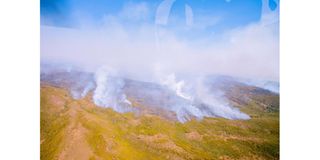
Dar es Salaam. A fire that broke out in the Kikerelwa area of Kilimanjaro National Park on Thursday, September 3, 2026, has been contained by more than 90 percent, with firefighting teams working to put out the remaining flames, Minister for Natural Resources and Tourism, Dr Ashatu Kijaji, has said.
The fire broke out at around 3:30 pm near the park’s boundary with Rombo District in Kilimanjaro Region, prompting the Tanzania National Parks Authority (Tanapa) to deploy a firefighting team from its Conservation Force.
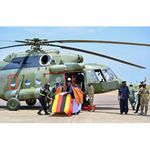
The operation has involved Tanapa, the Tanzania Forest Services Agency (TFS), the Fire and Rescue Force, tourism companies and residents of neighbouring villages, whilst helicopters have been used to support teams fighting the fire at higher elevations.
Minister for Natural Resources and Tourism, Dr Ashatu Kijaji
Dr Kijaji made the remarks on Saturday, September 5, 2026, after inspecting the affected area, saying the changing wind direction had also helped firefighters contain the blaze.
“As of this morning, we had managed to contain more than 90 percent of the fire, with the remaining 10 percent still being tackled,” she said.
She said authorities expected to contain up to 99 percent of the fire by the end of the day, with the remaining challenge involving burning tree stumps, particularly in valleys.
“We are first fighting the fire that is spreading across the remaining 10 percent so that we can eventually return to deal with the tree stumps, particularly in the valleys where the fire has moved,” said Dr Kijaji.
She said the cause of the fire had not yet been established as authorities were prioritising efforts to extinguish it.
“Once we have extinguished the fire 100 percent, we will conduct an assessment to establish what caused it and determine the extent of the damage,” she said.
Dr Kijaji said human activity could not be ruled out because the fire started higher up the mountain during the dry season, when vegetation is dry.
“It is possible that it could have been caused by people who were there taking tourists up the mountain, or something else could have happened. As you know, this is the dry season and the vegetation is dry, so anything could have happened,” she said.
She said the government had prepared for fires during the dry season by positioning trained firefighting teams near areas where such incidents commonly occur.
Dr Kijaji also said helicopters had been deployed to assist conservation officers and that the government had directed Tanapa to acquire its own helicopter.
“We have started the procurement process, and once Tanapa gets its own helicopter, it will be much easier to detect such incidents early, or as soon as signs of smoke begin to appear, so that we can extinguish them,” she said.
Despite the fire, Dr Kijaji said tourism activities were continuing normally and no human casualties had been reported.
“At the moment, our tourists are safe. The tour guides are safe. Our officers and rangers are safe. We have not recorded any harm to human beings,” she said.
Tanapa Assistant Conservation Commissioner for Corporate Communication, Ms Catherine Mbena, thanked conservation forces, the Fire and Rescue Force, tourism companies and residents of neighbouring villages for supporting the operation.
“We would like to thank all stakeholders who have come forward to join us in ensuring that we contain this fire,” said Ms Mbena.
She also urged journalists to provide accurate information about the incident.
“My appeal is that we should continue providing accurate information for the benefit of our country because we depend heavily on these natural resources and we have no other country. This is our country, and we should continue protecting it jealously,” she said.
Tanapa Conservation Commissioner, Mr Masana Mwishawa, said the firefighting operation had entered its third day and was difficult because of the mountainous terrain.
“Firefighting in the mountains is different from fighting fires in savannah areas. There are gorges and steep slopes, which make the operation difficult,” said Mr Mwishawa.
He said the fire could affect vegetation, insects, smaller animals, soil and water sources, although larger animals could move away from approaching fire.
“Fire cannot start by itself; it is started by human beings, but we are the ones who suffer the consequences,” he said.
Mr Mwishawa said tourism had not been affected, with tourists continuing to use the Rongai route because the fire was far from it.
“Tourists are continuing to climb the mountain and camping activities are continuing. Tourism is proceeding as normal,” he said.