Dar es Salaam. The third defence witness in the treason case facing the Chadema National Chairman, Mr Tundu Lissu, has commenced the second part of his evidence, answering cross-examination questions from prosecutors regarding various matters he stated in his evidence-in-chief.
The witness, who is Chadema's Deputy Secretary-General for Mainland Tanzania, Mr Amani Golugwa, as cross-examined on, amongst other matters, his capability to interpret international observer reports on the 2025 General Election, which he referenced during his evidence concerning irregularities that occurred.
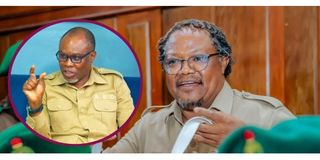
The case is being heard by a three-judge bench led by Mr Justice Dunstan Ndunguru, assisted by Mr Justice James Karayemaha and Mr Justice Ferdinand Kiwonde, and is currently at the defence stage.
Mr Lissu, who is also an advocate, faces a treason charge alleging he committed the offence of threatening the government contrary to Section 39(2)(d) of the Penal Code (2023 Edition).
In his evidence-in-chief, Mr Golugwa explained, amongst other matters, various irregularities he alleged existed in elections, ranging from the 2019 Local Government Elections to the 2025 General Election.
In his account, the witness additionally referenced international observer reports regarding the 2025 General Election and how they outlined various irregularities.
Furthermore, Mr Golugwa denied that words uttered by Mr Lissu constituted a treason offence, whilst providing definitions for certain words used by Mr Lissu, including the word “kukinukisha”, stating it involves releasing a pleasant fragrance or perfume.
Following those explanations and others provided during his evidence-in-chief, prosecutors commenced cross-examining him, and part of the examination proceeded as follows:
State Counsel: Witness, is it true that in 2019 you did not contest any position in the local government elections?
Witness: That is true.
State Counsel: Is it true that you neither filled in nor submitted forms to relevant authorities?
Witness: That is true.
State Counsel: Is it true these grievances you stated here in court were obtained from other sources?
Witness: That is not true.
State Counsel: When a person has election grievances, where should they submit them?
Witness: I do not recall.
State Counsel: Do you wish to tell the court that you have memory issues?
Witness: No.
State Counsel: Answer the question.
Witness: I know. A person should appeal to the appeals committee.
State Counsel: How many appeals did you have?
Witness: Many.
State Counsel: Did you submit your grievances to court?
Witness: No.
State Counsel: So you were satisfied with decisions of the appeals committee, which is why you saw no need to bring your grievances to court?
Witness: We did not submit them.
State Counsel: In the 2020 election, is it true you did not contest any position and filled in no forms for parliamentary or ward councillor positions to apply to contest?
Witness: That is true.
State Counsel: You will agree with me that information regarding candidates is information you obtained from other people?
Witness: That is not true.
State Counsel: If not true, show us, were any of your forms rejected?
Witness: I was not a candidate, but I participated in supervising my candidates.
State Counsel: Tell us, regarding your parliamentary grievances in the 2020 election, how many grievances did you submit to the High Court that were deemed to have merit?
Witness: I cannot recall.
State Counsel: Since you do not recall, what matter can you recall regarding any argument presented in court?
Witness: I do not recall.
State Counsel: Witness, you will agree with me that arguments you submitted in court were never proven?
Witness: That is not true.
State Counsel: Since you complained about ethical issues, tell us how many wards had your grievances proved correct?
Witness: I do not recall.
State Counsel: You will agree with me that your grievances were not proven by the court?
Witness: I disagree with you because they remain before the electoral commission.
State Counsel: How many cases did you submit to District Courts and Resident Magistrate Courts (councillor proceedings)?
Witness: I submitted none.
State Counsel: So you avoided the courts?
Witness: No.
State Counsel: Is it true that in 2024 you did not contest any position nor fill in a form to contest any position in that election?
Witness: That is true.
State Counsel: Is it correct that since you did not contest, information on your candidates' grievances came from the candidates?
Witness: It came from the candidates.
State Counsel: How many proceedings in the appeals committee were found to have merit?
Witness: All grievances were dismissed.
State Counsel: Witness, in your evidence you described the general election observer report; tell the judges which year those reports are from.
Witness: All those I described are from last year.
State Counsel: Tell us, are you the custodian of those reports?
Witness: No.
State Counsel: Did you produce them here in court?
Witness: I did not produce them.
State Counsel: In which language are those reports written?
Witness: English.
State Counsel: So you will agree with me that you are not the author of those reports?
Witness: Yes, I am not the author of those reports.
State Counsel: Is it true you were never part of anyone called upon to interpret those reports?
Witness: I was never called.
State Counsel: You will agree with me that you explained that report in court in Swahili while it was written in English?
Witness: That is true.
State Counsel: In Form Four, what mark did you achieve in English?
Witness: I do not recall.
State Counsel: So I would be correct in saying you have a memory issue?
Witness: Until I refresh my memory.
State Counsel: Witness, would I be correct in saying translation of something can affect the content?
Witness: That is not true; it depends.
State Counsel: Witness, are you aware report content can alter translation?
Witness: It depends.
State Counsel: So you stated for Form Four you do not recall what grade you got in English, yet you now translate international reports for us in court?
Witness: I stated for Form Four I received a C or D.
State Counsel: Now witness, does achieving a grade C or D qualify you to translate international reports for us in court?
Witness: Yes.
State Counsel: The Thabo Mbeki report you mentioned in your evidence, what was its title? So we know if you translated accurately or not, in English however.
Witness: I do not recall.
State Counsel: Coming to the SADC report, what was its title in English?
Witness: I do not recall.
State Counsel: Were you able to follow the East African Community 2025 Election Observer report as Deputy Secretary-General?
Witness: I did not follow it.
State Counsel: Regarding Justice Othman Chande's report, now as Golugwa, do you have confidence in this report?
Witness: I have no confidence in them.
State Counsel: So even what you explained yesterday in your evidence, you have no confidence in it?
Witness: That report I have no confidence in, but what I said I have confidence in.
State Counsel: So reasons you stated are true? Thus you have confidence in Justice Chande's report?
Witness: In parts of that report I have confidence, but the entire report I have no confidence in.
State Counsel: Yesterday you discussed the meaning of "kukinukisha" as being like perfume or fragrance; now in the context of your meeting (Chadema internal meeting of April 3, 2026), was an issue or topic of fragrance or perfume allowed to be discussed in an aspirants' meeting?
Witness: It was not present.
The witness continues to be cross-examined by other advocates.
Register to begin your journey to our premium contentSubscribe for full access to premium content