Over 2,500 women screened for cancer in Arusha outreach campaign
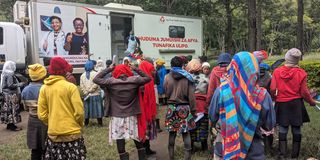
Women from Oldonyosambu Ward in Arusha District Council wait to undergo breast and cervical cancer screening during an ongoing outreach programme conducted on Saturday, May 9, 2026 by Aga Khan Health Services East Africa in partnership with other stakeholders.
Health experts say early screening services are helping detect breast and cervical cancer signs before they advance to dangerous stages.
Arusha. More than 2,500 women from remote areas of Arusha District Council have benefited from free treatment and early screening for breast and cervical cancer, as health experts call for intensified awareness campaigns to encourage more women to seek screening services.
The women were reached through a cancer screening campaign launched on May 4, 2026 under the East Africa Cross-Border Women’s Cancer Initiative.
The regional project is being implemented through a partnership involving Aga Khan Health Services East Africa in Kenya and Tanzania, the Aga Khan Foundation, Aga Khan University and France’s Curie Research Institute. The initiative is funded by the French Development Agency (AFD), the Gates Foundation and the Aga Khan Development Network (AKDN).
Speaking on Saturday, May 9, 2026, the project coordinator, Dr Sarah Maongezi, said the campaign had surpassed its initial target of screening 2,200 women after reaching 2,519 beneficiaries within four days.
Of those screened, 329 women underwent detailed breast and cervical cancer examinations, while more than 15 women were found with breast abnormalities requiring further medical follow-up.
“We cannot immediately conclude that these are cancer cases, but the women have been referred to government hospitals including Mount Meru and KCMC for further investigation,” said Dr Sarah.
She added that five women were found with early signs of cervical cancer, with some receiving treatment through mobile clinics deployed in various parts of the district.
According to Dr Sarah, three women were diagnosed with cancer and referred to government hospitals for specialised treatment.
Despite the progress made, she said limited public awareness remains a major challenge in the fight against cancer.
“There is still a huge need for education. In some areas, mobilisers have already conducted awareness sessions, but many women still do not turn up for screening. We would like to see more women taking advantage of these services,” she said.
She noted that after the outreach campaign ends, the programme will continue by building the capacity of nurses and healthcare workers in Arusha Region to ensure sustainability of screening services.
“Our goal is to leave behind a sustainable system that will continue supporting women even after the project ends,” she added.
The programme is also providing breast cancer education and screening awareness to secondary school students to equip them with self-examination skills and encourage them to share the information with their families.
“We are focusing on underserved communities where many people struggle to access healthcare services and reliable information about cancer,” said Dr Sarah.
Earlier, Arusha District Council reproductive and child health services coordinator, Butolwa Bujiku, said the outreach initiative had helped bring essential healthcare services directly to communities.
He said many cancer cases are often detected at advanced stages due to the absence of clear symptoms during the early stages of the disease.
“Our role is to identify patients early before the disease becomes severe. Once early signs are detected, treatment can begin immediately,” he said.
Bujiku said outreach teams had visited markets, secondary schools and rural communities including Bangata, Oljoro, Musa, Oldonyosambu, Sambasha, Lokii and Ngaramtoni Market.
The teams also visited secondary schools such as Bangata, Nduruma, Olturmet, Ilkiding’a and Sambasha, with a target of reaching 10 schools.
“Many women only visit hospitals when they become seriously ill. That is why we decided to take these services directly to communities because turnout remains low despite ongoing public announcements,” he said.
He added that Arusha District Council currently has 70 reproductive and child health centres, of which 41 are equipped to provide breast and cervical cancer screening services.
One of the beneficiaries, Ms Neema Mollel from Sanawari, encouraged women to overcome fear associated with cancer screening.
“I was screened and found healthy. Women should not fear these tests because they are painless and help detect health problems early,” she said.
She urged women, especially those in remote areas, to make use of free mobile clinic services.
“Going to hospital for screening can be expensive, so we should fully utilise these free services brought closer to our communities,” she said.