Playing with fire: When quest for profit comes before safety
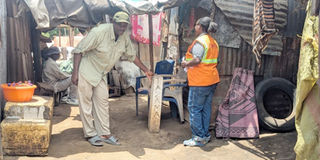
Residents of Mbagala Zakheim in Dar es Salaam conduct their daily business activities over the Tazama oil pipeline, with high-voltage electricity cables hanging overhead. Authorities continue to educate traders about the dangers while seeking alternative trading spaces. PHOTO | TUZO MAPUNDA
Dar es Salaam. At first glance, some areas of Dar es Salaam appear normal for daily activities. But beneath the bustle lies a hidden danger that could cause serious harm if safety rules are ignored.
Mbagala Zakheim, Gongo la Mboto and New Station to Pugu, in Temeke and Ilala districts, are densely populated and host vibrant economic activity.
Small-scale traders operate daily, attracting large numbers of customers seeking affordable goods. Food vendors, mechanics and other informal businesses thrive here.
However, beneath the surface and above these areas are sensitive infrastructures with significant risks.
Pipeline and power hazards
The Tazama oil pipeline jointly operated by Tanzania and Zambia runs underground, transporting oil from Dar es Salaam to Ndola in Zambia.
Built in 1968, the pipeline spans over 1,700 kilometres with a 24-inch diameter, pumping stations and storage depots.
While vital for energy security and reducing transport costs, any damage or interference can trigger a major disaster.
Above ground, high-voltage power lines of the National Grid run through the same areas.
The combination of underground oil pipelines and overhead electricity increases the danger: a leak or cable fault can result in severe injuries, fatalities and property loss.
Despite warning signs, many citizens continue their activities in these areas, prioritising income over safety.
Life on the pipeline
A food vendor selling buns and ginger tea in Mbagala Zakheim, Ms Asha Munira, operates directly above the Tazama pipeline, with high-voltage cables overhead. She knows the risks but has no alternative location.
“That is where my livelihood is. The area has many customers and I earn daily. Even though we know about the pipe and power lines, what can we do?” she says.
Nearby, fruit vendor Juma Sedeki moves under tall pylons with fruit-laden carts. “Hunger does not wait. I serve customers morning, afternoon and night. Human interaction is high, so I keep going,” he says.
Mama Subira, who runs a local brew bar, shares a similar view. “The danger is real, but where would I go? Everywhere is full. Here, I earn a living and educate my three children,” she says.
A bodaboda driver at Gongo la Mboto New Station, Mr Abdul Razaki, says: “This area is busy. People come for goods and transport. I haven’t seen any dangerous incident. Even if danger occurs, it’s God’s plan. Death comes in many ways—road accidents, fire, or air accidents. Everyone has a destiny.”
Other traders, including fishmonger Abdallah Sebo and hall owner Richard Steven, admit awareness of the risk but continue operating due to the lack of alternatives.
A new trader, Ms Mariam Amis, says she was unaware of the hazard. “I bought this stall and haven’t been educated about the danger,” she says.
Local leadership perspective
Mpakani Local Government Chairperson Jabiri Mohamed says authorities recognise the risk but struggle to remove people who rely on the area for income.
“We provide education so citizens know the danger, but evicting them could cause panic,” he says.
Gongo la Mboto Chairperson Seleman Mwaruko stresses that traders on the Tazama pipeline reserve are encroachers.
“The law is clear: 15 metres on each side of the pipe is prohibited for any activity. Education continues, but defiance remains,” he says.
Encroachment
Tazama Tanzania Regional Operations Manager Saimon Salu says Zakheim, Gongo la Mboto New Station and Pugu fall within the pipeline reserve.
“What is happening is encroachment. Urban growth has made enforcement harder,” he says.
Despite education campaigns, some local leaders and politicians have pressured for temporary access roads across the reserve. “We once faced conflicts with councillors over activities in the pipeline area. They remove activities today and they return tomorrow,” he says.
Mr Salu warns of the risks. “The pipeline operates at high pressure—over five times that of a car tyre. A burst could cause many deaths and destroy property. Oil may spill into homes and economic loss is significant,” he says.
He adds that encroachment has increased daily, with some areas even hosting markets. “We have not conducted a full census of encroachers, but their numbers grow as others operate without disturbance,” he says.
Government’s response
Energy Ministry Permanent Secretary James Mataragio says inspections will identify the situation and appropriate steps will follow. “Tazama inspectors will assess the areas and recommend solutions,” he says.
Dar es Salaam Regional Administrative Secretary (RAS) Abdul Mhite confirmed he is aware and will follow up to address the challenge. Other local leaders have said they are preparing alternative locations for traders.
Temeke District Commissioner Sixtus Mapunda says plans are underway to build multi-storey markets in Mbagala to relocate traders safely. Dar es Salaam City Mayor Nurdin Bilal “Shetta” also said authorities are identifying suitable sites to ensure safety.
Register to begin your journey to our premium contentSubscribe for full access to premium content