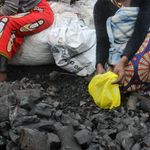
Dar/Shinyanga. Every evening in Tinde, Samuye, Ishina Bulaindi and neighbouring villages in Shinyanga Region, long convoys of bicycles and motorcycles loaded with sacks of charcoal move along narrow bush paths cutting through farms and woodland.
Transporters avoid main roads where Tanzania Forest Services (TFS) checkpoints are stationed, instead using informal village tracks locally known as “njia za panya” (rat paths), which have become an alternative transport network.

Residents describe the flow as organised, predictable and largely uninterrupted despite patrols.
Demand from Shinyanga Municipality and surrounding urban centres continues to fuel the movement, forming part of a wider regional charcoal supply chain serving households and small businesses.
The trade is sustained by seasonal dry conditions that make rural forest access easier and by informal networks linking producers, transporters and traders.
Under the Forest Act (Cap. 323 R.E. 2023), commercial harvesting requires permits, while transport of illegally harvested forest products is prohibited.
Regulations require Transit Passes to be verified at checkpoints under TFS and that offenders risk fines, seizure of equipment and prosecution under forest legislation.
Enforcement duties rest with forest officers mandated to inspect consignments and confiscate illegal products.
TFS operations also include roadside patrols and intelligence gathering in hotspot areas.
In practice, however, field observations suggest that significant movement occurs outside this framework as many consignments reportedly change routes repeatedly to avoid detection points.
Transporters say avoiding checkpoints is a deliberate strategy. “We avoid checkpoints because, without documents, you are stopped and get comprehensive questioning,” said Mr Dotto Leonard (not his real name).
“We use bush routes and know all stations,” he added, as transporters say coordination is essential for navigating rough terrain and avoiding interception.
Bicycles carry up to four sacks while motorcycles move in groups, feeding urban demand.
Accidents are also common on poorly maintained bush paths, especially at night, as night convoys rely on scouts who monitor road conditions ahead.
Movements begin in the evening when visibility drops and patrols are fewer.
Occasionally, enforcement officers chase transporters and confiscate bicycles, motorcycles and charcoal.
Officers face challenges of evasion and occasional hostility during operations.
Despite risks, many remain in the trade due to limited livelihood options and difficult access to permits.
Many young people depend on the charcoal trade as a primary source of income due to limited employment opportunities in rural areas.
Charcoal is aggregated at village points before being transported to urban markets.
Some middlemen finance production and control supply chains linking rural producers to urban traders.
At Usanda gate, traders pay about Sh4,000 per sack to proceed to Shinyanga.
Leaders say the arrangement creates an appearance of regulation but leaves movement outside proper verification.
Village leaders say they are rarely involved in enforcement coordination and the lack of inclusion weakens cooperation mechanisms.
Communities say they receive no benefit despite handling large volumes of charcoal.
Village authorities say limited resources hinder effective monitoring of forest product movement.
Deforestation is visible with declining tree cover, kiln sites and expanding bare land.
Experts warn that continued tree loss may worsen soil erosion and biodiversity decline.
Smoke from charcoal kilns also contributes to local air pollution, affecting nearby settlements, with health workers linking exposure to respiratory problems in nearby communities.
“We used to have many trees, but now the heat is rising and the rainfall pattern is changing,” said Ms Rebeka Hamduni, adding that trees are disappearing because charcoal has become the main business, affecting the soil.
TFS says it conducts checkpoints and uses digital systems to verify consignments. Digital verification systems include scanning of Transit Pass documents at checkpoints.
Despite measures, violations continue across the harvesting and transport chain as Shinyanga is also a transit corridor, complicating enforcement.
Officers inspect documents, verify Transit Passes and confiscate illegal consignments.
Authorities say success depends on cooperation from communities and stakeholders.
As informal village routes continue to undermine checkpoint enforcement, authorities continue awareness campaigns, but the challenge remains structural.
Cross-agency coordination between forest and police units is ongoing but inconsistent.
Authorities say long-term solutions require balancing enforcement with alternative livelihoods.
Sustainable forest management initiatives are being explored alongside stricter enforcement measures to curb illegal charcoal trade.
However, implementation challenges continue to slow progress across production and transport networks in the Shinyanga Region framework, which remains under pressure today.
Register to begin your journey to our premium contentSubscribe for full access to premium content