Revealed: What students in Bagamoyo are battling with
Despite the existence of secondary schools in nearly every ward in Tanzania, thousands of students continue to walk gruelling distances each day to access their right to education. PHOTO | FILE
Bagamoyo. Despite the Tanzanian government’s ambitious plan to establish a secondary school in every administrative ward, a recent investigation by The Citizen reveals a sobering reality: thousands of students continue to walk gruelling distances each day to access their right to education.
The schools were intended to bring secondary education closer to every Tanzanian child, particularly those in remote rural areas.
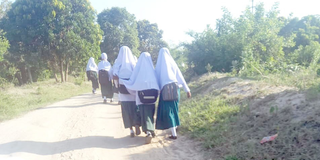
Yet the investigation found a significant gap between policy and practice. In many parts of Bagamoyo District, students walk between 14 and 30 kilometres daily to attend classes.
The situation contravenes the 2019 School Construction and Maintenance Strategy (SCMS), which stipulates that pre-primary pupils should walk no more than 1.5 kilometres, roughly a 25-minute journey.
Primary school pupils are expected to cover a maximum of three kilometres (around 40 minutes) and secondary students should travel no more than five kilometres, equivalent to a round trip of under an hour.
Moreover, Chapter 3.8 of the 2014 Education and Training Policy (2023 Edition) outlines the government’s responsibility, in collaboration with stakeholders, to ensure safe and supportive environments for education and vocational training.
Despite these guidelines, the daily commute remains a formidable barrier to attendance, learning and student safety.
A glimmer of hope: The Msichana Initiative
In May 2025, the Msichana Initiative, an NGO focused on empowering girls through education, visited Fukayosi Ward in Bagamoyo District.
During the outreach, it distributed 50 bicycles to female students facing the greatest challenges associated with long-distance travel to school.
At the handover ceremony, students presented a formal message to the Bagamoyo District Secondary Education Officer, Mr Alois Kaziyareli and shared testimonies illustrating how distance affects their daily lives.
Many reported walking up to 15 kilometres one way. The physical strain often results in late arrivals, fatigue and reduced concentration, undermining academic performance and motivation.
Representatives of the initiative emphasised that while bicycles offer immediate relief, they are a temporary fix to a structural problem.
The students’ plea was clear: the journey’s physical burden drains their energy and limits their potential before they even enter the classroom.
The investigation: Root causes in Fukayosi
Prompted by these testimonies, The Citizen conducted an in-depth investigation to identify the root causes and assess the impact on students and families between November 2025 and January 2026.
The reporter visited villages in Fukayosi Ward, including Mkenge, Kidomole and Mwavi, within the Bagamoyo District Council in the Coast Region.
The investigation confirmed that secondary school students in these communities often spend more than three hours walking daily.
In a ward served by a single secondary school, distance is compounded by scattered settlements, large administrative areas, limited infrastructure, high boarding costs and unreliable public transport.
In Fukayosi, the scattered layout of villages means the well-intentioned ‘one ward, one school’ policy fails to cover the final stretch from home to school.
For students in remote parts of Mkenge Village, the journey can feel as long as travelling to a school in another district.
Personal stories: Dreams deferred
Students who began Form One in 2023 at Fukayosi Secondary School are due to complete their studies in 2026, yet some learners have had their education interrupted.
One such case is Asha Salum, 18, who dropped out in Form One, citing long daily walks combined with severe financial constraints. Her dream of becoming a lawyer ended after six months of study.
Ms Salum lives in Mkenge Village, roughly 11 kilometres from the main road, which has no regular daladala service, leaving residents to rely on bodaboda motorcycle taxis to reach the nearest bus stop.
“It was a day of great joy when I received my results showing I had been selected for secondary school,” recalled Ms Salum, her voice tinged with regret. “I believed my dream was taking shape. I never imagined such challenges could destroy my ambitions.”
She frequently had to walk the full 15 kilometres or pay for motorcycle transport, costing between Sh5,000 and Sh7,000 per trip.
“The fare depends on where you get off. If they take you all the way to the school, it is Sh7,000. If you get off at the junction, it is Sh5,000, but then I still had to walk about two kilometres,” she lamented.
At the time, the school’s boarding facilities were not operational and some classmates rented rooms nearby.
Her parents were reluctant to allow her to live alone. “Rooms cost Sh10,000 to Sh20,000 per month. My parents might have managed the rent, but food and other school expenses, combined with the fear of leaving me alone, made it impossible,” she explained.
Eventually, Ms Salum stopped attending as her family could no longer afford basic meals.
The high cost of “free” education
Although Fukayosi Secondary School now has dormitories, boarding fees remain a barrier.
A student from Kidomole Village, speaking anonymously, said her parents cannot afford the annual Sh770,000 accommodation fee, noting that she has opted to continue as a day student despite the exhausting commute.
“The distance from home is very long. During the rainy season, transport becomes almost impossible because the roads turn to mud, so I have to walk,” she said.
“Even with a daladala, I still walk two kilometres from home to the bus stop and another two kilometres from where I get off to school. That is at least eight kilometres daily, even with transport,” added the student.
Another Form Three student from Mwavi Village described a routine starting before sunrise.
“To arrive on time, I wake at 5:00 am and leave home around 5:45 am. The walk to the bus stop is about three kilometres. Sometimes transport does not come and I walk five or six kilometres to reach the main road,” said the student, who preferred anonymity.
She admitted to frequently missing the first lesson due to travel delays and fatigue.
The government’s fee-free education policy has eliminated tuition fees but does not cover transport, accommodation, or meals.
For families living in poverty, these hidden costs severely limit access to schooling.
Discrimination and danger on the road
The investigation also highlighted concerns in public transport, as daladala drivers sometimes refuse students paying the subsidised Sh300 fare, preferring adult passengers who pay full price.
“Sometimes I arrive at the bus stop at 6:00 am, but drivers refuse to carry us, so I wait until 7:30 am,” said a Form One student.
Faced with limited options, some students accept lifts from strangers or motorcyclists, observing, however, that while temporarily helpful, the move exposes them to serious safety risks.
“Some riders give lifts for a few days, then start making sexual advances. Refuse and they stop helping. It puts us in danger,” insisted the student.
Community members fear that long distances increase risks of harassment, exploitation and teenage pregnancy, especially for girls travelling alone at dawn or after sunset. Parents often face hard choices between safety and education.
The parental dilemma
Parents expressed concern about the safety and well-being of their children.
A resident of Mkenge Village, Ms Christina John, said students’ routes pass through dense vegetation, making them unsafe in the early morning or evening. “We worry every day when children leave for school. The roads pass through isolated areas and anything can happen,” she said.
A guardian from Kidomole Village, Mr Abdallah Juma, expressed disappointment that the dormitory did not ease the burden.
“The annual Sh770,000 fee is beyond my reach. I rented a small room for my child at Sh15,000 per month. It is cheaper, but supervision remains a concern,” he bemoaned.
Many parents fear that leaving children unsupervised exposes them to negative influences.
School officials at Fukayosi Secondary acknowledged the challenges but said boarding fees are essential to cover meals, utilities, security and maintenance.
One teacher said instalments are allowed to ease the burden, yet boarding enrolment remains low due to widespread poverty.
Local government and ministerial response
Mkenge Village Executive Officer (VEO), Mr Xavery Mtunze, confirmed reports of families resorting to underperformance in primary exams to avoid distant secondary schools.
“Parents fear legal consequences if they fail to send children to school, so in some cases, they agree with them to perform poorly. It is a painful strategy to avoid costs they cannot meet,” said Mr Mtunze.
He said the village is constructing its own secondary school with community contributions and support from the Bagamoyo District Council, noting that residents donate small amounts during fundraising campaigns.
“It is slow, but the community is determined to build a school closer to home,” he said.
Bagamoyo Town Council Executive Director, Mr Shauri Selenda, attributed the distance problem to dispersed settlement patterns, with many farmers and livestock keepers living far apart.
He said the government is establishing “satellite” schools in remote areas to bring education closer to communities.
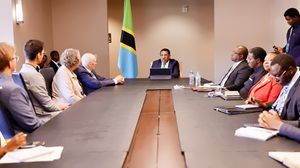
In a separate statement, Deputy Minister of State in the Prime Minister’s Office – Regional Administration and Local Government (PMO-RALG), Reuben Kwagilwa, reaffirmed the government’s commitment to expanding education infrastructure.
He acknowledged that in regions with vast coverage or challenging terrain, a single secondary school per ward may be insufficient.
“We are constructing additional schools in such areas. Some wards now have two or three secondary schools, so students do not have to travel long distances,” said the deputy minister.
Register to begin your journey to our premium contentSubscribe for full access to premium content