Samia’s Russia visit gives $1.2 billion uranium project fresh impetus

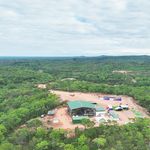
Minerals minister Anthony Mavunde has expressed confidence that the long-delayed Mkuju River uranium project is moving closer to full-scale implementation following President Samia Suluhu Hassan’s visit to Russia last week. PHOTO | FILE

Moscow. Tanzania’s long-delayed Mkuju River uranium project has received fresh momentum following President Samia Suluhu Hassan’s official visit to Russia, with Minerals minister Anthony Mavunde expressing confidence that the strategic investment is now moving closer to full-scale implementation.

Speaking to The Citizen in Moscow on the sidelines of the President’s visit, Mr Mavunde said discussions between Tanzanian and Russian leaders had reinforced commitments towards advancing the project, which is expected to position Tanzania among Africa’s leading uranium producers.

The Mkuju River project, located in Namtumbo District in Ruvuma Region, is being developed by Mantra Tanzania Limited, a subsidiary of Russia’s Uranium One Group under the Rosatom State Corporation.

Valued at about $1 billion, the project has remained largely dormant for more than a decade after a collapse in global uranium prices delayed commercial development despite the completion of exploration activities and regulatory approvals.

However, improved market conditions, growing global interest in nuclear energy and renewed engagement between Tanzania and Russia have revived prospects for the project.

Mr Mavunde described the uranium venture as one of the most important mining projects currently under development in Tanzania.

“The Mkuju project is a flagship investment not only for the mining sector but also for the wider economy. Tanzania is among a small number of African countries with the opportunity to develop a uranium industry of this scale,” he said.

According to the minister, President Hassan’s visit had provided an opportunity for direct engagement with Russian authorities and stakeholders involved in the project.

He said the discussions demonstrated a strong commitment by the Russian government and project partners to accelerate implementation.

“The visit has added significant momentum to the project. We expect to see major developments within a relatively short period because several preparatory stages have already been completed,” he said.

He pointed to the commissioning of a pilot uranium processing plant by President Hassan in July last year as a major milestone, describing it as evidence that the project had moved beyond the planning stage.

The pilot facility was established to test processing technologies and generate technical data required for the design of the future industrial complex.

Mr Mavunde said additional progress had been recorded in recent weeks, including the announcement of tenders for infrastructure works at the project site.

“Mining activities have already commenced within the framework provided by law. When you visit the site, there are clear signs that operational work is underway,” he said.

Questions have persisted over the project's financing arrangements, particularly as the current special mining licence is due to expire in April 2028.

Developers have previously acknowledged that some lenders have expressed concerns about extending long-term financing while the licence approaches expiry.

However, Mr Mavunde said the government remained confident that the project would proceed as planned.

He noted that the licence could be renewed under existing legal provisions and emphasised that substantial progress had already been achieved after years of delays linked largely to investor-related challenges.

“The government took various measures to help unlock the project. What matters now is that important steps are being taken and the project is moving forward,” he said.

Recent disclosures by Mantra Tanzania indicate that financing discussions are continuing with both Russian financial institutions and Tanzanian banks as the company seeks capital for mine construction and the planned processing plant.

Beyond uranium development, Mr Mavunde said Tanzania and Russia had also agreed to deepen cooperation in geological research, institutional strengthening and skills development.

He noted that historical ties dating back to the former Soviet Union had played an important role in Tanzania’s mining sector and could provide a foundation for future collaboration.

“One of the areas we are looking at is strengthening geological research and building the capacity of our professionals. Modern mining increasingly depends on technology and we must ensure that our workforce is prepared for these changes,” he said.

The minister said Russia had expressed willingness to support training programmes and technical cooperation aimed at strengthening Tanzania’s mining institutions.

If fully developed, the Mkuju River project is expected to transform Tanzania’s position in the global uranium market.

Mr Mavunde said projected production could exceed 4,000 tonnes annually at full capacity, potentially making Tanzania one of Africa’s leading uranium producers.

“Once production reaches full capacity, Tanzania could become the second-largest uranium producer in Africa after Namibia and among the top global producers,” he said.

The minister added that the project’s estimated investment of $1.2 billion would generate substantial economic benefits through employment, government revenues and local business opportunities.

Government estimates indicate that thousands of direct and indirect jobs could be created during construction and operational phases, while local authorities are expected to benefit through service levies and other revenue streams.

Communities surrounding the project in Namtumbo are also expected to benefit from increased economic activity, infrastructure improvements and expanded business opportunities linked to mining operations.

The Mkuju River deposit is estimated to contain about 139 million tonnes of uranium ore and is expected to support mining operations for more than two decades.

The project forms part of a broader government strategy to expand the contribution of mining to the national economy following the sector’s achievement of surpassing the 10 percent contribution target ahead of schedule.

Looking ahead, Mr Mavunde said Tanzania’s long-term vision was to unlock more value from its mineral resources through exploration, investment and increased participation by local miners.

“Tanzania has been blessed with abundant mineral resources. The task before us is to transform those resources into tangible economic benefits for our people and ensure the mining sector becomes one of the major pillars of the national economy,” he said.

He said that the government was intensifying geological surveys across the country while creating an enabling environment for small-scale miners, medium-sized operators and large investors to participate in the sector’s growth.

Mr Mavunde’s statement concurs with what President Samia Suluhu Hassan said at the St Petersburg International Economic Forum (SPIEF 2026) on Friday, June 5 that discussions so far point to the fact that Tanzania will have its first nuclear power plant will be ready during the 2028/29 fiscal year.

The goal, she said, was in line with Tanzania’s energy production goals that put emphasis on a mix of various sources.

Currently, Tanzania produces approximately 4,000 megawatts but according to President Hassan, the goal is to raise this to 8,000 megawatts by 2030 and to 70,000 megawatts by 2050.