Samia to set health research agenda at Arusha scientific conference
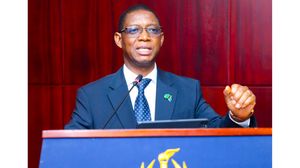
The National Institute for Medical Research (NIMR) Director General, Prof Said Aboud, speaks to journalists on Monday, June 8, 2026, in Arusha, on preparations for the 33rd Annual Scientific Conference organised by the institute. PHOTO | BERTHA ISMAIL
Arusha. President Samia Suluhu Hassan is expected to provide policy direction on the role of research in strengthening healthcare services in Tanzania during the 33rd Annual Joint Scientific Conference (AJSC), which begins in Arusha on Tuesday, June 9, 2026.
The three-day conference, scheduled for June 9–11, 2026, is being organised by the National Institute for Medical Research (NIMR), with the aim of promoting the use of scientific evidence and research findings in improving healthcare systems and guiding policy decisions in the sector.
Addressing journalists in Arusha on Monday, June 8, 2026, NIMR director-general, Prof Said Aboud, said the conference will serve as a major national scientific platform bringing together about 450 participants, including researchers, policymakers, health professionals, academics, and development partners from Tanzania, and abroad.
“We expect President Samia Suluhu Hassan to officially open the conference and provide policy guidance on how research can be more effectively utilised to improve healthcare services for Tanzanians,” said Prof Aboud.
He said this year’s conference is being held under the theme: “Universal Health Coverage: Building a Resilient Health System towards Tanzania Vision 2050.”
According to Prof Aboud, the theme reflects Tanzania’s commitment to building a health system driven by evidence, innovation and the application of research findings in policy formulation and implementation.
“The theme aligns with the national vision of creating a strong and sustainable healthcare system based on scientific evidence and innovation,” he said.
Prof Aboud said the conference has received a total of 339 scientific submissions from researchers working in various fields of health and medical science.
He added that the event will also provide a platform for discussing health policy issues, sharing experiences among stakeholders and strengthening professional collaboration needed to address current and emerging health challenges.
Among the expected outcomes are greater integration of research findings into policymaking, development of new strategies for improving healthcare services, identification of emerging research priorities, and stronger partnerships between government institutions, researchers, and development partners.
“The conference will also strengthen Tanzania’s contribution to regional and global health research, while showcasing the country’s achievements in generating and applying scientific evidence for national development,” he said.
Meanwhile, NIMR director of research coordination, and promotion, Dr Nyanda Ntinginya, said the conference will feature research and innovation exhibitions from NIMR and other research institutions in addition to scientific presentations.
“These exhibitions will offer participants an opportunity to learn about new technologies, research findings, and innovative approaches that can help address health challenges facing the country,” he said.
He emphasised that research remains the foundation of sound health, and development decisions.
“Through this conference, we are strengthening the role of science in driving transformation within Tanzania’s healthcare system, and ensuring that research findings are translated into practical solutions that benefit citizens,” he said.
Dr Ntinginya added that NIMR will continue to play its role as the national institution responsible for generating and promoting the use of scientific evidence to support government and stakeholders in making informed decisions that advance healthcare and improve the well-being of Tanzanians.