Science and innovation take centre stage as Tanzania aligns education with Vision 2050

Deputy Minister for Education, Science and Technology, Ms Hafidh Ameir, hands over a certificate of appreciation to the COSTECH Director General, Dr Amos Nungu for the Commission's exemplary contribution to to the growth of Science and Technology in Tanzania. PHOTO| JACOB MOSENDA.

Dar es Salaam. Tanzania is increasingly positioning science, technology and innovation as the engine that will drive the country's Development Vision 2050, with the government calling for an education system that produces graduates capable of competing in a fast-changing, knowledge-based and digital economy.

The renewed commitment was underscored during the Inclusive Mwalimu Gala 2026 in Dar es Salaam, on August 3, 2026, where government leaders, teachers, university lecturers, researchers, innovators and private sector representatives met to discuss how education can accelerate the implementation of the country's long-term development agenda.

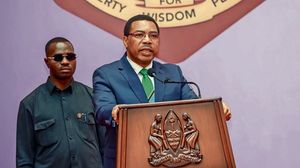
Opening the event, Deputy Minister for Education, Science and Technology Wanu Hafidh Ameir said the government would continue investing in teachers, instructors and lecturers through continuous professional development, research and modern technologies to ensure the education sector produces graduates whose skills match labour market demands.

"The government recognises that education is the foundation of economic, social, scientific and technological development. Our investments in education reforms, research, innovation and digital technologies are intended to build a competitive economy powered by knowledge," she said.

She said the Sixth Phase Government had expanded investments in education infrastructure, policy reforms and partnerships between universities, research institutions, industries and the private sector to ensure research generates practical solutions, jobs and economic growth.

The Deputy Minister noted that achieving Vision 2050 would require inclusive participation, particularly from women professionals, whose contributions in science, technology, education and research remain vital to building a resilient and competitive economy.

She added that the ministry is promoting gender equality in education, increasing female participation in science, technology, engineering and mathematics (STEM), strengthening protection against gender-based violence in learning institutions and investing in academic development for teachers and researchers.

The discussions also highlighted the growing role of the National Commission for Science and Technology (COSTECH), which this year marks 40 years since its establishment*.*

COSTECH Director General Dr Amos Nungu said the commission has spent four decades nurturing Tanzania's science, technology and innovation ecosystem and sees teachers as central to producing the country's next generation of innovators.

He described the Inclusive Mwalimu Gala as an important platform that brings together teachers, lecturers, parents and education stakeholders to exchange ideas and provide feedback on how education, science and technology can better support national development.

"As COSTECH celebrates 40 years, such forums give us an opportunity to listen to stakeholders while explaining the steps being taken to strengthen science, technology and innovation across the country," Dr Nungu said.

He stressed that teachers play a critical role beyond classroom instruction, saying they are responsible for identifying and nurturing future scientists, innovators and entrepreneurs.

"Teachers are preparing tomorrow's innovators. They should make students aware of opportunities available in science and technology, including the National Research Fund coordinated by COSTECH, so that young people can transform their ideas into practical innovations," he said.

According to Dr Nungu, strengthening awareness of research funding and innovation support mechanisms will enable more students and young researchers to participate in solving national development challenges through science and technology.

He also encouraged teachers and other stakeholders to participate in the upcoming National Education Week, scheduled to take place in Tanga from August 15 to 24, saying the exhibition will showcase locally developed technologies, ongoing research and innovation opportunities available through COSTECH.

"We want teachers and stakeholders to experience first-hand the innovations being developed in Tanzania and understand the many opportunities available to support research and technology development," he said.

Organiser and Member of Parliament representing universities, Ms Asha Feruzi, said the Inclusive Mwalimu Gala was created to stimulate national dialogue on the role of education, innovation and technology in implementing Vision 2050.

She said the forum seeks to strengthen collaboration between universities, researchers, innovators and the private sector so that research findings can be transformed into products, services and technologies that improve people's lives and drive sustainable economic growth.

She added that discussions during the conference also focused on emerging technologies such as artificial intelligence, digital transformation and stronger links between academia and industry to ensure graduates acquire skills that reflect the demands of the modern economy.

The event reflects Tanzania's broader ambition to shift from a resource-based economy towards one driven by knowledge, innovation and technology.