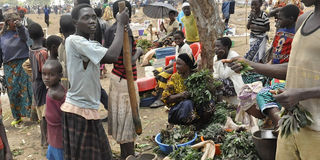
Dar es Salaam. Amid worldwide festivities honouring the achievements of women, the atmosphere is starkly contrasting in the Nyarugusu and Nduta refugee camps in Tanzania.
Two women from these camps have emphasised that they are unable to partake in the celebrations, highlighting that such jubilations are a luxury they cannot afford.
"For us, Women's Day felt like a distant dream," laments Ms Basele.
"While women outside the camp celebrate the day, we have been struggling to make ends meet, facing isolation and hardship every day."
The simple act of preparing a meal serves as a stark reminder of their difficult circumstances. They are forced to use wheat flour to make ugali, a traditional African dish typically made from maize flour, due to limited resources.
They long for the familiar taste of home but find solace only in their resilience amidst despair.
"We long for the taste of home, but all we have is wheat flour," reflects Ms Kiza, summarising the mix of resilience and desperation that defines their existence.
The worsening humanitarian situation in the camps compounds their distress, as diminishing aid and assistance leave them uncertain about the future.
"We feel forgotten," Ms Basele emphasised. "Developed countries must not turn a blind eye to our plight, even as the crisis keeps on increasing worldwide."
Their gratitude towards Tanzania, their host country, is palpable. Despite the challenges, they acknowledge the efforts made by the Tanzanian government and humanitarian organisations to assist.
Many refugees continue to face ongoing struggles as the possibility of returning home remains a distant dream for them.
With Tanzania hosting at least 163,944 refugees from Burundi and 89,021 from the Democratic Republic of the Congo as of October 31, 2023, according to official data from the Department for Refugee Services, returning to their homes remains a distant dream for many.
"We left our homes over 20 to 30 years ago, fleeing conflict and violence," Ms Basele recounted. "But returning is not as simple as it seems. How can we go back to a place that no longer feels like home?"
Experts say that once relocated, whether it be a makeshift shelter, refugee camp, or humble apartment, women quickly become the backbone of their family’s survival and resilience.
“They adapt swiftly, stretching every resource to ensure that their families have the necessities they need to keep going. In these annual celebrations, we are supposed to stand in solidarity with refugee and displaced women, honouring their strength, resilience, and contributions to our shared humanity,” said humanitarian expert Dr Meshack Mpalanga.
“We must, as countries, always envision a future where the suffering of women is alleviated and where every woman has the opportunity to flourish and realise her full potential, regardless of where she may be, at home or in asylum.”
According to him, women were the true warriors, building communities, navigating markets, and ensuring that their families were safe and could thrive in their new surroundings.
As such, in 2023, the United Nations High Commissioner for Refugees (UNHCR) appealed for sustained donor funding to support Tanzania’s refugee response.
For decades, UNHCR, the UN Refugee Agency, has supported the government of Tanzania in providing protection and assistance to hundreds of thousands of people who have fled from neighbouring countries.
The group that was speaking on their thoughts of Women’s Day celebrations had their voices echoing the sentiments of millions of displaced women worldwide, often overlooked amidst larger geopolitical agendas.
As the global community grapples with pressing issues, including climate change, the plight of refugees and displaced persons cannot be forgotten.
The recent announcement by the World Food Programme regarding the slashing of food rations for refugees in Tanzania exacerbates the crisis, particularly affecting women in the camps.
"We are uncertain about the next two years if things don't return to normal. Sometimes we only eat once a day so we can save whatever we have for our children," Ms Basele narrates.
Ms Kiza adds: "Lack of clean cooking energy and the disappearance of forests remain huge burdens for our survival."
Register to begin your journey to our premium contentSubscribe for full access to premium content