IMF sees stability gains in Tanzania, touts SMEs and job creation

IMF mission chief for Tanzania Mr Nicolas Blancher, in an interview with The Citizen at the conclusion of the mission in Dar es Salaam.

Dar es Salaam. The International Monetary Fund (IMF) has formally acknowledged the significant strides made by Tanzania in achieving macroeconomic stability.

This recognition comes alongside a firm recommendation for the government to accelerate efforts toward supporting small businesses.

The Fund has also stressed the urgency of job creation and enhanced social investment to ensure that economic growth remains sustainable over the long term. These conclusions of the sixth and seventh reviews under the Extended

Credit Facility (ECF) and the third and fourth reviews under the Resilience and Sustainability Facility (RSF). A staff-level agreement was reached between the IMF mission and the Tanzanian government following extensive consultations in Dar es Salaam.

This disbursement would bring total IMF support to about $1.05 billion under the ECF arrangement.

It would also bring support to about $563.8 million under the RSF arrangement. In an interview with The Citizen, IMF mission chief for Tanzania, Mr Nicolas Blancher, described the agreement as a significant milestone. He noted it as evidence of progress made during the four-year reform programme.

“We had a very good mission. We reached that stage of a staff-level agreement,” Mr Blancher said.

The latest IMF endorsement comes as Tanzania pursues ambitious infrastructure and industrialisation projects. The country is navigating a difficult global environment. Risks include slowing global economic growth and geopolitical tensions. Tighter external financing conditions also present a challenge.

According to the IMF, Tanzania’s economy has become increasingly resilient despite these external shocks. Disruptions linked to conflicts in the Middle East have affected many developing economies. Reduced levels of official development assistance from international partners have also played a role. Mr Blancher said Tanzania’s debt position remains comparatively strong relative to many peer economies. The IMF and World Bank continue to assess the country’s debt distress risk as moderate.

This remains the case even under various shock scenarios. “If you look at the level of debt-to-GDP compared to many other countries, it is relatively low,” he said. The anticipated IMF disbursement will help strengthen international reserves at the Bank of Tanzania. It will also support government financing at concessional rates. Furthermore, it aims to improve the country’s debt servicing profile.

Beyond the financing itself, the IMF believes the successful reviews send a positive signal. It informs investors, development partners, and businesses about Tanzania’s commitment to economic reforms. Over the past four years, the IMF says Tanzania has made progress in several areas. These include monetary policy and financial sector supervision.

The Fund also noted improvements in exchange rate flexibility and domestic revenue mobilisation. Tanzania’s recent removal from the Financial Action Task Force (FATF) grey list was a significant step. This reinforces investor confidence in the nation's financial integrity.

According to the IMF, such reforms have improved the country’s ability to absorb external shocks. They have created a more stable environment for investment and private sector activity.

However, the Fund emphasises that the next phase of growth depends on human capital. Tanzania must expand opportunities for private sector-led job creation. Mr Blancher said Tanzania’s young and rapidly growing population presents significant opportunities.

These must be accompanied by stronger investment in education and healthcare. Entrepreneurship must also be a primary focus.

“My biggest concern is the risk that Tanzania falls behind on social spending and support to private sector activity and job creation,” Mr Blancher said.

He noted that small and medium enterprises (SMEs) remain critical for employment creation. They are also vital for broader economic participation. He urged accelerated reforms to improve the business environment. Reducing barriers facing entrepreneurs is essential for growth. “It’s really opening the scope for SMEs, small entrepreneurs to develop, to create activity and to hire people. In all countries, that’s where job creation happens,” he said.

The IMF encouraged Tanzania to continue implementing reforms for better transparency. Predictability and accountability of public policies remain paramount. Simplifying aspects of the tax system will help attract more domestic and foreign private investment.

These remarks align with ongoing government initiatives under Vision 2050. They also support the Blueprint for Regulatory Reforms. These seek to improve Tanzania’s investment climate and accelerate inclusive growth.

The IMF also sees room to strengthen domestic financing for development. This can be achieved through improved tax collection and efficient public expenditure.

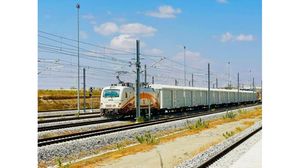
“There is scope to focus more on improving the efficiency and the quality of public investment spending,” Mr Blancher said. He acknowledged Tanzania’s major investments in infrastructure like the Standard Gauge Railway (SGR).

However, the IMF stressed the importance of balancing physical infrastructure with investments in people. Mr Blancher said sectors such as healthcare and education require more than just buildings. They need qualified personnel and modern equipment. Medical supplies and operational resources are also necessary to maximise long-term economic returns.

“It’s not just brick-and-mortar,” Mr Blancher said while referring to investments in hospitals and schools. The IMF further encouraged efforts to strengthen social protection programmes. The Tanzania Social Action Fund (Tasaf) is particularly important in this context.

Declining external aid and rising global uncertainties place additional pressure on vulnerable households. According to the Fund, sustaining reform momentum is essential. Improving the quality of public services will support inclusive growth and long-term economic resilience.

Despite the challenges ahead, the IMF maintained that Tanzania remains well-positioned to sustain growth. This will be possible if reforms accelerate and investment supports productivity.

Entrepreneurship and skills development must remain at the forefront of the strategy. For Tanzania, the latest IMF assessment offers both reassurance and a roadmap.

Macroeconomic stability has strengthened and economic resilience has improved. However, long-term success will depend on results.

The country must effectively convert those gains into jobs and stronger private sector growth. Wider economic opportunity for all citizens remains the ultimate goal.