Tanzania anti-graft watchdog probes 66 projects over irregularities

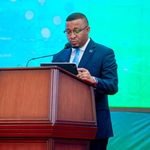
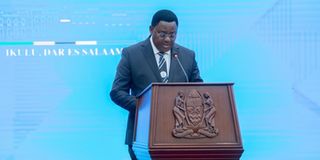
Director General of the Prevention and Combating of Corruption Bureau (PCCB), Mr Crispin Chalamila, reads a summary of the institution’s annual performance report at State House in Dar es Salaam on March 30, 2026. PHOTO | STATE HOUSE
Dar es Salaam. The Prevention and Combating of Corruption Bureau (PCCB) has launched investigations into 66 projects after identifying irregularities during its review of public resource utilisation.

The 66 projects form part of 913 projects found to have deficiencies out of a total of 1,864 audited by the institution in the 2024/25 financial year.

According to the PCCB, the total value of the monitored projects stands at Sh14.3 trillion, an increase from the 2023/24 financial year, when 1,773 projects worth Sh11.4 trillion were reviewed.

The remarks were made on Monday, March 30, 2026, by PCCB Director General, Mr Chrispin Chalamila, while presenting the institution’s 2024/25 report to President Samia Suluhu Hassan at the Dar es Salaam State House.

Among the projects reviewed are the Building a Better Tomorrow (BBT) initiative and the construction of water infrastructure under 30 projects managed by the Rural Water Supply and Sanitation Agency (Ruwasa), valued at Sh187.1 billion across several regions.

Others include 28 initiatives under the Tanzania Rural and Urban Roads Agency (Tarura), worth Sh43 billion, compensation to residents affected by the expansion of Serengeti National Park in Bunda, and the construction of dormitories worth Sh4.3 billion in Katavi and Rukwa regions, including Mpanda District.

Out of the 1,864 projects reviewed, the PCCB identified irregularities in 913, of which 66 have been subjected to formal investigation.

Mr Chalamila said that in the 2023/24 financial year, 92 projects were investigated, indicating a decline in the number requiring investigation due to improved monitoring efficiency by the bureau.

He cited weak contract management as a major concern, leading to projects being implemented contrary to contractual agreements and contractors being paid for incomplete work.

Other irregularities include failure to withhold taxes in some projects, non-compliance with public procurement laws, poor quality of work and materials, and overpayments beyond contractual terms.

Mr Chalamila emphasised that the issues are recurring and called on project managers to strengthen oversight to prevent persistent deficiencies.

Meanwhile, the PCCB’s monitoring efforts have contributed to an increase in revenue collection by more than Sh8.6 billion annually across 40 local government authorities analysed.

Initial collections stood at Sh97.8 billion but rose to Sh106.4 billion following the bureau’s intervention.