Tanzania arrests lovers in Dar’s first seizure of drugs linked to serious crimes

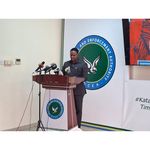
DCEA Commissioner General Aretas Lyimo speaks during a press conference in Dar es Salaam yesterday. PHOTO | COURTESY


Dar es Salaam. The Drug Control and Enforcement Authority (DCEA) has arrested two lovers after they were allegedly found in possession of a new and highly dangerous batch of narcotics believed to be used in criminal activities due to their ability to induce deep sleep, erase memory and heighten physical stimulation.

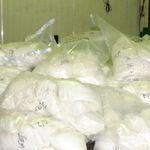
This is Tanzania’s first recorded seizure of 738 tablets of 3,4-Methylenedioxymethamphetamine (MDMA), weighing 177.78 grammes, and 24 tablets of Rohypnol (flunitrazepam), weighing 10.03 grammes. Rohypnol is a powerful sedative widely known for its misuse in serious crimes.

The suspects, Cuthbert Kalokola, 34, and Murath Abdallah, 19, were arrested at Sinza D in Dar es Salaam during a DCEA operation acting on intelligence information.

DCEA Commissioner General Aretas Lyimo said on Wednesday, December 3, 2025 that Kalokola was the first to be apprehended and he later led officers to Murath.

Mr Lyimo said Kalokola directed investigators to the house where Murath was staying. During questioning, it emerged that the drugs belonged to him, but both were held because they were living together.

Ms Murath claimed she did not know the substances were narcotics, telling officers that Mr Kalokola had said they were painkillers.

Mr Lyimo urged young women to exercise caution in relationships where they are unaware of their partners’ activities, noting that Ms Murath frequently ran away from home to stay with someone deeply involved in drug trafficking.

Commissioner Lyimo further revealed that Mr Kalokola admitted smuggling the drugs from the United Kingdom, where he previously lived and became linked to drug networks. He allegedly transported consignments through Kampala, Uganda, then into Tanzania via unofficial border routes.

After dropping off packages in Kampala, they were moved to the border, where motorcycle riders smuggled them through footpaths to avoid inspection before delivering them to him inside Tanzania.

“These drugs can cause deep sleep, memory loss, high blood pressure and even heart attacks. They are highly addictive, and some people misuse them believing they enhance sexual performance,” he said.

He said that Mr Kalokola is suspected of supplying clients in high-end hotels, with some users deploying the substances to commit crimes including fraud and sexual assault.

“Even a small amount slipped into a drink can render someone unconscious, placing women at particular risk,” he warned.

In separate operations, more arrests were recorded. At Mbezi Maramba Mawili, the DCEA arrested seven suspects, Jaribu Tindwa (38), Ally Meshe (39), Juma Mfamo (20), Rahim Nampanda (28), Abubakari Ally (20), Nurdin Rashid (36) and Farid Rashid (33), after seizing 90 kilogrammes of cannabis (skunk) hidden inside solar-panel tanks loaded onto a bus travelling between Tanzania and Malawi.

At the Kasesya border in Rukwa, another suspect, 26-year-old Godwin Andrew, was arrested with 244.3 kilogrammes of skunk concealed in speakers, air-cooling machines, lawn cutters and computer CPU casings.

The shipment was being transported in a South African-registered Iveco van operated by Makamua Logistics Limited.

In a separate development, the High Court Division of Corruption and Economic Sabotage has ordered the forfeiture of assets valued at Sh3.3 billion.

The assets, four houses, six plots and 11 vehicles, belonged to Saleh Basleman and Gawar Fakir, and were proven to be proceeds of drug trafficking.

The confiscation was effected under the Proceeds of Crime Act (Cap 256), the Economic and Organised Crime Control Act (Cap 200), and the Drug Control and Enforcement Act of 2015.

Mr Lyimo said the court order followed extensive investigations confirming that the properties were acquired through drug-related activities.

He stressed that asset forfeiture remains essential in the fight against organised crime, noting that imprisonment alone cannot deter offenders. “Taking away illegal gains prevents criminals from benefiting from their unlawful activities,” he said.