Tanzania designates 10 wards for port activities amid congestion concerns

Dar es Salaam. Temeke District Commissioner, Mr Sixtus Mapunda, stated that the plan to designate 10 wards within the district for port-related activities stems from an increase in economic activities following improvements at Dar es Salaam Port.

This statement comes a day after the ACT-Wazalendo party in Dar es Salaam Region opposed the plan, arguing the government should not affect citizens' settlements for dry port operations, but should instead utilise the Kwala area in Coast Region.
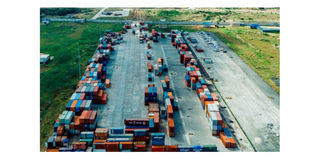

Speaking on Friday, September 4, 2026, Mr Mapunda stated that improvements executed at Dar es Salaam Port have rapidly expanded the port's capacity, a situation requiring surrounding areas to be strategically prepared to handle increased economic activity.

He stated that capacity previously expected to be attained by 2030 was reached in June, this year.

According to Mr Mapunda, approximately half of the cargo leaving Dar es Salaam Port goes abroad, whilst the other half remains in Tanzania; among the cargo remaining in the country, he stated 90 percent is used in Dar es Salaam and only 10 percent is dispatched to other regions.

“70 percent of the cargo remaining in Dar es Salaam remains in Temeke, thus Temeke forms an economic hub. All cargo originates from Temeke, so Temeke is friendly towards the port economy. That is why Temeke Municipality is unavoidable in council land use planning,” he stated.

He said this situation prompted the municipality to prepare 10 strategic wards capable of hosting port-related operations without causing the port itself to become overwhelmed with cargo.

These wards are Keko, Azimio, Buza, Sandari, Kilakala, Mtoni, Makangarawe, Temeke, Miburani, and Yombo Vituka.

ACT-Wazalendo's stance

During its press conference, ACT-Wazalendo opposed the plan, expressing fears it could lead to citizens being evicted from their areas and disrupting their lives.

ACT-Wazalendo Secretary for Dar es Salaam Region, Mr Felix Kamugisha, stated that the government ought to utilise Kwala Dry Port rather than converting residential areas for Temeke citizens into hubs for port activities.

The party stated that Kwala was already prepared to help relieve cargo congestion in Dar es Salaam and urged that more dry ports be removed from the city centre.

However, Mr Mapunda stated the debate should not focus solely on distance, but also on transport costs and economic benefits for traders and the final consumer.

Responding to the Kwala argument, Mr Mapunda stated the government must consider costs that traders or final cargo consumers would incur if all cargo were directed far from areas where it is needed.

“There are costs involved in going to Kwala. The government must look at reducing costs for the final consumer by ensuring cargo purchasing costs remain low, rather than taking cargo far away. We would be foolish to allow this 70 percent of cargo to go to Kwala or Morogoro only to return to Temeke to build factories,” he said.

This statement comes at a time when Kwala is positioned as a key component in the strategy to reduce congestion at Dar es Salaam Port.

Tanzania Ports Authority (TPA) has been clarifying that Kwala Dry Port is intended to help reduce cargo operational congestion in Dar es Salaam.

According to TPA, Kwala covers an area of 600,000 square metres, and its future plan is to assist in relieving Dar es Salaam of the burden of port activities, which will be redirected there to simplify cargo transport.

The government also explained that Kwala is scheduled to connect with standard gauge railway (SGR) and metre gauge railway (MGR) railway lines, whilst being developed alongside a Special Economic Zone to become a regional transport hub.

When President Samia Suluhu Hassan commissioned Kwala Dry Port on July 31, 2025, it was stated that the facility is expected to handle over 300,000 containers annually, equivalent to approximately 30 percent of containers passing through Dar es Salaam Port.

Regarding fears of citizens being evicted from these 10 Temeke wards, Mr Mapunda stated that notion is incorrect, explaining the plan aims to empower residents in those areas to capitalise on economic opportunities arising from proximity to the port.

“We are not relocating citizens; we will provide guidance on how best to utilise these areas,” he said.

He cited Kurasini as an example, stating residents were able to yield their areas to investors and establish commercial operations, without implying every citizen will be forced to leave.

“You have a plot suitable for container storage, you have a plot suitable for a factory, the government enables you to obtain investment that yields profit so you benefit from port proximity,” he said.

He stressed that just as a farmer benefits from being near a farm, Temeke residents should directly benefit from the economy surrounding the port.

In that logic, Mr Mapunda stated these 10 wards should be viewed as part of a broader investment strategy arising from the growth of Dar es Salaam Port, whilst urging residents not to fear.

“These 10 wards will form part of port investment and no citizen will be forcibly relocated. I ask residents of these 10 wards to get ready; you are part of this success,” he said.

Increase in ICDs, lorries

The increase in port operations in Temeke District has coincided with a surge in Inland Container Depots (ICDs) outside the port, creating traffic congestion on roads and residential areas surrounding these depots.

Reports recently published by The Citizen’s sister newspaper Mwananchi, indicated that the presence of ICDs in these areas has also increased the number of lorries requiring space to wait, load, and unload cargo.

In some areas, lorries have been parked along roadsides, particularly near areas with ICDs, causing traffic jams and affecting road safety and usability.

This challenge is also evident in cargo transport operations from Dar es Salaam Port, where increased cargo volume has raised lorry demand.

Temeke, which contains many areas connecting the port to the road network leading to ICDs and industrial zones, has become a crucial link in that supply chain.

This situation has boosted economic activities, but has also raised challenges regarding land use planning so cargo operations do not conflict with residential areas and citizen services.

From that perspective, Temeke's plan to designate specific areas for port-related operations could represent an attempt to reorganise the expanding cargo chain, whilst the challenge remains ensuring such investment aligns with parking, roads, and other infrastructure capable of handling the increase in lorries.