Tanzania, Malawi and Mozambique out to protect ecosystems

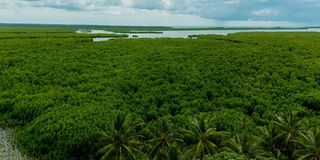
Ruvuma River Basin. PHOTO | COURTESY

What you need to know:

  • The project will run for 60 months, from 2025 to 2030, with funding of about $7.12 million, equivalent to roughly Sh18.2 billion, from the Global Environment Facility

Dar es Salaam. Tanzania, Malawi and Mozambique have launched a Sh18.2 billion regional initiative aimed at strengthening the integrated management of the Ruvuma River Basin and its coastal ecosystems, enhancing environmental protection and supporting community livelihoods.

The five-year project, valued at approximately $7.12 million, is funded by the Global Environment Facility and implemented by the International Union for Conservation of Nature (IUCN).

It will run for 60 months until December 2030, bringing the three riparian countries together to improve cooperation in managing the transboundary basin.

Implementation will be carried out in partnership with the Global Water Partnership Southern Africa (GWPSA) and Wetlands International Eastern Africa (WIEA) as executing agencies.

The initiative was officially launched during an inception workshop yesterday at Johari Rotana, attended by over 50 delegates from governments, regional organisations and development partners.

Speaking at the opening session, the chairperson of the Joint Development and Management of the Rovuma/Ruvuma River Basin and Director General of ARA-Norte, IP, Carlitos Momade Omar, described the project as a major milestone in strengthening regional cooperation.

“The project will run for 60 months, from 2025 to 2030, with funding of about $7.12 million, equivalent to roughly Sh18.2 billion, from the Global Environment Facility,” he said.

Mr Omar noted that the basin has been the focus of years of dialogue and technical cooperation among the three countries, culminating in the signing of a Memorandum of Understanding in Dar es Salaam in July 2024.

He explained that the project adopts a source-to-sea approach, recognising that land management, river health and coastal ecosystems are closely interconnected and must be managed collectively.

“Decisions taken in one part of the basin have consequences across borders and sectors. Fragmented governance structures can no longer adequately respond to these interconnected pressures,” he said.

Under the initiative, partner states aim to strengthen institutional frameworks for transboundary basin and coastal zone management, enhance science-based decision-making and improve investment planning for sustainable natural resource use.

The project will also boost enforcement capacity, improve coordination between water, land and conservation authorities, and expand community participation in environmental management.

Earlier, the director of the Ruvuma River and Southern Coast Basin Water Board (RSCBWB), Sudi Mpemba, welcomed delegates on behalf of Tanzania, describing the workshop as a critical step in establishing a clear implementation framework.

“This meeting brings together technical staff from governments and other stakeholders to discuss implementation arrangements and align the efforts of collaborating partners,” he said, acknowledging IUCN’s role in organising the workshop and supporting regional cooperation.

The project will focus on coordinated planning and management of land, freshwater and marine ecosystems across the basin, which spans southern Tanzania, northern Mozambique and parts of Malawi.

Representing Malawi, director of water resources, James Chitele, said the initiative is vital for protecting ecosystems and improving livelihoods for communities that depend on the basin.

“The project we are launching today is not only about water resources management; it is about safeguarding ecosystems, improving livelihoods and ensuring our shared natural resources benefit present and future generations,” he said.

According to organisers, the project will support the restoration of 88,620 hectares of degraded ecosystems, promote improved landscape management across nearly 280,000 hectares, and directly benefit more than 50,000 people.

Speaking at the workshop, IUCN Tanzania country representative Charles Oluchina said the initiative could become a model for integrated transboundary water governance in Africa.

“The project embodies an integrated vision of land, freshwater and marine resources. It demonstrates how nature-based solutions can conserve ecosystems while improving livelihoods and strengthening resilience to climate change,” he said.

Activities under the project will be implemented through five key components, including strengthening institutional frameworks, supporting science-based planning, mobilising investment for sustainable resource management, promoting community-based land and water management, and enhancing knowledge sharing, communication and monitoring systems.

The Ruvuma River Basin is one of the region’s most ecologically important landscapes, supporting diverse ecosystems and communities reliant on agriculture, fisheries and other natural resource-based livelihoods. Officials say the success of the initiative will depend on sustained cooperation among the three countries to balance environmental conservation with socio-economic development.

The inception workshop is expected to align stakeholders on implementation strategies, clarify roles and responsibilities, and update key planning tools, including the stakeholder engagement plan, gender action plan and monitoring framework.