Dar es Salaam. Tanzania and South Korea are exploring the use of artificial intelligence (AI), hospital information systems and other digital technologies to improve healthcare services.
The discussions at the weekend focused on connecting health facilities, sharing patients’ medical information and using technology to support healthcare workers in diagnosis and clinical decision-making.
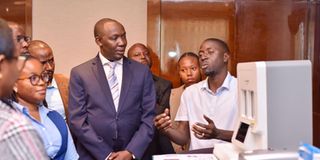
The talks were held during the Korea-Tanzania Healthcare Innovation Event organised by the Korea Trade-Investment Promotion Agency (KOTRA), bringing together government officials, health institutions, development partners, NGOs and private-sector companies.
Deputy Permanent Secretary in the ministry of Health, Mr Emmanuel Tayari, said Tanzania was implementing a digital transformation programme aimed at connecting healthcare services.
He said the government was developing an electronic prescription system that would link public and private healthcare providers.
The government also plans to integrate patient management systems to allow medical information to be accessed and shared more efficiently between health facilities.
“We have looked at how South Korean health technologies can be introduced in Tanzania, particularly those that are already in use,” Mr Tayari said.
“Our colleagues have explained the technologies they have in their systems, diagnostic equipment and other medical devices.”
He said the government wanted patients’ medical information to be available when they seek treatment at different health facilities.
“As a government, we want to ensure that health information can be shared across all hospitals so that when a person goes to receive services, their medical information is available,” he said.
A key issue raised during the discussions was the need to strengthen Hospital Information Systems (HIS) and link them with other health information platforms being used in Tanzania.
Experts said some hospitals already use digital systems, but the platforms do not always communicate with one another.
They proposed closer cooperation between Tanzania and South Korean institutions to integrate hospital systems with medical equipment so that information generated by devices can be transferred directly to hospital information systems.
KOTRA Senior Specialist Benedict Diyamett said cooperation between the two countries should go beyond traditional trade and focus on practical solutions to Tanzania’s healthcare challenges.
“Today is not simply an event. It is an opportunity to build bridges between two countries, two healthcare systems and, most importantly, between ideas and solutions that can be implemented in practice,” he said.
KOTRA Director General, Mr Park Jungwe, said South Korea could support Tanzania through technology, skills, investment and knowledge.
“We look at Korea not only as a source of technology, but as a strategic partner with whom Tanzania can work to develop solutions that are appropriate, affordable, sustainable and responsive to the actual needs of our people,” he said.
He said improving healthcare required cooperation between the Government, private sector, health institutions, NGOs and development partners.
Meanwhile, Jhpiego Tanzania’s Alice Christensen said healthcare workers should be involved in testing and evaluating new medical technologies before they are widely adopted.
She said their experience would help identify problems with equipment and determine whether it was suitable for the Tanzanian environment.
KOFIH Tanzania representative Gyeongbae Seo said digital transformation should focus on connecting health information, medical equipment, healthcare workers and patients rather than simply installing computers in hospitals.
“If these systems are securely integrated, the use of data and AI could help Tanzania improve disease diagnosis, reduce duplication of procedures and increase the efficiency of healthcare services,” he said.