Moshi. More than 200 secondary school teachers in Kilimanjaro are being trained to use digital resources in teaching as the education sector responds to the growing use of smartphones, artificial intelligence and online platforms among students.
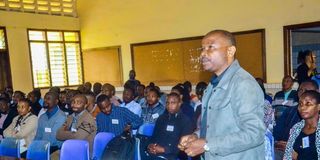
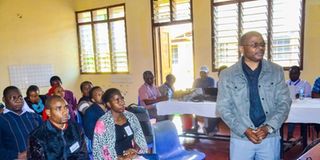
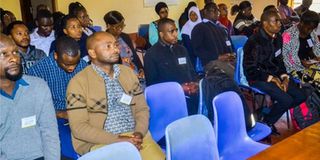
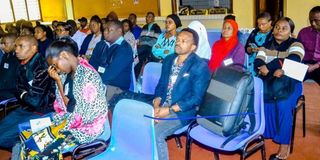
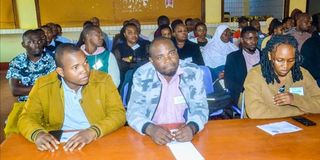
A total of 215 teachers from across the region are attending a week-long training at Stefano Moshi Memorial University College (SMMUCo) in Moshi Municipality, running from August 10 to 15, 2026.
The training is jointly organised by SMMUCo and Switzerland-based Teaching and Learning Advisory Group (TALAG) and focuses on helping teachers integrate digital tools into classroom instruction.
Opening the training, Kilimanjaro Regional Education Officer Abel Mtupwa told teachers that they risked falling behind their students if they failed to embrace emerging technologies.
“Your students are far ahead of you in the use of emerging technologies such as mobile phone applications, social media, artificial intelligence and even computers, but some of you have no clue,” he said.
Mr Mtupwa said teachers needed to continually upgrade their skills to ensure students received quality education and were prepared to navigate a rapidly changing world.
“We want our children to receive the best from their teachers, which will enable them to navigate the ever-changing world,” he said.
The training covers English Language, Biology, Mathematics, Textile Design, Information and Communication Technology (ICT), and Open and Blended Learning, with artificial intelligence also featuring prominently.
Lead facilitator Prof Karl Fleischmann said teachers did not necessarily need sophisticated equipment to incorporate technology into their lessons.
“Even when a school has only a few computers, teachers usually have smartphones that can be utilised for teaching and learning. We teach them how to use these devices effectively to enhance the learning process,” he said.
Prof Fleischmann said the programme was designed to help teachers improve their teaching methods, prepare learning materials and find innovative ways of engaging students.
The impact of the programme is already being seen among teachers who attended previous sessions.
Mark Lyimo, a teacher at Mboni Secondary School in Mamba Ward, Moshi District Council, said the training had helped him overcome his fear of emerging technologies and improve his classroom teaching.
“I feel more confident in using emerging digital technologies in teaching and learning. In addition, the training helped me create visual teaching aids and greatly improved my teaching,” he said.
Mr Lyimo has also established an online group to improve communication and engagement between the school and parents and caregivers.
For Mpirani Secondary School teacher Holiness Kaduma, the training provided an opportunity to introduce practical skills to students.
After attending the programme last year, Ms Kaduma established a Textile Design class at the school, which now has 15 girls.
She also secured five sewing machines through support from well-wishers, allowing the students to gain practical skills that could help them pursue employment or entrepreneurship opportunities.
“After the training last year, I was able to solicit five sewing machines from well-wishers, and now 15 girls are learning practical skills that will definitely have an impact on their future careers,” she said.
The initiative comes as efforts continue to incorporate practical and vocational skills into secondary education.
SMMUCo Provost Prof Andrew Mbwambo said the university college was committed to supporting government efforts to strengthen teachers’ capacity and improve education outcomes.
He urged teachers to view the internet, artificial intelligence and social media as teaching tools rather than distractions.
“This training aims to change the way our teachers view emerging technologies such as the internet, AI and social media—from seeing them as disruptive extras to recognising them as critical teaching aids,” he said.
Participants are being trained to identify relevant educational materials, prepare lessons and case studies, develop learning resources and use technology to engage students.
The programme, which has been running since 2014, has so far trained 1,710 teachers from more than 400 secondary schools in Kilimanjaro and Arusha regions.
It is jointly funded by SMMUCo, Switzerland-based Bachschuster Foundation, Globe Trotte Group, Walo Kamm Foundation, the Municipality of Hünenberg in Switzerland and other well-wishers.
The training comes as digital technology becomes increasingly embedded in students’ daily lives, placing greater pressure on teachers to acquire skills that enable them to use smartphones, online resources and artificial intelligence effectively in the classroom.
For the organisers, strengthening teachers’ digital skills is therefore essential to ensuring that technology supports learning rather than widening the gap between students and educators.