Josephine Christopher is a senior business journalist for The Citizen and Mwananchi newspapers
Mwananchi Communications Limitted
Dodoma. Tanzania has unveiled an ambitious Sh7 trillion five-year environmental transformation programme in a national strategy linking climate action directly to economic growth as the country advances toward its Vision 2050 goals.
The programme, running from 2026 to 2030, is designed to accelerate ecosystem restoration, expand clean energy use, strengthen waste management systems and unlock green financing through carbon markets.

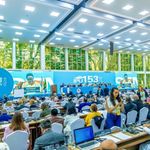
The programme was launched by Vice President Emmanuel Nchimbi during the commemoration of the World Environment Day in Dodoma on Friday June 5, 2026.
Dr Nchimbi said the initiative marks a critical national commitment to protect natural resources while strengthening the country’s ability to withstand climate shocks.
He stressed that environmental protection must move beyond policy discussions into practical action at all levels of government and society, calling for stronger public awareness, improved enforcement systems at local government level, and a shift in mindset on waste management.
“Waste should no longer be seen as a burden but as an economic opportunity,” he said, noting that materials such as organic waste and recyclables can be converted into fertiliser, animal feed and other commercial products under a circular economy approach.
Minister of State in the Vice President’s Office (Union and Environment) Hamad Masauni said the programme is anchored on the need to fast-track measurable environmental recovery while strengthening ecosystem services that underpin agriculture, energy, tourism and other key sectors.
“These measures are expected to contribute significantly to the achievement of our Vision 2050 goals, which seek to position Tanzania among the top 10 countries in Africa in terms of environmental sustainability and strong resilience to climate change,” he said.
According to him, through this programme, the government aims to achieve several major objectives, including to promote tree planting and sustainable cultivation of two billion trees annually and to restore five million hectares of degraded land.
“Third, to increase the use of clean cooking energy in order to reduce reliance on charcoal and firewood. To strengthen waste management systems and environmental cleanliness and to promote the carbon market to increase national revenue and contribute to climate change mitigation,” he said.
Mr Masauni said the programme seeks to increase public participation, particularly among youth and women, in green economy activities and environmental conservation.
A major highlight of the announcement was the significant progress in Tanzania’s clean cooking agenda, which has grown from 6.9 percent in 2021 to 28.6 percent in 2025.
The government aims to scale up clean cooking adoption to over 80 percent in 2032 as part of efforts to reduce deforestation, improve public health, and cut carbon emissions.
Dr Nchimbi said expanding access to clean cooking energy remains central to Tanzania’s climate and development strategy, particularly in reducing dependence on biomass fuels such as charcoal and firewood.
He also outlined plans to expand domestic and international climate finance, including carbon trading mechanisms, global environmental funds, and regional partnerships designed to support mitigation and adaptation.
Permanent Secretary in the Vice President’s Office, Dr Richard Muyungi, said the programme responds to pressing environmental challenges including deforestation, land degradation affecting over 60 percent of arid areas, invasive species spread across more than 20 regions, and low waste recycling rates estimated at 37 percent.
He said the government plans to scale up tree planting to billions of trees over the next decade, restore large areas of degraded land annually, and significantly expand access to clean cooking energy.
Dr Muyungi emphasised that the programme aligns with Tanzania’s long-term development blueprint and Vision 2050 environmental pillar, which seeks to position the country among Africa’s leading green and climate-resilient economies.
“We are building a system that integrates waste management, renewable energy, carbon markets, and ecosystem restoration into one coordinated national framework,” he said.
The programme places significant responsibility on local government authorities, requiring municipalities and cities to establish and maintain green spaces, strengthen waste collection systems, and invest in recycling infrastructure to reduce landfill dependence.
Urban planning authorities are also expected to enforce strict compliance in building permits, including mandatory tree planting requirements for new developments.
In addition, sector ministries are expected to integrate carbon market opportunities into their development programmes, while land authorities will enforce land-use plans to prevent environmental degradation caused by unregulated expansion.