Tarura turns to technology to build durable infrastructure in Tanzania
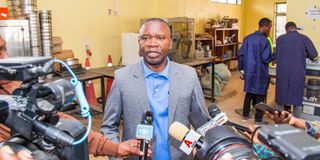
The Tanzania Rural and Urban Roads Agency (Tarura) acting head of the Research and Quality Control Unit, Mr Vincent Lwanda, briefs journalists and officials at the agency's materials testing laboratory facility in Dodoma. The briefing took place in Dodoma on Monday, September 7, 2026. PHOTO| ALFRED ZAKARIA
Alfred Zacharia is a business reporter for The Citizen and Mwananchi newspapers.
Mwananchi Communications Limitted
Dodoma. The Tanzania Rural and Urban Roads Agency (Tarura) is turning to modern technology to improve the quality and durability of roads, bridges, and other infrastructure nationwide.
The agency is using advanced soil investigation equipment to establish ground conditions before construction begins.
The approach aims to reduce infrastructure failures linked to inadequate knowledge of soil and rock conditions.
It also allows engineers to select construction methods and foundations that suit the conditions of each site.
Speaking during a media tour of Tarura laboratories in Dodoma on Monday, September 7, 2026, the acting head of the Research and Quality Control Unit, Mr Vincent Lwanda, said soil investigation was critical to the success of infrastructure projects.
“Soil investigation is one of the important steps in ensuring that the infrastructure we build is safe, strong, and able to last for a long time,” he said.
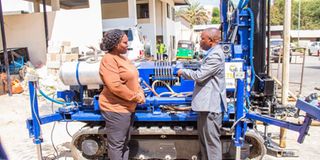
Tarura has invested more than Sh2 billion in a specialised drilling rig used to collect soil and rock samples from deep below the ground.
The equipment can obtain samples from depths of between 200 and 300 metres.
An engineer in Tarura’s Research and Quality Control Unit, Mr Emmanuel Kilasi, said the information obtained from the samples helps determine whether the ground can support the proposed structure.
“The samples help us understand the condition of the ground and its ability to carry loads. This is important when designing foundations for major infrastructure such as bridges, roads, and buildings,” he said.
The investment addresses a problem that can have a direct impact on taxpayers.
When soil conditions are not properly assessed, engineers may use inappropriate designs or construction methods, noting that results can be premature damage and higher maintenance costs.
Mr Lwanda said Tarura’s laboratory services had helped strengthen quality control and improve the performance of its road projects.
“In the past, some roads could deteriorate within a short period because adequate investigations had not been carried out on the soil and construction materials,” he said.
He said the agency was now placing greater emphasis on testing before and during construction.
Tarura operates a main laboratory in Dodoma and 16 other laboratories across the country.
The facilities are also available to members of the public, institutions, and contractors who want to test construction materials.
“These laboratories are not only for roads. We welcome members of the public undertaking construction activities to bring their materials for quality testing,” said Mr Lwanda.
The agency requires contractors implementing its projects to use the laboratories at different stages of construction.
He said test results are also used as part of the quality assurance process before contractors are paid.
The system gives Tarura an additional tool to monitor construction standards and ensure public money is spent on projects that meet the required specifications.
The laboratories are also helping to develop practical skills among engineering students.
Students from universities and other higher learning institutions are given opportunities to gain hands-on experience in soil testing and construction-material analysis.
A second-year student at Mbeya University of Science and Technology (Must), Ms Vivian Mwakabaja, said the training had helped her connect classroom theory with practical engineering work.
“The training has helped me connect what I learn in class with real engineering work. I have learned how to test soil quality and determine its ability to carry loads,” she said.
For Tanzania, the investment comes as the country continues to expand its road network and other public infrastructure.
The quality of the ground beneath a project can determine how well that investment performs over time.
It is also becoming more important as infrastructure faces increasing pressure from extreme weather and other effects associated with climate change.
Tarura’s approach suggests that building durable infrastructure starts long before construction equipment arrives at a site.