Why Tanzania needs a permanent reconciliation commission

Dar es Salaam. Tanzania needs a permanent national reconciliation commission to identify political tensions early and help resolve them before they escalate into crises, former Zanzibar First Vice President and ACT-Wazalendo chairman Othman Masoud Othman has said.

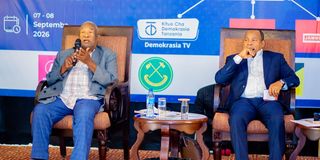
Mr Othman made the proposal on Tuesday, September 8, 2026, while speaking at the National Stakeholders Conference to reflect on the country’s political situation, the 2025 General Election and the nation’s future.

Drawing on Zanzibar’s experience of political tensions and reconciliation efforts, Mr Othman said Tanzania should move away from a system in which dialogue is initiated only after political disagreements have already developed into serious disputes.

“We should have a national commission instead of doing things only after a problem has happened, then calling each other, meeting and running around,” he said.

He said such a body should operate permanently, monitoring political developments and providing recommendations on how emerging problems could be addressed before they become more difficult to resolve.

“It is better to have a body that can, every day, provide recommendations on how to correct things before they are damaged and escalate into something worse,” he said.

Mr Othman said Zanzibar’s political history showed why preventive mechanisms could be useful in managing tensions, particularly during electoral periods.

He said political disagreements could emerge when parties and institutions responsible for managing elections move from cooperation to confrontation.

“Many times a problem happens during an election. Instead of parties cooperating with the electoral commission and perhaps the registrar’s office, you start having disagreements,” he said.

According to Mr Othman, establishing a permanent reconciliation mechanism would provide an institutional avenue for addressing such disagreements before they develop into wider political conflicts.

He cited Zanzibar’s experience even before Zanzibar Revolution, following the political disturbances of 1961, saying recommendations made at the time included establishing a committee to address political problems.

Mr Othman said the committee was established and played a role in improving the political environment ahead of the 1963 election.

“We have taken the experience that after those disturbances in 1961 in Zanzibar, one of the recommendations was to establish such a committee, and it was established and worked well,” he said.

For Mr Othman, that experience provides a basis for considering a similar permanent mechanism at national level, with the emphasis placed on prevention rather than waiting for political crises to occur.

Mr Othman also argued that effective oversight would be critical to ensuring political reforms deliver lasting results.

“One of the biggest problems we have is the absence of accountability. We have that problem even before revolution of Zanzibar and independence of Tanganyika,” he said, pointing to Parliament, the House of Representatives, the media, academic institutions, the judiciary and civil society as important oversight institutions.

He warned that without stronger oversight, political agreements alone might not prevent the country from returning to the same problems.

“Without oversight, we are here and we could go even further in the wrong direction,” he said.

He said the proposed commission would therefore be part of a broader effort to institutionalise dialogue and early intervention, rather than relying on temporary negotiations whenever political tensions rise.