The rise and rupture: How Nyerere and Kambona’s political alliance collapsed
Dar es Salaam. In the formative years of Tanganyika’s independence, Julius Nyerere and Oscar Kambona were inseparable partners in statecraft—a visionary philosopher-president and his politically astute lieutenant who commanded TANU’s organisational machinery with unmatched charisma.
Their alliance, however, would not survive the ideological battles and power realignments that defined Tanzania’s first decade.
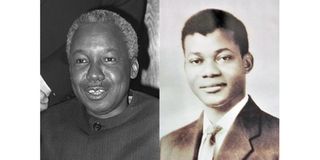
What began as fraternity ended in suspicion, exile and a bitter political cold war that shadowed the nation for more than 30 years.
Kambona, who served as TANU Secretary-General and later as Defence and Foreign Affairs minister, was instrumental in mobilising grassroots support that delivered independence in 1961.
Nyerere relied on his political instincts and organisational touch, describing him as “a younger brother.”
The synergy was personal as well as strategic: Nyerere stood as best man at Kambona’s wedding in London. Few relationships in African liberation politics were as close—or as consequential.
The Mutiny, the rift and political demotion
The first cracks in their alliance appeared during the Dar es Salaam army mutiny of January 1964.
With Nyerere temporarily out of the spotlight, it was Kambona, then Minister of Defence, who took charge, calming mutineers and restoring order.
“That event marked the beginning of Julius’s discomfort,” said a former senior TANU figure, quoted in 2011.
“Oscar had shown he could control a crisis… and that scared people close to Nyerere.”
Soon after, Kambona was shifted from Defence to Foreign Affairs, a move seen by many as a calculated demotion.
The situation worsened in November 1964, when Kambona, without full authorisation, held a press conference alleging a Western plot against Tanzania, based on documents later discredited as forgeries.
Nyerere, though privately sympathetic, was politically forced to disavow the claims.
“Kambona acted without full information,” Nyerere told the party's National Executive Committee. “It was reckless diplomacy.”
At TANU’s December 1964 NEC meeting, Kambona was publicly censured. Though he retained his cabinet post, his political credibility had been severely undermined.
1967: Ideological collision over Ujamaa
The Arusha Declaration hardened their divide. Nyerere’s push for socialist transformation and state control was deeply opposed by Kambona, who urged a gradual, experimental approach to Ujamaa:
“He told me Ujamaa was not practical without pilot programs,” former minister Al Noor Kassum recalled. “He worried it was too radical, too fast.”
By 1966, Kambona was under surveillance, authorities froze his bank accounts, revealing nearly £50,000 in unexplained deposits.
Facing mounting pressure, he quietly left the country. In July 1967, hours before possible arrest, he flew permanently into exile.
Kambona warns of authoritarian drift
While in exile on a visit to Nigeria, Kambona gave a rare, blunt interview that reflected the depth of his break with Nyerere’s system. Asked about the state of Tanzanian politics, he replied:
“I feel a bit unhappy with the development of the present in Tanzania, because I have my concern that the events are leading towards the establishment of dictatorship in my country.”
He argued that Tanzania’s one-party framework prevented any true measure of public sentiment:
“There is no way of finding this out, because in Tanzania there is only one party, and this is one party by law.”
On the future, Kambona issued an unequivocal caution:
“It all depends upon how long the people of Tanzania will submit to this authoritarian rule.”
He further questioned the ideological compatibility of the East African Community and Ujamaa:
“If Tanzania has chosen the way to socialism, how is it going to protect it? The other two are not socialist states.”
A Long exile and a failed return
From London, Kambona became one of Nyerere’s fiercest critics, accusing the regime of suppressing dissent and mismanaging the socialist project. In 1967 he was labelled a coup plotter; a 1970 treason trial targeting his allies cemented his political exile.
He returned in 1992 at the dawn of multiparty politics, but the landscape had shifted. Younger leaders dominated, and his new party, TADEA, failed to regain national relevance.
Nyerere, still the moral authority of the nation, dismissed his allegations of corruption among senior independence-era officials:
“Let him provide evidence. Otherwise, he is just shouting in the marketplace.”
Kambona died in London in 1997, politically diminished but historically central.
A Political rupture that shaped the state
The Nyerere–Kambona schism was not merely personal. It set the course for Tanzania’s governance model. With Kambona gone, internal checks within TANU disappeared, consolidating single-party authority and enabling a tighter ideological state.
Kambona lost the war of political survival, but his warnings, on authoritarian drift, party-state fusion and economic direction, continue to echo in contemporary academic and policy debates.
Their story remains a lesson in the fragility of revolutionary alliances: two architects of independence whose destinies diverged, leaving behind both a nation and a caution for political history.
Register to begin your journey to our premium contentSubscribe for full access to premium content