Dar es Salaam. A visit by a parliamentary committee to Ardhi University (ARU) has reignited debate on whether the country is fully utilising the expertise it already possesses to resolve one of its most persistent governance challenges.
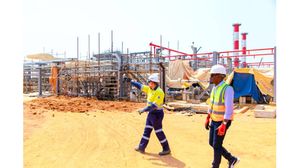
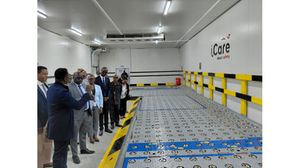
During the inspection of infrastructure under the Higher Education for Economic Transformation Project (HEET) at the Dar es Salaam-based University on March 16, members of the Parliamentary Standing Committee on Education, Culture and Sports quickly shifted the discussion.
They posed the construction progress debate, to a broader national concern: land disputes - a national challenge, that has increasingly surfaced during the nationwide tour of Prime Minister Mwigulu Nchemba.
Across several regions, wananchi have used the Premier’s visit to air grievances over land ownership disputes, many involving farmers, pastoralists and urban expansion.
The complaints echo a long-standing national dilemma where overlapping land uses, weak planning enforcement and inequitable access have fuelled tensions for decades.
Recognising the gravity of the situation, Dr Nchemba, during one of his rally, directed regional commissioners to investigate reported disputes and tasked key government offices, including the Attorney General and the ministries responsible for lands and local government, to propose lasting solutions.
Yet for many observers, resolving the crisis may require something beyond political directives: sustained involvement of technical experts.
Members of the parliamentary committee visiting ARU said the institution, widely recognised as the country’s leading centre for land management, urban planning and geospatial sciences, could play a larger role in shaping long-term solutions.
Ukonga MP Bakari Shingo said land disputes in his constituency have persisted despite repeated ministerial visits.
“Our country is facing serious land challenges in many places. In my constituency, ministers have visited several times, yet the conflicts remain unresolved,” he said.
“This university has the expertise. The question is how we can fully utilise it to help address such disputes.”
Committee chairperson Husna Sekiboko echoed the sentiment, noting that most of Tanzania’s land specialists are trained at ARU.
“With the level of expertise produced here, Tanzania can significantly reduce land disputes if these professionals are properly involved in planning and land management decisions,” she said.
Responding to the concerns, ARU Vice Chancellor Evaristo Liwa said the university has already contributed to resolving several disputes across the country through applied research and field interventions.
“In many cases our experts and even our students have been involved in addressing land challenges, including farmer–pastoralist disputes,” he told the committee.
He cited the university’s intervention in Mbarali District, where ARU specialists helped resolve a long-running dispute between farmers and pastoralists by establishing clear and scientifically determined land boundaries.
Similar technical interventions were conducted in Kilosa District, where flooding and land-use tensions had intensified disputes between farming and pastoralist communities.
“After our experts were involved in planning and resolving the issues, the conflict subsided,” Prof Liwa said, adding that such fieldwork also provides practical training opportunities for students.
However, he stressed that universities cannot impose themselves in local disputes without formal government engagement.
“We cannot just insert ourselves into these processes. But when we are invited, we come with solutions and participate actively in conflict resolution,” he said.
A deeper structural problem
Experts say Tanzania’s land disputes are rooted in structural challenges. Rapid population growth, unplanned urban expansion and weak enforcement of land-use plans have intensified competition over land resources.
According to analysts, the problem is compounded when technical advice from planners, surveyors and land economists is sidelined in favour of short-term political decisions.
Urban planning specialist, Dr John Lupala, of ARU, has previously argued that land conflicts often emerge when planning frameworks are ignored or implemented inconsistently.
“When settlements grow without proper planning and clear demarcation, disputes become inevitable,” he noted in earlier research on urban land governance.
The ongoing HEET-funded transformation at ARU is expected to strengthen the country’s ability to address such challenges in the long term.
According to the university, construction of laboratories, studios, workshops and classrooms under the project has reached 97 percent completion and is expected to finish by the end of March 2026.
The expansion also includes specialised programmes aimed at tackling land disputes directly.
“We have introduced new programmes focusing on conflict resolution,” Prof Liwa said. “We have even gone further to establish short courses for property brokers and land agents so that we can improve the current situation, which often generates more conflicts in society.”
Register to begin your journey to our premium contentSubscribe for full access to premium content