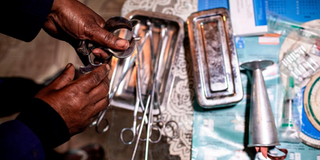
Dar es Salaam. A recent investigation by The Citizen has uncovered the growing scale of Tanzania’s underground unsafe abortion network, exposing how women are being drawn into a secretive system driven by fear, desperation and weak access to reproductive healthcare services.
The investigation, revealed how women spend between Sh40,000 and Sh100,000 on abortion-related drugs sourced through hidden networks involving brokers, some pharmacists, covert healthcare workers and unregistered clinics operating largely through phone calls and WhatsApp groups.
In severe cases, treatment costs for complications were found to rise to nearly Sh1 million, with some women suffering life-threatening health consequences after undergoing unsafe procedures in secrecy.
The investigation also exposed a growing underground system involving brokers, some pharmacists, covert healthcare providers and unregistered clinics operating largely through mobile phones and WhatsApp groups.
Several women interviewed said they lost large sums of money while searching for the services in secrecy, with some later suffering life-threatening complications that required emergency medical attention.
Health experts warned that many women die before even reaching hospital because of excessive bleeding, severe infections and the use of unsafe drugs or crude instruments.
Against that backdrop, stakeholders are now calling for long-term measures aimed at reducing deaths, health complications and the continued expansion of the illegal abortion market.
The experts argue that despite existing laws prohibiting abortion except in circumstances aimed at saving the life of the mother, the reality on the ground shows the practice continues secretly across different parts of the country.
Independent advocate Peter Majanjala said Tanzania needs to review some of its laws so they reflect current reproductive health realities and the international obligations the country has already accepted.
According to him, Tanzania ratified the Maputo Protocol in 2007, but provisions related to reproductive rights and abortion under special circumstances have not been fully incorporated into domestic legislation.
“There is a need to amend some sections of the Penal Code, particularly Sections 150, 151, 152, 219 and 230, in order to expand the circumstances under which a woman may legally terminate a pregnancy,” said Majanjala.
He said such circumstances should include pregnancies resulting from rape, incest, sexual assault or situations where the pregnancy threatens the physical or mental health of the woman.
According to him, such reforms could help reduce unsafe clandestine abortions and encourage women to seek medical help earlier.
“As a nation we already ratified the Maputo Protocol, so there is a need to examine how its provisions can align with domestic laws without leaving gaps that push women into dangerous environments,” he said.
Article 14(2)(c) of the Maputo Protocol calls on member states to authorise medical abortion in cases of sexual assault, rape, incest and where pregnancy endangers the health or life of the mother.
However, Tanzania continues to rely largely on Penal Code provisions that prohibit abortion except where it is performed to save the life of the pregnant woman.
Beyond legal reforms, the experts said public education remains one of the most important tools in reducing complications associated with unsafe abortion.
Majanjala said many citizens are still unaware that post-abortion care services are available in hospitals regardless of the circumstances surrounding the pregnancy loss.
“People need to understand that even after a miscarriage, they can still go to hospital and receive post-abortion care services to protect their health and save their lives,” he said.
Reproductive rights lawyer Martha Serengi said a long-term solution also requires addressing fear and uncertainty, which often prevent women from seeking medical assistance early.
“When the system is built largely around fear, many women become afraid of going to hospital or seeking advice early. In the end they turn to unsafe alternatives,” she said.
Serengi said reproductive health and legal literacy should receive greater attention so people understand both their rights and the services available at health facilities.
“Many people do not even know that post-abortion care services exist in hospitals and that their purpose is to save lives. Such education can help reduce deaths and long-term complications,” she said.
She added that healthcare providers also need a clearer legal environment that allows them to perform their duties without fear or confusion.
“When the law appears too restrictive or unclear even to some professionals, the result is confusion among the public and more people resorting to the underground market,” she said.
Consultant obstetrician and gynaecologist Dr Isaya Mhando said from a public health perspective, strict laws alone have failed to stop abortions and instead pushed the practice underground into unsafe conditions.
He said many women end up taking drugs without professional supervision or following instructions from unqualified individuals.
“When laws are too restrictive and people fear going to hospitals, many end up seeking help from unqualified individuals or using medication recklessly without proper examination,” he said.
According to Dr Mhando, unsupervised use of abortion drugs can be especially dangerous for women with ectopic pregnancies.
“Without tests such as ultrasound scans, a woman may take the drugs without knowing the pregnancy is outside the uterus, and that situation can become life-threatening,” he said.
He said some women suffering severe complications never reach hospital because they fear arrest or social stigma.
Citing reproductive health studies, Dr Mhando said many women experiencing abortion-related complications remain at home instead of seeking treatment immediately.
“Fear of the law and social stigma continue to be major barriers preventing women from seeking hospital care on time,” he said.
Meanwhile, University of Dar es Salaam economic analyst Abel Kinyondo said controlling the illegal market is another critical part of the long-term solution.
He said illegal businesses often thrive where demand remains high but no transparent system exists to regulate services openly.
“The Government regulates only lawful markets. In this case, authorities should enforce existing laws to ensure illegal clinics and all places involved in unlawful practices are shut down,” said Professor Kinyondo.
He said secrecy and illegality have made the business more expensive while women continue carrying the financial and health burden.
“The more services operate underground, the greater the likelihood of poor-quality services because there is no transparent oversight,” he said.
Register to begin your journey to our premium contentSubscribe for full access to premium content