Why journalists need to transform their reporting to protect biodiversity

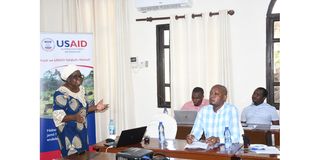
Media Trainer and Mentor, Pili Mtambalike, trains journalism on impactful reporting on biodiversity conservation during a seminar organized by Journalists’ Association of Tanzania (JET) and sponsored by USAID Tuhifadhi Maliasili Activity in Bagamoyo over the weekend. PHOTO |  THE CITIZEN CORRESPONDENT

What you need to know:

  • But to be able to adequately perform their duties to protect wildlife, journalists must transform the way they report on the environment and climate, experts who made presentations at a training and reporting programme organised by the Journalists Environmental Association of Tanzania (JET) said
Bagamoyo. The ongoing unpreceded environmental degradation and the resultant climate change require unprecedented action from all stakeholders, experts said over the weekend.

Journalists have a unique role to play in prompting action from all actors.

But to be able to adequately perform their duties to protect wildlife, journalists must transform the way they report on the environment and climate, experts who made presentations at a training and reporting programme organised by the Journalists Environmental Association of Tanzania (JET) said.

The project is part of the USAID Tuhifadhi Maliasili (Preserve Natural Resources) Activity.

Media Trainer and Mentor, Pili Mtambalike, said being able to make reporting on wildlife conservation impactful and captivating journalists should unleash the power of storytelling.

Storytelling is the opposite of cold, matter-of-fact reporting, she noted.

“Journalists need to go beyond facts and figures and explore to create a personal impact. This requires emphasising the importance of emotional connection for the enduring influence of stories,” Ms Mtambalike noted.

To be able to bring wildlife conservation to the top of the agenda, journalists should also focus on the diversity of ecosystems as an essential element of wildlife conservation.

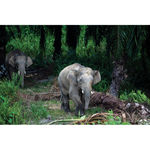
The audience likes to read or watch about specific accounts and details of specific animals, their lives and behaviours, how they survive, reproduce, and how they interact with other animals in their ecosystem. But they really get that in the Tanzanian media, she noted.

“Personalising the narrative through introducing individual animals is crucial. We must bring attention to individual animal stories to personalise wildlife conservation,” Ms Mtambalike, who is also a veteran journalist, noted.

The TMF executive director, Dastan Kamanzi, said the time has come for journalists to effectively play the role of watchdogs so as to protect wildlife biodiversity. This involves engaging in Tija journalism.

“Tija means productivity. This implies that Tija journalism works to produce quality and quantity of public interest, accountability, and investigative journalism products that greatly impact human life,” Mr Kamanzi noted.

Mr Kamanzi noted that in Tija journalism, reporters should put public interests first when covering wildlife biodiversity and environmental issues.

Through the USAID’s Tuhifadhi Maliasili Activity, journalists, would get the chance to cover biodiversity conservation issues in seven key wildlife corridors across Tanzania, including the Kwakuchinja Corridor, Kigosi Moyowosi-Burigi Chato Corridor, Nyerere Selous-Udzungwa Corridor and Amani-Nilo Corridor.

Others are the Ruaha Rungwa-Katavi Corridor, the Ruaha Rungwa-Inyonga Corridor, and the Mahale-Katavi Corridor.

JET Director John Chikomo said the two-day tailor-made training would equip journalists with the necessary skills and knowledge to conduct investigative reporting on biodiversity conservation and climate change issues.

"Through the USAID Tuhifadhi Maliasili Activity, JET seeks to create an enabling environment for journalists to investigate and report adequately on conservation issues," he affirmed.

Furthermore, Mr Chikomo highlighted the critical role of journalists in facilitating an open and transparent flow of information from citizens to decision-makers and other stakeholders.

With the acquired investigative, reporting, and analytical skills, journalists are poised to generate reliable and regular coverage of corridors, wildlife connectivity, and other biodiversity conservation issues.

The collaboration between JET and USAID signifies a significant step forward in leveraging the power of journalism to address pressing environmental challenges, ensuring a sustainable future for Tanzania's rich natural heritage.