Dar es Salaam. As Tanzania joins the world in observing World Water Day on March 22, 2026, experts have identified several factors contributing to the country’s persistent water shortage, with wastage and inefficient distribution cited among the main challenges.
According to development and environmental stakeholders, poor water distribution, weak infrastructure, climate change, and unsustainable use of water resources continue to limit access to safe and clean water.

The Energy and Water Utilities Regulatory Authority (Ewura) report on the performance of water and sanitation authorities for the 2024/25 financial year shows that water losses increased from 36.8 per cent in 2023/24 to 42.3 per cent in 2024/25.
The report also indicates that households, on average, receive only 14 hours of water service per day.
Speaking at the report launch in Morogoro on March 19, Water Minister Juma Aweso said the government has begun taking steps to reduce water losses by evaluating directors of water authorities based on their ability to limit wastage.
He noted that some officials have been illegally connecting clients outside formal systems, contributing to apparent water losses. Hotels and factories, for example, are sometimes connected unofficially, with payments collected by staff misreported as lost water in official records.
Despite these challenges, experts emphasise that World Water Day, established by the United Nations at the 1992 Earth Summit in Rio de Janeiro, continues to highlight the importance of clean water and sustainable resource management.
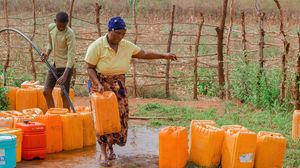
For ordinary citizens, the shortage remains a daily struggle. Jamila Hussein (35) of Mbezi, Dar es Salaam, said she rarely sees water from her home tap, forcing her to rely on boreholes and purchase 20-litre buckets at Sh500 each.
In rural areas, the situation can be more severe. Corester Haule (25) of Kipingu village, Njombe, died in 2025 while fetching water from the Ruhuhu River after a crocodile attack.
Statistics show some progress in access. According to the 2025 National Water Policy, rural water coverage increased from 50 per cent in 2002 to 83 per cent in 2024, while urban access rose from 73 per cent to 91.6 per cent.
Minister Aweso said that out of 12,333 villages nationwide, 10,758 are now connected to water services, leaving 1,575 yet to be reached.
Looking ahead, the National Development Vision 2050 warns that population growth, economic activities, and climate change could worsen water scarcity. The government aims to achieve water security for social and economic development by that year.
Economist Oscar Mkude said Tanzania has abundant water sources, but distribution systems fail to meet demand, even in major cities such as Dar es Salaam.
Rapid urbanisation, poor infrastructure, pollution, and unsustainable use of water increase the challenge. Mkude recommended measures such as reducing water losses, controlling illegal connections, improving infrastructure, using modern monitoring technology in industries, and adopting drip irrigation to save water in agriculture.
Environmental expert Aidan Msafiri said that poor management of water infrastructure, over-extraction, and lack of tree planting threaten long-term sustainability.
Social analyst Magabilo Masambu stressed the importance of promoting low-cost rainwater harvesting, particularly in rural areas with limited access.
The National Water Policy 2002, 2025 edition recommends developing resilient water infrastructure to reduce the impacts of droughts and floods, while ensuring sustainable access for all.
Register to begin your journey to our premium contentSubscribe for full access to premium content