Why UDSM’s employability ranking matters for Tanzania
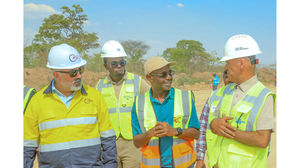
University of Dar es Salaam (UDSM) Deputy Vice Chancellor- Research, Prof Nelson Boniface speaks in a recent QS forum held in Addis Ababa, Ethiopia. The oldest University in Tanzania was recognised as among the elite when it comes to Employability Outcome. PHOTO | COURTESY.
Dar es Salaam. Tanzania’s oldest university has achieved what many education experts describe as a significant milestone for the country’s higher education sector after emerging as one of the best university in East Africa for graduate employability in the latest QS World University Rankings (QS-WUR).
The University of Dar es Salaam (UDSM) scored 85.3 in the Employment Outcomes indicator, ranking 131st globally among 1,504 universities that qualified for the rankings from more than 8,800 institutions assessed worldwide.

The performance also placed UDSM ninth in Sub-Saharan Africa and third in East Africa in graduate employability.
Unlike overall university rankings, the Employment Outcomes indicator measures how well universities prepare students for the labour market by assessing graduate employability, alumni success and the impact graduates make in society.
The recognition means that graduates from Tanzania’s oldest university are increasingly being viewed as competitive in today’s job market, reflecting years of investment in improving teaching quality, research, innovation and stronger links with industry.
Speaking in a press conference on July 15, 2026, UDSM Deputy Vice Chancellor for Research, Prof Nelson Boniphace, said the institution had received the recognition during the QS World University Rankings conference in Addis Ababa, Ethiopia.
Prof Boniphace, said the achievement reflects the university’s commitment to producing graduates capable of competing globally while contributing to Tanzania’s development.
He said the university would continue improving its teaching, research and international partnerships to further raise the country’s profile.
Education expert Dr Bonea Mathew, said employability is becoming one of the most important indicators for universities because it shows whether graduates possess the knowledge and skills employers need.
“A high employability ranking tells students, parents and employers that graduates are leaving university with competencies that are relevant to the labour market.
That is ultimately what higher education should deliver,” he said.
The recognition comes at a time when Tanzania has been implementing reforms aimed at improving higher education quality through investments in research, innovation, digital infrastructure and curriculum review under the Higher Education for Economic Transformation (HEET) project.
These reforms are intended to produce graduates with practical skills while strengthening universities’ contribution to national development.
Higher education expert, Dr Devotha Minquza of the University of Cape Town, told The Citizen in an interview that the recognition extends beyond UDSM because international rankings influence how the world views a country’s education system.
“When one university performs strongly in global rankings, it increases confidence in the country’s higher education sector.
It attracts research partnerships, academic collaboration and international students while signalling improvements in education quality,” she said.
For many years, global university rankings have largely been dominated by institutions from South Africa and North Africa, with few universities from the rest of the continent receiving significant recognition.
UDSM’s latest achievement therefore represents an important shift for Tanzania, demonstrating that its universities are becoming increasingly competitive internationally, particularly in producing graduates who can secure employment and contribute meaningfully to economic growth.
The university has in recent years expanded international collaborations, strengthened research output, invested in modern learning facilities and promoted innovation among students and researchers.
While education experts caution that maintaining such recognition will require continuous investment in quality teaching, research and graduate skills, they agree that the latest ranking sends a positive message about the direction Tanzania’s higher education sector is taking.
More importantly, Dr Minquza noted, “it demonstrates that Tanzanian universities are no longer only expanding access to higher education, but are increasingly being recognised for preparing graduates who can compete successfully in the global labour market.”
Register to begin your journey to our premium contentSubscribe for full access to premium content