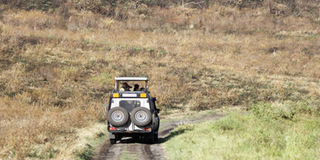
The 137 square kilometres park sits mostly on the eastern side of the towering Mt Meru, one of the densely populated areas in Arusha Region. The mountain is within the park boundaries.
Arusha. Conservation experts have raised the red flag over increasing human activities around Arusha National Park (Anapa) blocking corridor areas linking the park with other protected areas.
The 137 square kilometres park sits mostly on the eastern side of the towering Mt Meru, one of the densely populated areas in Arusha Region. The mountain is within the park boundaries.
Speaking to reporters who visited the park on Wednesday, the tourism officer, Mr Samwel Sakinoi, said the situation had worsened to the extent that big mammals from the surrounding areas can hardly get entry into the park or move outside it.
In ecological context, this is dangerous, as it leads to the death of some species which cannot move out of the park in search of forage or for breeding.
The population also dwindles following animals, which traditionally gained entry during some seasons, being blocked.
“This will, in the long run, reduce the park’s attractions,” he said, citing a wildlife corridor at Kisimiri, north of the park, which links Anapa with other animal protected areas such as West Kilimanjaro plains situated close to the Kilimanjaro National Park (Kinapa).
The official disclosed that at least 84 villages had been established around the park, most of which were involved in intensive agriculture and livestock rearing and that the newly-established settlements had seen increased human populations. Mr Sakinoi said while the park in collaboration with the Tanzania National Parks (Tanapa) was still working on appropriate strategies to address the challenge, the local people were being sensitised on the need to reduce pressure on the fragile ecology of the park.
He said it was very unfortunate that some villagers living around the park had invaded it for grazing, cutting down timber, farming as well as setting up settlements.
This, he insisted, was against the laws which created national parks. Under the Ordinance, no human activity should take place inside a national park.
“Human activity is to blame for the disappearance of some animals,” he said, as he took journalists around the attractive sites inside the park which include the famous Ngurdoto Crater and the Momella alkaline lakes which attract many animals.
The tourism officer further disclosed that horse riding had been added as a tourist attraction and that the new product had led to an increase in the number of visitors reaching the site daily to 40 from 20 a few years ago.
One of the local people living around the park, which is only 30 kilometres from Arusha, Mr Elituliza Elisa, said he was not aware of the encroachment on the park by settlements of the surrounding communities, but said some people had been inside the park to collect medicinal herbs and harvest honey.
He explained that most of the villagers were very keen to benefit from the park through construction of schools, health centres and water supply projects by Anapa through corporate social responsibility.