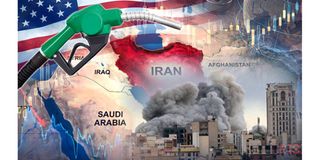
Dar es Salaam. Tanzania could face rising fuel and fertiliser costs if the conflict in the Middle East persists, the government has warned, as recent disruptions in global commodity markets have already begun affecting domestic energy prices.
Presenting the State of the Economy Report 2025 in Parliament on Thursday, the Minister of State in the President's Office (Planning and Investment), Prof Kitila Mkumbo, said geopolitical tensions involving Iran continue to affect global commodity markets, transport costs and supply chains.
The warning comes weeks after the Energy and Water Utilities Regulatory Authority (Ewura) announced fuel prices for June 2026, citing the conflict involving the United States, Israel and Iran as a key factor influencing developments in the domestic petroleum market.
While petrol prices in Dar es Salaam fell slightly by Sh29 per litre to Sh4,086, diesel prices increased by Sh85 per litre to Sh4,333 despite a government subsidy of Sh534.91 per litre aimed at shielding consumers from global price shocks.
According to Ewura, the conflict, which began on February 28, 2026, has heightened uncertainty in international oil markets and affected countries that rely on fuel imports from the Middle East, including Tanzania.
Prof Mkumbo told Parliament that research conducted jointly by the National Planning Commission and the United Nations Development Programme (UNDP) found that the conflict had contributed to higher oil prices, increased transport costs and disruptions to global supply chains.
“The war against Iran has caused panic in global oil markets due to fears of disruptions in oil transportation through the Persian Gulf and other major international shipping routes,” he said.
According to the report, crude oil prices rose from about $100 per barrel in March 2026 to $126 per barrel in April before easing to between $90 and $95 in early June.
The minister said Tanzania remains vulnerable to such shocks because it imports all its refined petroleum products, with between 60 and 70 percent sourced from Gulf countries, India and Singapore.
The report further warns that the agricultural sector could face additional pressure because Tanzania imports between 30 and 40 percent of its urea and DAP fertilisers from Gulf countries, particularly Qatar.
Any prolonged disruption in the region could increase production costs for farmers and place upward pressure on food prices, according to the report.
However, the government believes the crisis could also create opportunities for the country.
Prof Mkumbo said Tanzania could benefit from increased demand for transhipment and cargo storage services if access to some Middle Eastern ports becomes constrained by the conflict.
“For example, there is an opportunity to provide transhipment and cargo storage services for vessels unable to deliver cargo to Middle Eastern ports because of the conflict,” he said.
The government also expects Tanzania to attract investors seeking alternative destinations away from conflict-prone regions as implementation of Vision 2050 gathers pace.
The warning comes as Tanzania seeks to sustain economic growth, maintain price stability and attract investment while navigating growing uncertainty in the global economy.